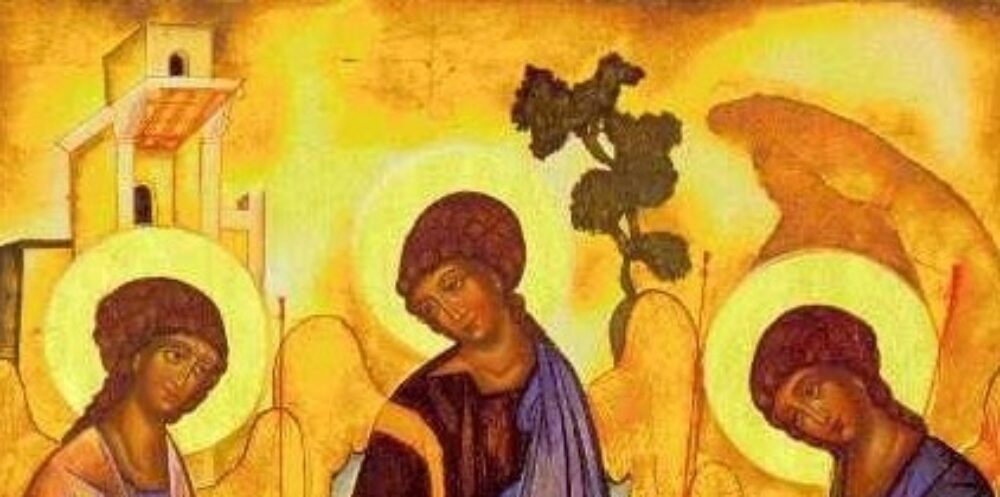
December 27, 2015 – Mark 1:9-11

Following Jesus Christ
Into Whatever Comes Next

In those days Jesus came from Nazareth in Galilee and was baptized by John in the Jordan. Immediately coming up out of the water, He saw the heavens opening, and the Spirit like a dove descending upon Him; and a voice came out of the heavens: “You are My beloved Son, in You I am well pleased.” Mark 1:9-11

Intro: I’ve enjoyed reading in the Gospel of Mark this past week

It has been like sitting in a garden or wandering through a forest
– something rustles in one of the verses and I have to take a closer look
• there is much in Mark that inspires and much to savor
– it seemed like something here could provide a good theme for my last talk of 2015
• I want to share with you some of my impressions of Jesus
• since I’ve been reading two chapters at a time, that’s how we’ll go through this


Chapters 1-2: Jesus is always composed and unruffled

For example, his baptism was marked by several supernatural phenomena
– the heavens opening, the Spirit descending and the voice speaking from the sky
• but there is no indication at all that any of this surprised Jesus
– then later, he is not shocked that people would come to him for healing
• nor is he disturbed by a demon’s screaming as he taught in a synagogue (v. 24)
• Jesus acts as if all this is perfectly normal, exactly what he expected
◦ nothing knocks him off balance — it is as if the extraordinary were his daily routine
◦ it seems that around Jesus, miracles cease to be miraculous

Now let’s take a look at the people who came into contact with Jesus
– here we see a sharp blatant contrast: Jesus’ equanimity and their excitement
• two words come up in response to Jesus (vv. 22 & 27)
◦ they were amazed at his teaching and actions
◦ they perceived that Jesus exercised an unique authority
• immediately it became obvious that he was extraordinary
◦ he knew and interacted with a world that was closed off to them

It is always of critical importance that we acknowledge the humanness of Jesus
– he is among us as one of us — he hungers, tires out, cries, loves and so on
• yet he is of a higher human order — one that we are incapable of duplicating
◦ in other words, Jesus is a type of being we cannot grow into
• Jesus is a one-of-a-kind human — flesh and blood like us, yet more
◦ this does not make him less susceptible to pain and sorrow (Heb. 2:14-18)
◦ rather, it enables him to help us at the same time he is able to identify with us Continue reading →

December 20, 2015 – Micah 5:1-4; Luke 1:39-45

Fourth Sunday of Advent
Theotokos

“Now muster yourselves in troops, daughter of troops;
They have laid siege against us;
With a rod they will smite the judge of Israel on the cheek.
But as for you, Bethlehem Ephrathah,
Too little to be among the clans of Judah,
From you One will go forth for Me to be ruler in Israel.
His goings forth are from long ago,
From the days of eternity.”
Therefore He will give them up until the time
When she who is in labor has borne a child.
The the remainder of His brethren
Will return to the sons of Israel.
And He will arise and shepherd His flock
In the strength of the LORD,
In the majesty of the name of the LORD His God.
And He will remain,
Because at that time He will be great
To the ends of the earth.
Micah 5:1-4

Now at this time Mary arose and went in a hurry to the hill country, to a city of Judah, and entered the house of Zacharias and greeted Elizabeth. When Elizabeth heard Mary’s greeting, the baby leaped in her womb; and Elizabeth was filled with the Holy Spirit. And she cried out with a loud voice and said,
“Blessed are you among women, and blessed is the fruit of your womb! And how has it happened to me, that the mother of my Lord would come to me? For behold, when the sound of your greeting reached my ears, the baby leaped in my womb for joyh. And blessed is she who believed that there would be a fulfillment of what had been spoken to her by the Lord.”
Luke 1:39-45

Intro: Like other Christmas scenes taken from scripture,

The moment Mary entered the home of Elizabeth has inspired countless paintings
– from the rigidly posed figures in ancient icons
• to Renaissance realism and many of today’s cheesy illustrations and graphics
– all of these paintings tell a story
• yet each one is like a still frame extracted from a video
• the backstory adds depth to the single picture


Previously, an angel had visited Zacharias and then Mary

Both were frightened at first
– both were given an impossible promise
• both were baffled by what they were told
• and both asked a logical question given their circumstances
◦ yet the old priest was punished for asking,
◦ while young virgin was graciously answered
– though questions look similar, they’re not the same
• Zacharias: By what will I know this? (v. 18, literal)
• Mary: How will be this? (v. 34, literal)
◦ Zacharias’ question had to do with knowing, Mary’s, with being

I know many Christians share in common my struggle with faith
– our spiritual growth stalls or stops at Zacharias’ question
• we hesitate to commit to God’s will unless we first know how it will work
◦ that if we don’t understand what he’s doing, we can’t move forward
◦ we expect everything we are led into to have a rational explanation
• if we aren’t given a map or travel itinerary, we postpone making the journey
◦ before we jump in, we want details and we want certainty
– I easily relate to biblical characters like Thomas or Nicodemus
• when Jesus told Nicodemus, “You must be born again”
◦ he did not ask the Lord, “Can we do that right now?”
◦ instead, he asked, “How can these things be?”
• he could not imagine the method or mechanism of rebirth
◦ but he didn’t need to know
◦ it was something that could happen to him, not an accomplishment of his own

By contrast, Mary did not ask for a rational explanation
– she was prepared to accept her role and was already on board
• basically, her question was, “What’s the next step?”–i.e., “How do I get pregnant?”
– she jumped over Zacharias’ question and Nicodemus’ question
• she went straight to belief and surrender (vv. 38 & 45)
◦ she accepted what she was to be
◦ “may it be done” translates the Greek genotmai, “to cause to be”
• God wanted her to be something, not merely know some things
◦ he wanted a willing partner


This next point may surprise you

God doesn’t consult with me or seek my advice
– and he doesn’t bother to explain everything to me
• if I waited for explanations, there would be long delays
◦ by the time I had the information I wanted, the opportunity would be long past
• we feel like it’s is so important to know,
◦ that we won’t cooperate with God unless he tells us how and why
“How is God going to help with my bills?”
“How is he going to fix my circumstances?”
“How is he going to put my marriage back together?”
– what do we t think we will gain by knowing?
• comfort? the illusion of control?

I’ve said it before: Continue reading →

December 13, 2015 – Zephaniah 3:14-17; Luke 3:10-18

Third Sunday of Advent
A Song of Joy

Shout for joy, O daughter of Zion!
Shout in triumph, O Israel! 
Rejoice and exult with all you heart,
O daughter of Jerusalem!
The LORD has taken away His judgments against you,
He has cleared away your enemies.
The King of Israel, the LORD, is in your midst;
You will fear disaster no more.
In that day it will be said to Jerusalem:
“Do not be afraid, O Zion;
Do not let your hands fall limp.
The LORD your God is in your midst,
A victorious warrior.
He will exult over you with joy,
He will be quiet in His love,
He will rejoice over you with shouts of joy.
Zephaniah 3:14-17

And the crowds were questioning him, saying, “Then what shall we do?” And he would answer and say to them, “The man who has two tunics is to share with him who has none; and he who has food is to do likewise.”
And some tax collectors also came to be baptized, and they said to him, “Teacher, what shall we do?” And he said to them, “Collect no more than what you have been ordered to.”
Some soldiers were questioning him, saying, “And what about us, what shall we do?” And he said to them, “Do not take money from anyone by force, or accuse anyone falsely, and be content with your wages.”Luke 3:10-18

Intro: The verses from Zephaniah belong to the traditional cycle of Advent readings

What was Zephaniah’s ministry and message?
– the nation of Judah had been misled by two corrupt and violent kings
• the whole society, top to bottom, was in desperate need of reform
• their current king, Josiah, was only eight years old when he began his reign
– the word God gave Zephaniah was for the king, judges, priests, prophets and people
• God’s discipline had been harsh–and could be even harsher
◦ but if they were ready to return, he was ready to receive and restore them
• Zephaniah advised and encouraged both king and people to seek the LORD

An interesting feature of Zephaniah’s short book is the way it is organized
– Mary Douglas refers to it as “ring composition”
• a literary form that was characteristic of many ancient writings
• the end of the story (poem, etc.) comes back around to the beginning
◦ a distinct theme that occurs in the opening is repeated at the end
◦ in complex rings, everything matches up, from start to middle and middle to end:

1 – 2 – 3–3 – 2 – 1ring composition

• frequently, this form places the key theme in the middle

[This is just for those of you who read these notes from my Sunday talks] The main headings of David Dorsey’s analysis of the literary structure of Zephaniah are as follows:
a coming judgment upon the wicked of Jerusalem (1:2-6)
b coming judgment of corrupt leaders (1:7-13)
c Yahweh’s judgment of all the nations (1:14-18)
d CENTER: call to repentance (2:1-3)
c’ Yahweh’s judgment of all the nations (2:4-15)
b’ coming judgment of corrupt political leaders (3:1-7)
a’ coming restoration of Jerusalem and its fortunes (3:8-20)
(The Literary Structure of the Old Testament, Baker, 1999, p. 313)

– the book begins and ends with a series of “I will” statements (made by God)
• only in the beginning, they are all negative and at the end they are all positive
• several other details strengthen this connection between beginning and end
◦ e.g., the same Hebrew word used in the first sentences recurs in the last sentences
(translated remove in 1:2-3, but translated gather in 3:18-20)

We’re fortunate to land in the book’s pleasant meadow
– the passage above is an invitation to rejoice for what is on the horizon
• how does this fit the Advent theme?
• we are reminded to approach Christmas with joyful preparation


This is not first time I’ve come to a topic I have no business addressing

Forty-two years ago, I settled into scripture to prepare a sermon on our love for God
– all at once, it seemed that God spoke to me, gently but clearly:
“You don’t love Me, you know”
• I did not reply, but immediately and quietly chose another topic to talk about
• later on I had to come back and face a bitter truth
◦ wondering, “Well what am I doing in ministry?” I realized, I loved to teach
◦ the inner conflict this raised eventually resulted in an important change in me
– I am not a joyful person – I lived through too many years of depression Continue reading →

December 6, 2015 – Malachi 3:1-4; Luke 3:1-6

Second Sunday of Advent
Preparing for Christmas

“Behold, I am going to send My messenger, and he will clear the way before Me. And the Lord, whom you seek, will suddenly come to His temple; and the messenger of the covenant, in whom you delight, behold, He is coming,” says the LORD of hosts. “But who can endure the day of His coming? And who can stand when He appears? For He is like a refiner’s fire and like fullers’ soap. He will sit as a smelter and purifier of silver, and He will purify the sons of Levi and refine them like gold and silver, so that they may present to the LORD offerings in righteousness. Then the offering of Judah and Jerusalem will be pleasing to the LORD as in the days of old and as in former years.” Malachi 3:1-4

Now in the fifteenth year of the reign of Tiberius Caesar, when Pontius Pilate was governor of Judea and Herod was tetrarch of Galilee, and his brother Philip was tetrarch of the region of Ituraea and Trachonitis, and Lysanias was the tetrarch of Abilene, in the high priesthood of Anna and Caiaphas, the word of God came to John, the son of Zacharias, in the wilderness. And he came into all the district around the Jordan, preaching a baptism of repentance for the forgiveness of sins; as it is written in the book of the words of Isaiah the prophet,
“The voice of one crying in the wilderness,
‘Make ready the way of the LORD,
Make His paths straight.
Every ravine will be filled,
And every mountain and hill will be brought low;
The crooked will become straight,
And the rough roads smooth;
And all flesh will see the salvation of God.’ ” Luke 3:1-6

Intro: I noticed a city crew working one night a few days before Thanksgiving

They were hanging Christmas decorations on street lights
– now this is one of those things some of us love to gripe about
• rushing the seasons
• not only merchandisers, advertisers and local city governments,
◦ there are those OCD types who have their Christmas shopping done by October
– maybe those who anticipate the next season have the right idea
• just the wrong reasons
• both of our biblical passages have to do with preparation for Advent
◦ they tell of a messenger appointed to deliver the Advent announcement
◦ as it turns out, John the Baptist is that person


Let’s explore a little deeper into John’s message (vv. 7-9)

John’s rhetoric has all the earthiness of a desert dweller
– vipers, fruit, stones, axe laid at root of trees (and in vv. 16-17, water, fire and wheat)
• all these are allusions to basic elements
– in Matthew’s gospel “brood of vipers” was aimed at Pharisees and Sadducees
• what a word picture!
◦ but was it a fair analogy? does it really describe the ultra-religious?
• yes, because fanatical, dogmatic religion can become venomous
◦ it can run too far in the wrong direction, become more serpent than Spirit
◦ a painfully clear example of its bloody violence occurred this last week in Redlands

John called people to prepare themselves for God’s next great work
– this entailed baptism, which symbolized purification
• for their part, they needed to repent (make a dramatic change or turn)
• for God’s part, he would forgive their sins
– sin is not simply a matter of breaking a rule (like one of the Ten Commandments)
• to misrepresent God, to twist the truth or misuse his gifts are forms of sin
◦ creativity used for evil defaces the image of God in a human person

C. S. Lewis referred to a type of sin that was “a distortion of an energy breathed into us–an energy which, if not thus distorted, would have blossomed into one of those holy acts . . . . We poison the wine as He decants it into us; murder a melody He would play with us as the instrument. We caricature the self-portrait He would paint. Hence all sin, whatever else it is, is sacrilege.”

• John’s work was to let people know they could start over
◦ that the past that haunted or enslaved them could be erased
◦ if they were ready to change, God was ready to forgive


A message like John’s invites self-examination

Notice how John had people asking, “What should we do?” (vv. 10-14)
– a huge piece of life is missing for many people
• apart from self-examination we do not catch the deficits that diminish who we are
◦ there’s lots of introspection with therapists and the self-help industry
◦ but not a lot of serious personal interrogation like Paul recommends:

Test yourselves to see if you are in the faith; examine yourselves! Or do you not recognize this about yourselves, that Jesus Christ is in you–unless indeed you fail the test. (2 Cor. 13:5)

• even a simple self-examination each evening could be spiritually beneficial Continue reading →

November 28, 2015 – Jeremiah 33:14-16; Luke 21:25-36

First Sunday of Advent
Life Between Yesterday and Tomorrow

“Behold, days are coming,” declares the LORD, “when I will fulfill the good word which I have spoken concerning the house of Israel and the house of Judah. In those days and at that time I will cause a righteous Branch of David to spring forth; and He shall execute justice and righteousness on the earth. In those days Judah will be saved and Jerusalem will dwell in safety; and this is the name by which she will be called: the LORD is our righteousness,” Jeremiah 33:14-16 

There will be signs in sun and moon and stars, and on the earth dismay among nations, in perplexity at the roaring of the sea and the waves, men fainting from fear and the expectation of the things which are coming upon the world; for the powers of the heavens will be shaken. Then they will see the Son of Man coming in a cloud with power and great glory. But when these things begin to take place, straighten up and lift up your heads, because your redemption is drawing near.
Then He told them a parable: “Behold the fig tree and all the trees; as soon as they put forth leaves, you see it and know for yourselves that summer is now near. So you also, when you see these things happening, recognize that the kingdom of God is near. Truly I say to you, this generation will not pass away until all things take place. Heaven and earth will pass away, but My words will not pass away.
Be on guard, so that you hearts will not be weighted down with dissipation and drunkenness and the worries of life, and that day will not come on you suddenly like a trap; for it will come upon all those who dwell on the face of the earth. But keep on the alert at all times, praying that you may have strength to escape all these things that are about to take place, and to stand before the Son of Man.” Luke 21:25-36

Intro: There are three things I need to explain about these passages:

  1. It was not my choice to use these particular verses for my talk today
  2. Thousands of churches around the world are reading the same verses
  3. Both passages belong to an Advent tradition that has been observed for centuries

The Jeremiah passage: the promise of a coming Messiah

The reign of King David was seen as the beginning of Israel’s golden age
– eventually, God would give Israel an ultimate king
• “branch of David” was one of his symbolic titles–David’s dynasty was the tree trunk
◦ Israel’s ultimate king would replace every human government
• through the Messiah, God’s would establish universal justice and safety for Israel
– think of it, perfect justice! An idealistic dream come true
• many convictions overturned in the last decade by advanced DNA testing
◦ those and other judicial errors reveal the fallibility of human administration of justice
◦ we frequently mess up in the collection, examination and evaluation of evidence
• If ever I’m in court for crime I didn’t commit, I don’t want to be judged by a jury of my peers
◦ I want a jury of exceptionally perceptive, well-educated, brilliant and fair-minded individuals

However, Jeremiah could not see that the Messiah’s mission would involve two installments
– from his location in time, it looked like one historical event
• it is not unlike the way we talk about the Roman Empire
◦ as if it were a single, monolithic period of history
• we overlook the details and developments of its rise, evolution and fall
– the first installment of Jeremiah’s prediction is our Christmas
• the first Advent (or coming) of Jesus
◦ he announced that the kingdom was “at hand” (near and already present, Mk. 1:15; 14:41-42)
◦ in Jesus God’s kingdom (dimension) entered our world, but as mystery, hidden (Mt. 13:11, 33)
• those who experience the kingdom willingly sacrifice everything for it


The Luke passage: Jesus’ describes events relating to his return

Instructions are interspersed with predictions of cosmic signs, fear, dismay and perplexity
– how his followers were to respond to these things
• both in the future when they happen and now
– Douglas Coupland wrote an intriguing series of first-person vignettes: “The Dead Speak”
• each author reports his or her experience of a nuclear explosion
◦ a typical introduction: “I was by the fridge in the kitchen when it happened.”
• it got me thinking about how a report of Jesus’ return might read

I was walking Kona in the hills near our home when it happened. From childhood I had naively believed there would be a literal trumpet sound, perhaps amplified a million times. It was more like the concussive blast of cosmic thunder, an infinite-sized sonic boom. The universe shuddered–not in a rolling or jarring motion like an earthquake, but the way a person shivers when panicked or a child trembles with excitement.
And then the infusion. Every molecule, every atomic particle in the universe charged with alien energy.  Only the new fundamental force (if that’s what it was) did not come from outside space and time, but from within–the essence that thrust space into existence. In that instant, the four-dimensions of the universe dimmed in the radiance of another dimension. Invisible until this moment, the kingdom of God was unveiled. Totally foreign, unnervingly strange, and  yet I responded as if it were entirely natural. I whispered, “Of course,” just before being swept into the nothingness that is everything.

◦ whereas Coupland’s vignettes end with phrases like, “and then I was dead,” Jesus said,

. . . straighten up and lift up your heads, because your redemption is drawing near.

– so “Christmas” comes twice in history and what Luke presents is the second Advent Continue reading →