December 29, 2019

Podcast

Intro: One of our neighbors has several fruit trees in their backyard

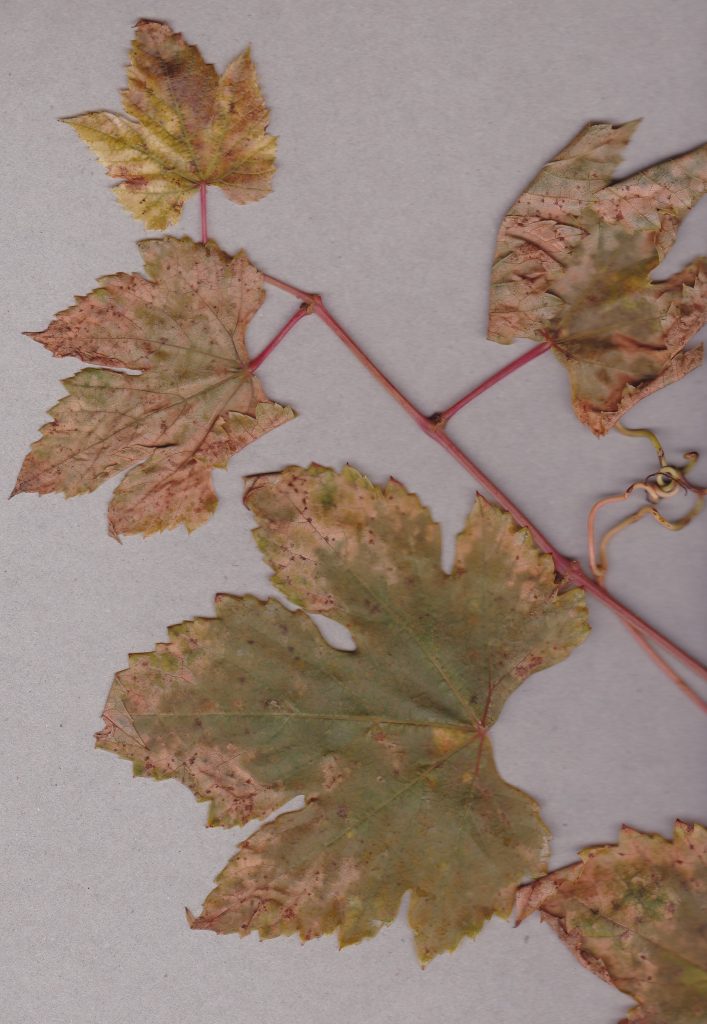
They also have a grapevine that is not trellised and grows in all directions
– several times a year I have to trim the branches that encroach into our yard
• I cut the small branch pictured above from our neighbor’s vine
• in cutting the branch from the vine, I killed it
– it still has some life in it, but that won’t last long,
• because there is no new life is flowing into it to nourish it
• cut off from the vine it can’t survive and will never produce grapes
Jesus said:

I am the true vine, and my Father is the vinedresser. Every branch in me that does not bear fruit he takes away, and every branch that does bear fruit he prunes, that it may bear more fruit. Already you are clean because of the word that I have spoken to you. Abide in me, and I in you. As the branch cannot bear fruit by itself, unless it abides in the vine, neither can you, unless you abide in me.
I am the vine; you are the branches. Whoever abides in me and I in him, he it is that bears much fruit, for apart from me you can do nothing. If anyone does not abide in me he is thrown away like a branch and withers; and the branches are gathered, thrown into the fire and burned. If you abide in me, and my words abide in you, ask whatever you wish, and it will be done for you. By this my Father is glorified, that you bear much fruit and so prove to be my disciples. As the Father has loved me, so have I loved you. Abide in my love. If you keep my commandments, you will abide in my love, just as I have kept my Father’s commandments and abide in his love. These things I have spoken to you, that my joy may be in you, and that your joy may be full.
You did not choose me, but I chose you and appointed you that you should go and bear fruit and that your fruit should abide, so that whatever you ask the Father in my name, he may give it to you.
John 15:1-12, 16

This passage seemed fitting at this time
– there are only a couple of days left in this year, and then, 2020
• no one can say what will happen in the next twelve months,
• but we can be sure it will not be boring
– we spent the past four weeks of Advent preparing for Jesus
• now that Christmas has come, and Jesus is here,
◦ let’s use this year to deepen our relationship with him
◦ to love him more, trust him more, and render better service to him and others

I have heard all kinds of stories of how people came to faith in Jesus

No two stories are the same
– you could not build an evangelism strategy that fits the stories
• God has led us each by our own winding road to Jesus
◦ he has given us life – a specific kind of life
◦ that life is constantly flowing into us
And this is the testimony, that God gave us eternal life, and this life is in his Son. Whoever has the Son has life; whoever does not have the Son of God does not have life (1 Jn. 5:11-12)
– if I were to cut myself off from Jesus,
• that life would no longer be flowing into me
◦ that part of me would wither and eventually die
• would I know that it had died?
◦ our would I be religious enough to think to think I was still alive?

Therefore we must pay much closer attention to what we have heard, lest we drift away from it (Heb. 2:1)

This is the most common way that people disconnect
– it’s a gradual process that goes undetected at first
• we don’t notice the distance slowly growing between us and the Lord
• busyness gets in the way and we get caught up in other things
– the gradual drift works the way Jesus described a seed planted among thorns
They are those who hear the word, but the cares of the world and the deceitfulness of riches and the desires for other things enter in and choke the word, and it proves unfruitful (Mk. 4:18-19)
• so, like the branch cut from the vine, that life is choked out of us
• we either abide in him or live apart from him
◦ and apart from him, we can do nothing

On occasion, Jesus said things that were mean to wake people up

For example:
The hour is coming, and is now here, when the true worshipers will worship the Father in spirit and in truth, for the Father is seeking such people to worship him (Jn. 4:23)
– “here” can be a location in time and in geographical space
• now/here — time/space — this moment/this place
◦ these words locate his presence with us in this moment
• when we sleep, we are not conscious of time
Anthony de Mellow said, “Spirituality means waking up. Most people, even though they don’t know it, are asleep. They’re born asleep, they live asleep, they marry in their sleep, they breed children in their sleep, they die in their sleep without ever waking up. They never understand the loveliness and the beauty of this thing that we call human existence. . . . most people never get to see that all is well because they are asleep.” “Waking up is unpleasant, you know. You are nice and comfortable in bed. It’s irritating to be woken up.”
– listen again to Jesus’ message to the church of Sardis,
I know your works. You have the reputation of being alive, but you are dead. Wake up, and strengthen what remains and is about to die, for I have not found your works complete in the sight of my God. Remember, then, what you received and heard. Keep it, and repent. If you will not wake up, I will come like a thief, and you will not know at what hour I will come against you (Rev. 3:2-3)
• to be not only alive, but also awake, is to be aware of this present moment
• what is this moment? What does it look like? sound like? feel like?
◦ you have to be alive and awake to know
◦ and you have to abide in Jesus to be alive

We do not want to come to the hour of our death
and only then realize that we have never lived

Death is not the destiny of Jesus’ followers

Life is our destiny
– abundant life – a fruitful life
• Jesus chose and appointed us for this kind of life
• and because this kind of life glorifies and pleases God,
◦ Jesus sponsors us
– what do you need to stay connected to Jesus this year?
• what do you need to be awake, alive and productive?
◦ if you know, ask the Father and he will supply it
◦ if you don’t know, ask the Father and he will show you

To prepare ourselves for the new year

We are going to renew our connection with Jesus – here, now
– Communion is a ritual of re-connection
• it is a worshipful moment of receiving new life
• the life that flows into us from Jesus

Conclusion: Earlier I said most common way people disconnect is gradual

But sometimes people turn and stomp away from God
– years ago I was speaking at a church in Sacramento
• I mentioned a realtor I met while living in Yuba City
◦ he had a grown son who loved God and was in Christian service
• his son was diagnosed with cancer, and many people were praying for his healing
◦ but after several hard months, he lost the battle
◦ the father, angry at God turned his back on religion
he rejected church, prayer, the Bible–anything to do with God
– he lived with this resentment for years
• but one day he bumped into a preacher to whom he told his story
◦ the preacher said,
“You know, God lost a son too. His was also a painful death. And for what? For people like you and me”
• the realtor told me, it was like he woke up in that moment
◦ he let go of his anger and allowed God to share his grief
◦ by the time I met him, he was a devoted man of God

Like I said, I told his story in Sacramento
– afterward a few people wanted to talk with me
• one old man approached me and with a firm grip took my hand
• and for awhile looked down and did not speak
◦ tears puddled in his eyes
◦ then he said,
“I lost my son. He was the Campus Crusade director for this district. Hundreds of people loved him and prayed for him, but he died. Since then, I have hated God–until today.”

It is time for us to come home
from darkness to light
from death to life
It is time to wake up and be here — now
Where Jesus again and again
pours himself into us

December 22, 2019

Podcast

In the sixth month the angel Gabriel was sent from God to a city of Galilee named Nazareth, to a virgin betrothed to a man whose name was Joseph, of the house of David. And the virgin’s name was Mary. And he came to her and said, “Greetings, O favored one, the Lord is with you!” But she was greatly troubled at the saying, and tried to discern what sort of greeting this might be. And the angel said to her, “Do not be afraid, Mary, for you have found favor with God. And behold, you will conceive in your womb and bear a son, and you shall call his name Jesus. He will be great and will be called the Son of the Most High. And the Lord God will give to him the throne of his father David, and he will reign over the house of Jacob forever, and of his kingdom there will be no end.” Luke 1:26-33

Intro: It seems to me that the traditional Advent themes are jumbled

The first Sunday is hope, then the second, third, and fourth are faith, joy and peace
– if I had lived in the 4th century–and anyone had asked me
• I would have suggested that we put faith first
◦ faith is what enables us to hope
◦ so hope would be the theme of the second Sunday
• then, feeling secure about the future, we would be at peace
◦ and that, I think, is when we are most likely to feel joy
– one other Advent theme that integrates and completes the others
love–and we save that for Christmas Eve
• but since we are following the ancient tradition,
◦ the arrival of Jesus into our world is God’s gift of peace

The angel, before visiting Mary, had another appointment

Zechariah was already an old priest when assigned to his service
– there were hundreds of priests – he belonged to one division
• when they drew names to see who would enter the sanctuary,
◦ Zechariah’s name was drawn
◦ this is where we meet him – lighting incense in the temple
• this was done every morning and evening
◦ incense symbolized Israel’s prayers and praise
◦ the people praying outside waited to receive his blessing
– this moment had to be meaningful–Zechariah did not do this often
(this may have been the only time he had ever had this honor)
• he’s in the dark, sacred space and every object around him is holy
◦ suddenly, in his peripheral vision he glimpses someone else
◦ he turns, and standing beside the altar is the angel Gabriel
Do not be afraid, Zechariah, for your prayer has been heard
• I won’t go through the rest of story, except this:
• coming out of the holy place, Zechariah could not speak,
◦ he was unable to pronounce God’s blessing on the worshipers
The LORD bless you and keep you;
the LORD make his face to shine upon you and be gracious to you;
the LORD lift up his countenance upon you and give you peace
(Num. 6:24)

Sometime after Mary’s angelic encounter, Joseph got the news

I imagine him coming to his parents’ home after a long day
– he’s surprised to see his mother at the gate
• she takes him by the arm and leads him to side of house
◦ “Mother what is it?” “Mary,” she answers
◦ she has trouble getting the words out – “She’s pregnant”
• “That’s impossible! We never even . . .”
◦ “I know, I know, but it’s true”
– Joseph did not immediately assume, “Well, it must be a miracle”
• he was immediately contemplating divorce
◦ they were not merely “engaged,” but “betrothed”
◦ the first stage of an arranged marriage — legal and binding
• because Joseph is a good man, he wants to do the right thing
◦ the divorce will be private for her sake and for both families
◦ but the angel of the Lord appeared to him – in a dream
Joseph, son of David, do not fear to take Mary as your wife

The angel had one more Christmas errand

This visit came after the birth of Jesus
– last week we read the story of the shepherds
• the angel of the Lord appeared to them also
◦ his first words were,
Fear not, for behold, I bring you good news of great joy

So here we have four stories and one message
Do not be afraid
• for Zechariah and the shepherds,
◦ the fear was triggered by presence of other-worldly beings
• but it was different for Mary and Joseph
◦ Mary was “greatly troubled” by the angel’s greeting
◦ Joseph’s fear was the prospect of going forward with marriage
taking on the responsibility of the whole mess
– the idea I’m chasing, is that in each instance,
• fear was triggered, then addressed, and then calmed

In calming the fear, the theme of peace is implied

One of the statements made to Mary was a partial quote (v. 33)
– we read the full quote the first Sunday of Advent
. . . and his name shall be called
Wonderful Counselor, Mighty God,
Everlasting Father, Prince of Peace.
Of the increase of his government and of peace
there will be no end
(Isa. 9:6-7)
• worshipers at the temple would have received a blessing of peace,
• if Zechariah had been able to speak
– in the announcement to the shepherds, the promise is explicit
Glory to God in the highest,
and on earth peace among those with whom he is pleased
(Lk. 2:14)
• this wasn’t a promise of universal peace
• it was a promise to everyone who received heaven’s gift

Stephen Porges, a professor of psychiatry and research scientist
– he has focused his research on the vagus nerve
• it plays a vital role in preparing the body for action or rest
◦ it also functions in personal relationships and social interaction
• he says the human body and brain function best when we feel safe
Porges, “If our nervous system detects safety, then it’s no longer defensive. When it’s no longer defensive, then the [functions of] the nervous system support health, growth, and restoration.”
◦ socially we’re better adjusted
◦ we are more present, creative, and positive
– he says, safety is not defined by the absence of threat or risk
• but by the feeling of being safe
◦ in other words, my situation may not be safe,
◦ but we can still think and respond well if we feel safe
(for example, a car’s safety features allow us to feel safe while driving)

Perhaps the best way to understand promise of peace is Shalom

This Hebrew word signifies a state of complete well-being
– a quiet, secure and productive life,
• with good physical health and close relationships
– last week, when joy was our subject, I quoted Jesus,
These things I have spoken to you, that my joy may be in your, and that your joy may be full (Jn. 15:11)
• he made a similar statement regarding peace
I have said these things to you, that in me you may have peace. In the world you will have tribulation. But take heart; I have overcome the world (Jn. 16:33)
• he also said,
Peace I leave with you; my peace I give to you. Not as the world gives do I give to you. Let not your hearts be troubled, neither let them be afraid (Jn. 14:27)

Here’s what I believe we need to understand

The Christmas promise is that we will find peace in Jesus
– this is not easy for us
• our minds are materialistically conditioned
◦ how can Jesus become real enough to us, to rest in him?
• by getting to know him in scripture,
◦ then by practicing spending time with him in silent prayer
– in the New Testament, we hear Paul say repeatedly that we are
IN CHRIST
• with relaxed, deep breaths we can learn what that feels like
◦ quiet our souls in him – to trust – and to rest
• no matter what our circumstances throw at us,
◦ if we can find our way back to Jesus, we can return to peace
◦ he is always a safe, loving, calming presence

Conclusion: One last thought about the angel and his messages

Each time he appeared to a person, he spoke to them by name
Do not be afraid, Zechariah
Do not be afraid, Mary
Joseph, son of David, do not fear
– as soon as the angel spoke, they discovered they were known
• they were not anonymous digits, lost in the mass of humanity
– God knew them by name – and he had a message for them
• as he knows each of us by name, and has a message for us
• are we listening?

Let me hear what God the LORD will speak,
for he will speak peace to his people, his saints
(Ps. 85:8)

December 15, 2019

Podcast

And in the same region there were shepherds out in the field, keeping watch over their flocks by night And an angel of the Lord appeared to them, and the glory of the Lord shone around them, and they were filled with great fear. And the angel said to them, “Fear not, for behold, I bring you good news of great joy that will be for all the people. For unto you is born this day in the city of David a Savior, who is Christ the Lord. And this will be a sign for you: you will find a baby wrapped in swaddling cloths and lying in a manger.” And suddenly there was with the angel a multitude of the heavenly host praising God and saying,
“Glory to God in the highest
and on earth peace among those with whom he is pleased.”
When the angels went away from them into heaven, the shepherds said to one another, “Let us go over to Bethlehem and see this thing that has happened, which the Lord has made known to us.” And they went with haste and found Mary and Joseph, and the baby lying in a manger. And when they saw it, they made known the saying that had been told them concerning this child. And all who heard it wondered at what the shepherds told them. But Mary treasured up all these things, pondering them in her heart. And the shepherds returned, glorifying and praising God for all they had heard and seen, as it had been told them.
Luke 2:8-20

Intro: I’m going to begin by asking you two questions

First, What makes you feel happy?
– take a moment and give this some thought

Second, What makes you feel joy?
– again, take a moment with this question

I don’t think it’s possible to separate joy from happiness
– but I do believe it’s helpful to make the distinction
• we could spend a lifetime in the pursuit of happiness,
◦ pile up a lot of good times,
◦ but never experience joy
– so, how do they differ?
happiness depends on external factors–what “happens”
joy depends on internal processes–response and reflection
happiness is temporary
joy has a long shelf-life
happiness fluctuates
joy is stable
happiness is loud
joy is quiet
happiness feels good
joy feels content and grateful
happiness expresses itself with enthusiasm
joy expresses itself with a smile, a hug
happiness is at home with entertainment
joy is at home with deep thought

This third Sunday of Advent we celebrate joy

The angel’s presence evoked great fear; their message was of great joy

In first century Israel, a shepherd’s life was not enviable
Bruce Malina provides some cultural background to the story:
“Although shepherds could be romanticized (as was king David [sic]), they were usually ranked with . . . tanners, sailors, butchers, camel drivers, and other despised occupations. Being away from home at night they were unable to protect their women and therefore were considered dishonorable. In addition, they often were considered thieves because they grazed their flocks on other people’s property.”
– shepherding was a bottom-rung occupation
• some jobs today are treated with a noticeable lack of respect
◦ we don’t even mention them by name, but activity
◦ “flipping burgers,” “scrubbing toilets,” “washing dishes”
“bagging groceries,” and so on
• in Luke’s gospel, Jesus gravitated towards these people
◦ more than once, he is criticized for socializing with them
– the world of these shepherds was hard and unpleasant
• authoritarian governments create a culture of oppression
◦ that is, people who are oppressed by “higher-ups”
◦ typically oppress others who are “lower-downs”
• shepherds were fair game for everyone’s contempt

WARNING: This will be a brief tangent. To me, a sad example of ugly religion is when people who claim to be Christians treat with contempt or condescension waiters in restaurants, clerks in stores, fast-food servers, gardeners, janitors, and people other similar professions. And some ugly religion people do this just because they can. In the reconstructed world of Jesus, no person is above or below anyone else.
But whoever would be great among you must be your servant, and whoever would be first among you must be slave of all (Mk. 10:43-44)

The angel promised a joy that will be for all the people
– as if giving proof this was true, the announcement came to shepherds
• those dirty outcasts became the first messengers of the good news

In scripture, God is the source of all human joys

Israel celebrated annual feasts in which they worshiped with rejoicing
(see Deut. 16:11, 14, 15; 26:11; 27:11)
– they rejoiced at harvest time, sheep-shearing, weddings, etc.
• in all joyful occasions, they lifted their eyes to heaven
◦ every good thing that comes from the natural world is God’s gift
◦ and every gift is cause for joy and rejoicing with thanksgiving
There are many who say, “Who will show us some good?
Lift up the light of your face upon us, O LORD!”
You have put more joy in my heart
than they have when their grain and wind abound
(Ps. 4:6-7)
• in that same psalm, the poet celebrates other gifts of God
◦ relief from distress – peace, and safety
– after returning from exile, Israel renewed their covenant with God
• when they gathered to hear the reading from the Scriptures,
◦ the people wept over their past sins and what that cost them
• but Nehemiah and the Levites told them not to grieve
Go your way. Eat the fat and drink sweet wine and send portions to anyone who has nothing ready, for this day is holy to our Lord. And do not be grieved, for the joy of the LORD is your strength (Neh. 8:10)

Israel also rejoiced in God for their liberation from slavery and exile
– after fleeing Egypt and crossing the Red Sea,
Then Moses and the people of Israel sang this song to the LORD, saying,
I will sing to the LORD, for he has triumphed gloriously;
the horse and his rider he has thrown into the sea.
The LORD is my strength and my song,
and he has become my salvation
this is my God, and I will praise him,
my father’s God, and I will exalt him
(Ex. 15:1-21)
• looking forward to the time they would return from captivity,
◦ Isaiah sang,
And the ransomed of the LORD shall return
and come to Zion with singing;
everlasting joy shall be upon their heads;
they shall obtain gladness and joy,
and sorrow and sighing will flee away
(Isa. 51:11)
– but most frequently in scripture, especially in the New Testament,
• joy comes from relationships with other people
◦ so Paul could say to the believers in Thessalonica,
For what is our hope or joy or crown of boasting before our Lord Jesus at his coming? Is it not you? For you are our glory and joy (1 Thes. 1:19)

The Book of Joy was one of my favorite reads in the past two years

In it, Douglas Abrams reports a week-long conversation between the Dalai Lama and Desmond Tutu
– both men have suffered extreme hardships
• yet both men are fountains of joy
– through their conversation they discerned eight pillars of joy:
Perspective – “There are many different angles”
Abrams, “A healthy perspective really is the foundation of joy and happiness, because the way we see the world is the way we experience the world. Changing the way we see the world in turn changes the way we feel and the way we act, which changes the world itself.”
Humility
– we are not as big as we think
• and, we are not as small as we think
Desmond Tutu, “God uses each of us in our own way, and even if you are not the best one, you may be the one who is needed or the one who is there.”
Humor – “Laughter, joking is much better”
Abrams, “Humor is one of the best ways to end conflict, especially when you are able to make fun of yourself or admit that you are overreacting or being silly.”
Acceptance – “The only place where change can begin”
Forgiveness
Tutu, “Forgiveness is the only way to heal ourselves and to be free from the past.” “Without forgiveness, we remain tethered to the person who harmed us.”
Gratitude
Compassion
Generosity
– in his instructions to the leaders of the church of Ephesus, Paul said,
In all things I have shown you that by working hard in this way we must help the weak and remember the words of the Lord Jesus, how he himself said, “It is more blessed to give than to receive” (Acts 20:35)

Conclusion: And that brings us back to where we began

The good news of great joy had to do specifically with Jesus
– Peter said that in him we rejoice with joy that is inexpressible and filled with glory (1 Pet. 1:8)
• something Jesus said to his disciples their last night has stuck with me
These things I have spoken to you, that my joy may be in your, and that your joy may be full (Jn. 15:11)

When the shepherds got over their fear,
– and their rational minds kicked in,
• they decided, “If this is true, we better go check it out”

This is all I really have to say today
– we can find our way to Jesus if we sincerely want to
• we can open our hearts fully to him
• allow him to pour his joy into us – and then begin to live it

What I know for sure,
is that there is more in Jesus to lift us up
than there is in this world to bring us down

December 8, 2019

Podcast

Now after Jesus was born in Bethlehem of Judea in the days of Herod the king, behold, wise men from the east came to Jerusalem, saying, “Where is he who has been born king of the Jews? For we saw his star when it rose and have come to worship him.” When Herod the king heard this, he was troubled, and all Jerusalem with him; and assembling all the chief priests and scribes of the people, he inquired of them where the Christ was to be born. They told him, “In Bethlehem of Judea, for so it is written by the prophets:
‘And you, O Bethlehem, in the land of Judah,
are by no means least among the rulers of Judah;
for from you shall come a ruler
who will shepherd my people Israel.'”
Then Herod summoned the wise men secretly and ascertained from them what time the star had appeared. And he sent them to Bethlehem, saying, “Go and search diligently for the child, and when you have found him, bring me word, that I too may come and worship him.” After listening to the king, they went on their way. And behold, the star that they had seen when it rose went before them until it came to rest over the place where the child was. When they saw the star, they rejoiced exceedingly with great joy. And going into the house, they saw the child with Mary his mother, and they fell down and worshiped him. Then, opening their treasures, they offered him gifts, gold and frankincense and myrrh.
Matthew 2:1-11

Intro: I was young and foolish the first time I visited Bethlehem

I was not prepared for the Church of the Nativity
– an ancient cathedral built over a cave
• the guide told us this was the shelter where Jesus was born
– a large icon screen stood behind the altar reaching almost to the top of the vaulted ceiling
• brass candle-holders and incense censers hung between the pillars
• an assortment of meaningful symbols dangled from the ceiling,
◦ including bulbs that looked like gigantic Christmas tree ornaments
– you see, this is what we do
• we decorate Christmas with symbols that are meaningful to us
• for instance, we have painted the magi into a warm and cozy scene
◦ in reality, the mood Matthew describes was tense and dangerous
◦ and in spite of the danger, the magi found Jesus and worshiped him

This is the second Sunday of Advent
– and this morning we light the “Bethlehem candle”
• different meanings have been attached to it
• you and I might as well attach our own meanings
– for me, this year, the candle represents the light that led the magi to Jesus,
• and the faith that enabled them to persevere until they found him

In the movie, “Jesus of Nazareth,” Peter Ustinov played Herod the Great

He was an excellent choice! I remember him fuming,
“King of the Jews? King of the Jews? I am the king of the Jews!”
– we know from history that “When Herod ain’t happy, ain’t nobody happy”
• Matthew handles this rather delicately,
When Herod the king heard this, he was troubled and all Jerusalem with him
• Herod consulted the biblical experts
◦ where did the prophets say the Messiah was to be born?
◦ they answered, “Bethlehem,” and supplied a quote from Micah
– so at this point in the story, who all knows where to look for Messiah?
• the chief priests and scribes, King Herod, and now the magi
◦ but of the three, only the magi go off to find him
• this is the first lesson I learn about the faith of the magi:

It belongs not to the person who knows,
but to the person that goes

Many books have been written on what Christians believe
– and arguments over our beliefs have raged for 2,000 years
• but beliefs do not necessarily bring us to faith
– beliefs are static–that is, they do not live, change, or evolve
• we can pick up new beliefs or throw out old beliefs, but they stay the same
◦ they can be discussed, analyzed, defined, and repeated
◦ they can branch out, but they don’t reproduce
• James points out the limits of belief with a measure of sarcasm,
You believe that God is one; you do well. Even the demons believe–and shudder! (Jas. 2:19)

Faith, on the other hand, is dynamic – it moves, grows, and changes
Helmut Thielicke, “. . . faith does not consist in ‘believing something is true’ . . . . It consists in a struggle, a conversation with God.”
– I am convinced that you have to struggle with faith to make it your own
• beliefs that have been handed down to us belonged to someone else
• faith, however, can only belong to us

Faith is a journey or quest – like that of the magi

Faith moves toward what it believes
– and once faith begins to move, it sets other things in motion
• faith makes other things happen
• the magi’s journey of faith was not an easy one
T. S. Eliot imagined their journey in poetry
One of the magi narrates:

‘A cold coming we had of it,
Just the worst time of the year
For a journey, and such a long journey:
The ways deep and the weather sharp,
The very dead of winter.’
And the camels galled, sore-footed, refractory,
Lying down in the melting snow.
There were times we regretted
The summer palaces on slopes, the terraces,
And the silken girls bringing sherbet.
Then the camel men cursing and grumbling
And running away, and wanting their liquor and women,
And the night-fires going out, and the lack of shelter,
And the cities hostile and the towns unfriendly
And the villages dirty and charging high prices:
A hard time we had of it.
At the end we preferred to travel all night,
Sleeping in snatches,
With voices singing in our ears, saying
That this was all folly.
(T. S. Eliot, “Journey of the Magi” — first stanza)

– but I do not believe our journey is much easier
• for them, Bethlehem was hundreds of miles
◦ for us it is thousands of miles
◦ and even more, it’s thousands of years away
• we have to travel the distance of credibility
Helmut Thielicke, “Are we to entrust ourselves and our questions about life to a man who road a donkey in a legendary far-off time in a [distant] corner of the world?”
◦ of course, the answer is yes
◦ only Jesus did much more than just ride a donkey

On Wednesday night, our Lexio Divina meditation was John the Baptist’s question to Jesus, Are you the one who is to come, or shall we look for another? John had struggles of his own when it came to placing his faith in Jesus. Perhaps he expected a Messiah who would drive Rome out of Israel, restore the ancient dynasty of David, and establish Jerusalem as the super power and political center of the world, bringing peace to God’s people and all the nations.
Jesus’ answer to John’s disciples was, “Just go back and tell him what you’ve seen”
– then he added a caption to the picture they would paint for John
And blessed is the one who is not offended by me (Lk. 7:23)
• to be offended is to be “stumbled,” “put off,” or “disappointed”
– Jesus was saying,
“This is who I am. These are the things I do. The blessing I bring is for the one who will accept me without disappoint me, but take me for who I am”
– this is the struggle of faith — we are at times struggling with Jesus

Faith is what links us to God

There is a verse of Hebrew Scripture at heart of Paul’s theology
– it is a statement about Abraham
And he believed the LORD, and he counted it to him as righteousness (Gen. 15:6)
• again, righteousness means right-in-relation to the other person
• faith in God is what makes a person right with God
◦ all through the Scriptures, God is saying, “Trust Me”
– some students are good at taking tests
• but there’s one test no one enjoys taking
◦ it’s what James called the testing of your faith (Ugh!)
. . . for you know that the testing of you faith produces steadfastness (Jas. 1:3)
◦ Peter says the genuineness of our faith is tested because it’s
more precious than gold that perishes though it is tested by fire (1 Pe. 1:7)

Jesus tested the faith of his disciples more than once
– and when it broke down, he called them on it
• when he calmed a storm at sea,
Why are you so afraid? Have you still no faith? (Mk. 4:40)
• when they asked why there were unable to cast out a demon
Because of your little faith (Mt. 17:20)
– God doesn’t test our faith in order to break us
• to show us that we’re hypocrites, that we didn’t make the cut
• if school tests merely reveal what students don’t know,
◦ they’re worthless
◦ if they’re tools to help us learn, they’re invaluable
God’s purpose is to deepen, strengthen, and increase our faith

Conclusion: In our list of Christmas preparations,

Do we need to include a trip to Bethlehem?
– Can’t we just say,
“I have all these other things to get done.
And I still have presents to buy,
cards to address, dinners to attend.
And I know all that stuff about Bethlehem already.
Is it all that important that I think about it–again? ”
– Yes, it is, because there is where our faith was born

Faith can come to people in different ways
– sometimes it comes spontaneously, as in crisis when people cry out for God
• or it comes naturally, in times of desperation
◦ as when parents will try anything to save the life of their child
– sometimes it comes as the last or only solution to a problem
• many people have to be talked into surgery
◦ or driven to it by pain
◦ “I don’t trust doctors” or “I don’t trust hospitals”
• but one day they have to go, because there is no other hope

Our day to day faith in Jesus, the faith we live by, Paul says
comes from hearing and hearing through the word of Christ (Ro. 10:17)
• hearing again, we create a path for faith in our brains
Andrew Newberg and Mark Walden, in How God Changes Your Brain, tell us, “When you intensely meditate on a specific goal over an extended period of time, your brain begins to relate to your idea as if it were an actual object in the world by increasing activity in the thalamus, part of the reality-making process of the brain. The concept begins to feel more obtainable and real.”
• what is the goal we’re stretching for here?
◦ to build ourselves up in our faith
But you, beloved, building yourselves up in your most holy faith and praying in the Holy Spirit, keep yourselves in the love of God (Jude 20)

This week there will be plenty of reminders of Jesus’ birth
– slow down, press the pause button on your day, and think
• not your typical busy brain thoughts
• but quiet reflective thoughts

The sort of thought that is rooted in awareness
and gives you new eyes to see,
and opens you up to the touch of Jesus
Be with Jesus in that present moment
in such a way that you allow yourself to be changed

December 1, 2019

Podcast

But there will be no gloom for her who was in anguish. In the former time he brought into contempt the land of Zebulun and the land of Naphatali, but in the latter time he has made glorious the way of the sea, the land beyond the Jordan, Galilee of the nations.”
The people who walked in darkness
have seen a great light;
those who dwelt in a land of deep darkness,
on them the light has shown.
You have multiplied the nation;
you have increased its joy;
they rejoice before you
as with joy at the harvest,
as they are glad when they divide the spoil.
For the yoke of his burden,
and the staff for his shoulder,
the rod of his oppressor,
you have broken as on the day of Midian.
For every boot of the tramping warrior in battle tumult
and every garment rolled in blood
will be burned as fuel for the fire.
For to us a child is born,
to us a son is given;
and the government shall be upon his shoulder,
and his name shall be called
Wonderful Counselor, Mighty God,
Everlasting Father, Prince of Peace.
Of the increase of his government and of peace
there will be no end,
on the throne of David and over his kingdom,
to establish it and to uphold it
with justice and with righteousness
from this time forth and forever more.
The zeal of the LORD of hosts will do this
Isaiah 9:1-7

Intro: Should we celebrate Christmas?
– irritable Christians who write blogs or post on social media,
• remind us that it’s not likely Jesus was born in December
◦ that the “church” took over a pagan holiday,
◦ and to this day much of the Christmas celebration is still pagan (1)
• if that’s so, should we not celebrate the birth of Jesus?
◦ not return to the old, old narrative of announcements, angels, stable, shepherds, star and magi?
◦ should we, like the Gospels of Mark and John skip over all that?
– God entered our world – that is an event worth celebrating
• we don’t want to forget what our lives were like without him
◦ or that Israel spent long years waiting, looking, hoping
• and what better time to celebrate his first coming
◦ than in the cold, dark days of winter?
◦ at Christmas we reconnect with a sacred moment in time

Advent season is four weeks of preparation
– our attention is focused on the first and second coming of Jesus
• but it’s more than remembering he came once and will come again
• we prepare ourselves for Jesus,
◦ as if he were to return at any time – next week. tomorrow, tonight
◦ or in this present moment

Isaiah 9 is one of the standard texts for first Sunday of Advent

The first word in chapter 9 is a conjunction, “but”
– it joins two ideas, but indicates a difference – a turn
• so what came before this turn?
– at that time, Ahaz was the king of Judah–he was not a good man
• two other nations had allied themselves to invade Judah
• everything Ahaz did to prepare for the invasion was wrong
◦ instead of turning to Israel’s God,
◦ he turned to another nation and its gods
In the time of his distress he became yet more faithless to the LORD—this same King Ahaz. For he sacrificed to the gods of Damascus that had defeated him and said, “Because the gods of the kings of Syria helped them, I will sacrifice to them that they may help me.” But they were the ruin of him and of all Israel (2 Chr. 28:22-23)

God sent Isaiah to the people of Judah with a message of doom
And they will look to the earth, but behold, distress and darkness, the gloom of anguish. And they will be thrust into thick darkness (Isa. 8:23)
– hearing this, Isaiah’s audience would feel,
• the utter hopelessness of their situation
– this is the point where Isaiah’s message turns
• the gloom does not spread everywhere
◦ and it’s not for all time
But there will be no gloom for her who was in anguish

Are you familiar with the lands named, Zebulun and Naphtali?

It’s okay if you aren’t–in fact, this is the only place in Isaiah where they are mentioned
– they were two of Israel’s tribes who settled on the northeast border
• we are more familiar with “the Jordan” and “Galilee”
◦ here, Galilee is associated with “the nations”–i.e., Gentiles
• the point is, this region was considered compromised
– these territories were far from the capital city of Samaria
• they were the least likely places to find God at work
• so it is shocking that Isaiah would point to them and say,
◦ “This is where God’s salvation will be revealed first”

If we jump to the New Testament, Zechariah, father of John the Baptist,
– prophesied that John’s mission would be to
go before the Lord to prepare his ways and
to give light to those who sit in darkness and in the shadow of death (Lk 1:76-79)
• and in Matthew, when Jesus began his ministry, he began in Galilee

And leaving Nazareth he went and lived in Capernaum by the sea, in the territory of Zebulun and Naphtali, so that what was spoke by the prophet Isaiah might be fulfilled:
The land of Zebulun and the land of Naphtali,
the way of the sea, beyond the Jordan, Galilee of the Gentiles—
the people dwelling in darkness
have seen a great light,
and for those dwelling in the region and shadow of death,
on them a light has dawned
(Mt. 4:12-16)

◦ Jesus began his ministry in these most unlikeliest of places
– Isaiah said God was going to turn the fate of his people around
• and he was going to do in their darkest moment and darkest places
The people who walked in darkness
have seen a great light

In the Hebrew Scriptures, light is associated with glory

A brilliant radiance appeared on Mt. Sinai, over the sacred tent and in the temple
– if you want a visual image, think back to a brilliant sunrise
• this light was how God revealed his immediate presence to them
As soon as Aaron spoke to the whole congregation of the people of Israel, they looked toward the wilderness, and behold, the glory of the LORD appeared in the cloud (Ex. 16:10)
• this is what Isaiah announced was on its way,
◦ the glory of God’s presence
– it is as if Isaiah could see it happening already
• already he could feel the joy of it – hear the rejoicing (v. 3)
• to be set free is a wonderful feeling
◦ whether we’re liberated from an oppressive situation or from our own small selves — our bad habits and addictions
◦ the joy of salvation is the kind of joy that celebrates

The heart of this hope is verse 6 (we’ll come back to it)

There is a key statement at the end of verse 7
The zeal of the LORD of hosts will do this
– Israel’s salvation would not result from human ambition or be a human achievement
• God is not neutral when it comes to his people
◦ to talk about his zeal or his jealousy, is to say that he is passionate
• of course, in a unique way, because he is God
◦ but, still, we can understand – he cares – and deeply
◦ and God’s passion is a powerful force
– God makes things happen – the things he wants to happen

Now verse 6, and I want to read this with Jesus in mind

For to us a child is born,
to us a son is given
– my dad liked to stress that a child was born, but the Son was given
• the Son, who had been with the Father from eternity, was given to us
For God so loved the world, that he gave his only Son, that whoever believes in him should not perish but have eternal life (Jn. 3:16)
in the previous chapter, a name was given to the child
• in a previous chapter, a name was give to the child born of a virgin
Immanuel (Isa. 7:14), which Matthew translates for us, “God with us” (Mt. 1:22-23)
and the government will rest on his shoulders
• this was Isaiah’s vision and Israel’s hope
• a new government in which God’s will would be done on earth as in heaven

And then, that blessed list of titles:
Wonderful Counselor – no more wrong turns for the nation
– no more guessing, no more mistakes, or foolish decisions

Mighty God – the power Israel’s Savior wields is unlimited
– this is the might that liberated Israel from Egypt

Everlasting Father – before King Ahaz, Israel had a good king
– Ahaz was not good, but after him King Hezekiah was good
• but after Hezekiah, his son, Manasseh was Judah’s worst king ever
• there was no consistency in the succession of kings from one generation to the next
◦ but with God’s Savior, there would no longer be a a succession of unreliable rulers
And to him was given dominion
and glory and a kingdom,
that all peoples, nations, and languages
should serve him;
his dominion is an everlasting dominion,
which shall not pass away,
and his kingdom one
that shall not be destroyed (Dan. 7:14)
– when we are given the Son, we have the Father also
Jesus said, Whoever has seen me has seen the Father (Jn. 14:9)

Prince of peace – history tells the story of this war-torn planet
– political candidates can promise peace and try to pursue peace,
• but none of them can deliver peace
– Jesus is the “prince” of peace
• he makes the promise and he delivers

Verse 7 combines the last two themes, “everlasting” and “peace”
– his government of peace will continue to spread, expand, and never end
• again, this is something God is passionate about
• his zeal will make it happen
– do not forget, God begins his work in the unlikeliest of places

When Jesus’ ministry got underway, one of his first followers ran to tell his friend Nathanael that he had found the One, whom Moses and the prophets had written about, Jesus of Nazareth. Nathanael answered, “Can anything good come out of Nazareth?” (Jn. 1:46). He was expressing the common opinion that northern Israel was less devout and further from the spiritual heart of the nation.
When the Pharisees first tried to arrest Jesus, Nicodemus spoke up in his defense, that they should not condemn him without a fair trial. Their response was, “Are you from Galilee too? Search and see that no prophet arises from Galilee” (Jn. 7:52).
God is pleased to shine his light into these dark corners. God’s work begins where his light is most needed and can do the most good–places like my own dark heart.

Conclusion: What is it that shines in the darkness?

In a word: Hope – even a wire-thin ray of hope can keep a life going
– in recent years a lot of people have written books and essays on hope
• most of it is common-sense wisdom
◦ they offer a number of things we can do to ignite hope and keep it alive
◦ they all say the same thing: hope is something we have to crank out for ourselves
• but Christmas is about gift — we are given a hope
◦ or better, we are given a hope
◦ it’s like a life preserver that has been tossed to us
– we do not create hope for ourselves
• what we do is hold on to the hope that is given to us (Heb. 3:6)

The Christmas promise is as lovely and life-changing as ever
But it won’t do us any good unless we personalize it
It is a matter of getting beyond our thoughts,
whether intensely rational or devotional,
and going down deeper than our emotions
It is about being there
in that dark place where the baby is born,
and the strangers adore,
and the light now shines.
For Jesus has shown us a Father who cares
and who has dropped us a ray of hope,
hope that is ours,
hope that can anchor itself in God,
a hope that holds onto us and will never pass away

__________________
(1) Frequently, the Roman Catholic Church is blamed for setting the date for the annual celebration of Christmas. However, in the fourth century, there was no distinction between Roman Catholic, Eastern Orthodox, or Protestant church (the later two did not yet exist)–there was only one Church and all Christians belonged to it.