Meditations In Mark – chapter 11 05/28/2023

Podcast

Facebook

Welcome and Prayer: Nancy Lopez

Welcome to our RefleXion Community.  May the Spirit of the Lord be with you!

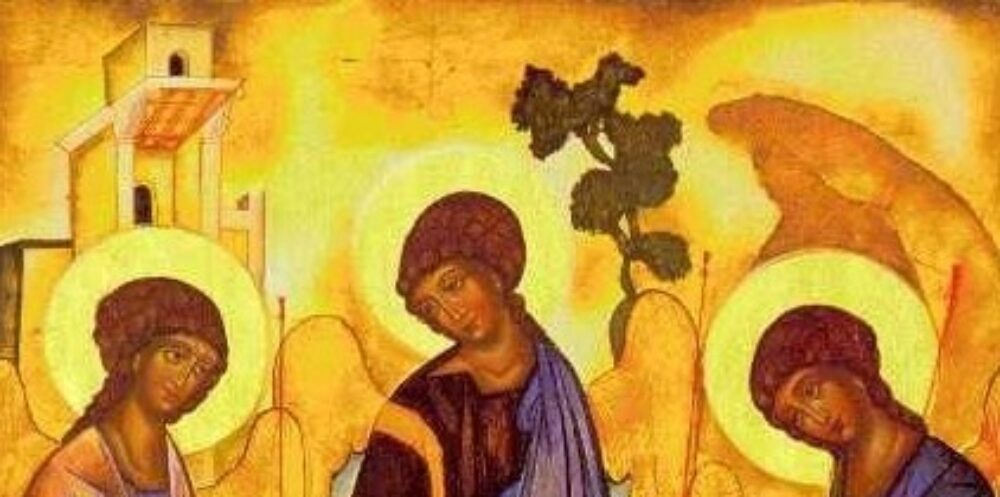
Thank you, Jim, for the beautiful and important message last week from the book of Micah.  I’m sharing two more verses from Micah that illustrate two kinds of power:  human and spiritual. First: “What sorrow awaits you who lie awake at night, thinking up evil plans. You rise at dawn and hurry to carry them out, simply because you have the power to do so.” And “But as for me, I am filled with power–with the Spirit of the LORD. I am filled with justice and strength.”

When Chuck is performing a wedding, he might say, “by the power vested in me…”  When you want to be able to make decisions for someone else you might get power of attorney.  There are many kinds of human power.  And then there’s dynamis power (from which we get our words dynamite and dynamic).

Today is the celebration of Pentecost, 50 days after the resurrection of Jesus. Jesus walked the earth after the grave for 40 days, and then, before He ascended to heaven (to sit at the right hand of the power of God by the way) He told the disciples to go to Jerusalem and wait for the promise of the baptism of the Holy Spirit, when they would be empowered.  They gathered, and they were baptized with this new kind of power, dynamis power.  And then they shared it with others—for the rest of their lives. 

Dynamis power as defined is active, potent, effective, and energetic.  It’s always looking for a place to display its power; it is active.  It is potent, having might and influence.  It is effective; it does what it sets out to do. It is energetic, pouring out vitality and life.  This power raised Jesus from the dead.  This power was given to the disciples at Pentecost. This power raises us from the dead.  It is given to us in the Holy Spirit.

The Holy Spirit in you and in me is powerful:  active, potent, effective, and energetic.  So, what do I need power to do?  What do you need power to do? 

Let’s pray: Father, You gave us Your Son, Jesus the Christ; and You gave us the Holy Spirit to   empower us and to unite us, to make us one with You and with each other.  May the work You have commissioned each one of us to do come to its fullness; may the dynamic power of the Spirit remain with us and empower us to live in compassion, wisdom, truth, influence—everything that You have intended for us. We make space in our hearts and in our lives for Your work.  Come Holy Spirit and fill us to overflow for the sake of the world.  Amen

Morning Talk: chuck smith, jr.
And he entered Jerusalem and went into the temple. And when he had looked around at everything as it was already late, he went out to Bethany with the twelve. On the following day, when they came from Bethany he was hungry. And seeing in the distance a fig tree in leaf, he went to se if he could find anything on it. When he came to it, he found nothing but leaves, for it was not the season for figs. And he said to it, “May no one ever eat fruit from you again.” And his disciples heard it.
. . . And he entered the temple and began to drive out those who sold and those who bought in the temple . . . . And he was teaching them saying to them, “Is it not written, ‘My house shall be called a house of prayer for all the nations’? But you have made it a den of robbers.” Mark 11:11-17 (Please read through verse 25)

Intro: The chapter begins with Jesus’ dramatic entrance into Jerusalem

But first, he gives instructions to two disciples regarding the colt he was going to ride
– imagine this: the disciples go find the colt and begin untying it,
• wouldn’t the bystanders assume they were stealing it
◦ so Jesus instructed them to say,
The Lord has need of it and will send it back here immediately
• how does that make sense?
◦ would the bystanders know the two disciples were referring to Jesus?
◦ or would they assume the disciples knew the actual owner? (the “lord” or “master” of the colt)
• is Jesus telling them how to “borrow” a colt and get away with it?
– there is another, better lesson here
• they were on a mission, and if anything went wrong,
◦ they would not have Jesus there to resolve it for them
◦ so what would they do?
• Jesus arranged it, so even though they would not have him, they would have his word
◦ and his word would guide them
◦ in a way, he’s preparing them for when he would be gone
My meditation: “God gives himself to us in his word, and his word is always with us. Hang onto it!”

Mark gave the bulk of the chapter a specific arrangement (vv. 11-25)

It moves back and forth from the temple to the fig tree, from the fig tree to the temple, etc.
– Mark creates a connection between the temple and the tree, so the one reveals something about the other
• first Jesus goes into the temple and looks around–that’s all
◦ the next morning he sees the tree and goes to it for fruit
but he found nothing but leaves — it was all show and no go
◦ like sometimes people give us nothing but talk, or nothing but cliches, or nothing but platitudes
• then Jesus did something that seems completely out of character — he cursed the fig tree
My meditation: “What Jesus says to the fig tree evokes a peculiar effect. Addressing it as ‘you’ personifies the tree, as if it understood him and was responsible for disappointing him. When I was young, I remember reading this and feeling sorry for the tree. In this scene, the fig tree is more than a tree. If, by this point in the story, we have learned anything from Mark’s gospel, we know that truth is hidden everywhere and things are not always what they seem. Will we have eyes to see what is happening here?”
◦ the disciples took note of what Jesus said to the tree
◦ that’s all I want to say about this for now

Going from the tree, Jesus entered the temple again
– only this time he makes a scene
• he had gone to the tree looking for figs
◦ then, he went into the temple looking for—what?
◦ people encountering God, perhaps, and especially in prayer
• what did he find? commerce and exploitation
◦ his quotation was suited perfectly to what was happening
My house shall be called a house of prayer for all the nations
◦ visitors from other nations had to change currency to pay the temple tax
◦ and some had to purchase offerings that were approved by the priests
– rather than a house of prayer, Jesus found a ring of thieves

Again, going from the temple Jesus and disciples came to the fig tree
– they were surprised to see it had died and withered overnight
• by associating the temple and tree, Mark has uncovered a parable
◦ the tree was destined for one thing: to produce figs
◦ temple was destined to be a house of prayer for all nations
• if a fig tree is healthy, it is going to produce figs
◦ that is its nature, that’s what it was created to do
And God said, “Let the earth sprout vegetation, plants yielding seed, and fruit trees bearing fruit in which is their seed, each according to its kind (Gen 1:11)
◦ but now we learn of a fig tree without figs and house of prayer without prayer
– when we get to chapter 13, we’ll see that a day or two later
as he came out of the temple, one of his disciples said to him, “Look, Teacher, what wonderful stones and what wonderful buildings!” And Jesus said to him, “Do you see these great buildings? There will not be left here one stone upon another that will not be thrown down (Mk. 13:1-2)
• the exterior of temple, like the fig tree, looked wonderful
◦ and like the fig tree, would suffer a similar fate
My meditation: “Mark does not waste words. He notes that the fig tree was withered ‘to its roots’ for a reason. Roots and fruits of a tree are frequent biblical allusions. The bad fruit in the temple was a problem that went to its roots.”

Jesus used the withered tree to give his disciples instructions regarding prayer

Prayer was the fruit he did not find in the temple
– I think Jesus wanted to give his disciples incentive to pray
• whenever I have read this passage, three phrases stand out
“Have faith in God”
My meditation: “I think it is a universal human trait to look for a key to unlock a door to supernatural resources. The entire industry of psychics, palm readers, fortunetellers, Shamans, and so on is built on this desire. The world wants to tap whatever power can make its dreams come true. Some Christians believe that they have found the key here in what Jesus says about prayer.
Imagine what would happen if that was what Jesus meant when he said, ‘Whatever you ask in prayer, believe that you have received it, and it will be yours.’ There would be complete chaos. On the same street one person would ask for rain and another for clear skies and another for a cool breeze and another perfect calm. Someone would ask for more daylight and another would ask for longer nights so they could get more sleep. And so on and on.
As students, Jesus’ disciples have not been quick to learn that there is a spiritual revelation within his teaching that is hidden behind his literal words. I should, at least, be cautious so that I don’t miss something bigger and more important than using prayer to get whatever I want.”

My meditation (Two hears ago): “Barb and I have been watching a TV series in which a young man is given the ability to release a blast of energy. The first time he discovered this, it happened by accident. Later, when he tried to make it happen, he couldn’t. Obviously his effort was useless. I felt that if he would relax and let the energy flow through him, it could happen again. At that moment I felt impressed that this was an important lesson.
The next morning I felt the same impression when I read Jesus’ words, “Have faith in God.” Jesus says that with faith, I can tell a mountain to jump in the ocean and it will. I’m not really interested in doing that, but what if I’m going to ask God to heal a friend who has cancer? When I pray, do I need to tense up all my muscles, tighten my jaw, concentrate until I give myself a headache? Would that help me pluck up the faith to release the power of God?
Human energy can be graced by God, but it is not grace. Grace flows. We can be channels of grace, but that is all. Grace is effortless.
Have faith in God.’ By that Jesus is telling us more than ‘believe in God.’ He tells us to trust God. If you cannot walk, is it really so difficult to let someone carry you? I need to get my mind out of God’s way. Trust does not require effort, but surrender. Let grace come, and it will. Open yourself to God, and his grace will flow.”

“Whatever you ask in prayer believe”
In 2017, I wrote a long and labored meditation on vv. 22-24
– I’ll spare you the first eight paragraphs
My meditation: “How humbling all of this is for me. But if humbling, then I suppose it is good for me; even if it doesn’t feel good. How incomplete I am—and after all this time. How fragmented and riddled with holes. I am hopeless.
[Then I imagined this conversation with Jesus]
‘Yes, so true. You’re hopeless.’
‘What, Lord? You agree with me?’
‘Yes, I do. That is why I saved you; why I watch over you; why I reveal these things to you; and why I have been patiently guiding your slow progress. In yourself, you are hopeless. But I love you and you will always find your hope in Me. Now what is it that you want?’
‘Lord, I want eyes that see, ears that hear, and a heart that does not doubt.’
‘Very well. You have asked for what you want and it’s yours. And I am yours, and you are Mine.”

“Whenever you stand praying, forgive”
My meditation: “Jesus raises the bar as high as it can go when he uses the words ‘anything’ and ‘anyone’ (‘forgive, if you have anything against anyone’) I am certain that everyone comes to an hour in their life when they cannot do this.”
[Early in 2020] “The Lord’s instruction that when we pray we must forgive is familiar. It is what he stressed when teaching the Lord’s Prayer in Matthew 6 (vv. 14-15). What is unusual here is the context. Yes, he’s saying the same thing about forgiveness, but not in the context of an everyday sort of prayer like the Our Father. Here he is teaching the disciples about moving mountains, working miracles. Even in this context, he insists that forgiveness is a necessary facet of prayer.”
[Later, that same year] “I read in Hannah Arendt this morning that Jesus ‘likened the power to forgive to the more general power of performing miracles, putting both on the same level and within [our] reach.’ And in a footnote she adds, ‘faith will move mountains and faith will forgive; the one is no less a miracle than the other, and the reply of the apostles when Jesus demanded of them to forgive seven times in a day was: “Lord, increase our faith.”’
I find than when I am aware of being in God’s presence or when I’m aware of Jesus’ love for me, it is easier to forgive.”

Conclusion: I’ll sign off with a meditation that is not tied to anything in particular

My meditation: “I feel that Mark has given us a ‘warmer feeling’ for Jesus’ interaction with individuals than Matthew or Luke. Like he was with the first leper he healed, or blind Bartimaeus, or the rich young man whom he loved. Perhaps this reflects what Mark most wanted his readers to receive from the story of Jesus; that he cares, he comes close, he touches us.”

This is how I want to know and experience Jesus every day,
in his care, his nearness, and his touch

Micah 6:6

Welcome and Prayer: Nancy Lopez

Good morning all…welcome!                        The Lord is with you!

As a reminder, we are collecting offerings today for the Novi Community, our friends who are in Ukraine, helping children of war recover from trauma.  Please be generous; in particular, they need funds to buy trauma kits.  You might remember that we saw these backpacks a few months ago when Steve and Jon visited us.  These will go with the trained counselors who use the kits to minister to the children.  Please make your checks to Novi, or to RefleXion is fine too.

I wanted to open with a prayer for them.  I have learned to “Pray the Psalms,” and maybe that would be a way of prayer that you might enjoy.  I know that so many of the Psalms are from King David, his songs, laments, cries for help, his praise.  When I am reading the Psalms, it’s a bit like reading his personal journal.  I ask for the Spirit to reveal what I need to see and feel.  Maybe this is my cry, and so interesting that David wrote this about 3000 years ago, right?  I might not relate to what the psalmist is saying for my own life experience, but someone is experiencing this.  I read it slowly, and someone I love might come to mind and a prayer might be formed.  As I read through Ps. 68 this week, I thought of Ukraine and The Novi Community and found an intersection of psalm and prayer. 

I’m going to read a few verses and then offer my prayer, then read a few more and do the same a few times.  Would that be OK?  This how it came to me.

From Psalm 68, beginning in v. 1:  A Psalm of David. A Song. God shall arise, his enemies shall be scattered; and those who hate him shall flee before him! As smoke is driven away, so you shall drive them away; as wax melts before fire, so the wicked shall perish before God! But the righteous shall be glad; they shall exult before God; they shall be jubilant with joy!  Sing to God, sing praises to his name; lift up a song to him who rides through the deserts; his name is the LORD; exult before him!

My prayer:  God, you are our God and the God of all people.  You are present to the people of Ukraine.  Rise up, God!  Scatter their enemies, your enemies.  Let the time be now for your people to be glad, even jubilant with joy.  They have suffered so much.  Remember the children.  Give them a song to sing.  Remind them that you are with them and for them.

Verses 5-10:  Father of the fatherless and protector of widows is God in his holy habitation.  God settles the solitary in a home; he leads out the prisoners to prosperity, but the rebellious dwell in a parched land.  O God, when you went out before your people, when you marched through the wilderness, the earth quaked, the heavens poured down rain, before God, the One of Sinai, before God, the God of Israel.  Rain in abundance, O God, you shed abroad; you restored your inheritance as it languished; your flock found a dwelling in it; in your goodness, O God, you provided for the needy.

My prayer:  You have provided, Lord.  Thank you for the caregivers, the helpers; remember them.  Provide comfort and strength for them too.  Thank you for the leaders and staff of Novi.  We ask for provision for the kits they need.  Rain an abundance of blessings that they might know the love of God in this way.  Let not their enemies have provision, that they must turn back. Let them be thirsty, thirsty for what matters most.  Let their hearts be broken by what they do and see. 

Verses 28-30:  Summon your power, O God, the power, O God, by which you have worked for us. Because of your temple at Jerusalem kings shall bear gifts to you. Rebuke the beasts that dwell among the reeds, the herd of bulls with the calves of the peoples. Trample underfoot those who lust after tribute; scatter the peoples who delight in war.

My prayer:  Yes, by your authority and power Lord.  Do not let empire, power and greed control this war.  Scatter the people who delight in war.  We will use human power and tools—thank you for them; and what we really need is changed hearts.  Only you can do such a wonderful thing.  Let the leaders and soldiers of Russia realize truth, wisdom, and compassion. Change their hearts, O God. 

Verses 31-35:   Nobles shall come from Egypt; Cush shall hasten to stretch out her hands to God.  O kingdoms of the earth, sing to God; sing praises to the Lord, to him who rides in the heavens, the ancient heavens; behold, he sends out his voice, his mighty voice.  Ascribe power to God, whose majesty is over Israel, and whose power is in the skies.  Awesome is God from his sanctuary; the God of Israel–he is the one who gives power and strength to his people. Blessed be God!

My prayer:  Lord, let nations rise up to help the suffering.  Speak to all of us about righteousness. Plant seeds of hope that all people might declare your goodness, might know your mercy and justice.  Grant us power and strength.  Let each of us be a part of something that will bless, will give you glory, for you are an awesome God.  We pray in the name of your son, Jesus. Amen

Morning Talk: Jim Calhoun

With what shall I come before the Lord
and bow down before the exalted God? Shall I come before him with burnt offerings,
with calves a year old?
Will the Lord be pleased with thousands of rams, with ten thousand rivers of olive oil?
Shall I offer my firstborn for my transgression, the fruit of my body for the sin of my soul?
He has shown you, O mortal, what is good.
And what does the Lord require of you? To act justly and to love mercy
and to walk humbly with your God.
Micah 6:6-8

⁃ More than 700 years before Jesus there was Micah. Micah was a prophet.
⁃ He came early in the stream of prophets. There had been peace for generations.
⁃ Things seemed to be going well.
⁃ But the people had lost the thread
⁃ They had lost the storyline.
⁃ They had forgotten who they were and what life was all about.
⁃ They were floundering and didn’t know it.

⁃ They were headed for disaster.
⁃ In 734 BCE things began to change.
⁃ The Assyrians went on the march to take Palestine.
⁃ They took aim at the region and began to pound away.
⁃ Each year for the next seven they came and made war.
⁃ In the end Damascus and its kingdom were dissolved and absorbed by the Assyrians.
⁃ Ammon, Moab and Edom were forced to pay tribute to the Assyrians. Tribute isn’t just taxes, but an expression of submission.
⁃ The Philistines, the Kingdom of Israel in the north and the Kingdom of Judah are each made vassal states. The Assyrians controlled the states and territories without having to govern them. Part of the arrangement meant that the wealth of the vassal states would flow toward Assyria.
⁃ The northern Kingdom of Israel was the most prosperous of these three and chafed at this arrangement.
⁃ When the King that conquered them died, the northern kingdom rebelled. Over the next three years Assyria counterattacked and destroyed their capital, Samaria in 721 BCE after a three year siege.
⁃ After the collapses of the northern kingdom about 20 percent of the people were relocated to Mesopotamia (current day Iraq) about 600 miles away.

⁃ Others immigrated south to the Kingdom of Judah.
⁃ Most stayed were they were and became who we know as Samaritans.
⁃ The Assyrians also settled their own people in the region.
⁃ The Northern Kingdom was destroyed and the “ten tribes of Israel” were lost.
Why? Micah addresses the reasons and cites the following:
⁃ Unjust and corrupt leaders
⁃ The use of power for personal gain
⁃ Judges accepted bribes
⁃ Prophets and priests who exploited people for cash
⁃ Micah addresses how the poor were treated and he defends their rights against the rich and powerful
⁃ They wanted the land and homes and inheritances of others and then took them.
⁃ They defrauded them
⁃ They used false scales and weights
⁃ Micah also addresses the problem of idolatry.
⁃ Their pursuit of wealth was idolatry
⁃ And the wealth would be carried away by others and they would no longer enjoy it.
⁃ They had lost the thread

⁃ Yet they look for the Lord’s support and say,
“Is not the Lord among us?
No disaster will come upon us.”

⁃ They were unaware that they had lost the plot
⁃ Disaster came anyway.
⁃ Micah told the people that destruction was coming. First to the northern kingdom in Samaria. It happened in his lifetime.
⁃ Then in Jerusalem in the southern kingdom. It happen in time about 150 years later.

How do we come to lose the thread?
⁃ The answer is found in the human condition
Finite
⁃ It is tremendously difficult for some of us to admit that we just don’t know
⁃ Not knowing makes us vulnerable
Flawed
⁃ Some things don’t work as they should
⁃ We don’t always know when things aren’t working correctly
Fragile
⁃ Anything that works in our lives may one day not work
⁃ We are easily disrupted
⁃ We are far more dependent than we like to imagine
Stress
⁃ The gap between needs and resources
⁃ Chronic stress = guilt, fear, anger, depression
⁃ We will often do anything we can think of to deal with the stress in our lives
⁃ This is one of the ways we lose the thread. We become so focused on what is creating stress in our lives that we turn our focus away from God.
Maladaption
⁃ Some of the ways we try to manage our stress just makes things worse.
⁃ They leave a long trail of hurt in our lives and in the lives of others.
⁃ One approach is we numb ourselves to our stress, our pain, our vulnerability. Unfortunately that means we also numb ourselves to the stress, pain and vulnerability of others, including those closest to us.
⁃ We add to the suffering of others and are unaware or we don’t care or both.
⁃ Things that were once unthinkable become everyday common
⁃ And we can get lost
⁃ We can get lost in our idols.
⁃ All of the substitutes we have for God
⁃ Micah is very plain about this.
⁃ The most powerful of these idols is money and wealth
⁃ It can corrupt our daily lives
⁃ It can corrupt our courts

⁃ It can cause us to treat others miserably, exploiting them, manipulating them, using them, destroying them and the whole fabric of their lives
⁃ It can corrupt even our worship
⁃ And it all seems reasonable, a matter of good practice and prudence since we are serving the idol to pacify our worries
⁃ And we lose the thread
Common good
⁃ The common good is good.
⁃ No need to talk it down or retreat from it. We can and should participate in it. It is our privilege and opportunity.
⁃ We can also get lost in the common good.
⁃ All the work to make life work for our families and our communities.
⁃ All the love, all the truth, all the beauty
⁃ It can fill a whole life. Absolutely consume it. And we forget there is something more.
⁃ We become blind to all that is happening. We congratulate ourselves for our happy families and good communities.
⁃ We forget that there is more to life and we lose the thread.
⁃ We say to ourselves
“Is not the Lord among us?
No disaster will come upon us.”


Micah gives us the path back.
⁃ First he tells us what is not helpful.
⁃ No need for grand gestures
⁃ No call for thousands of rams, ten thousand streets of oil or your first born.
⁃ These things use up all of our energies and we think we are done.
That we have appeased the angry God.
⁃ We don’t need to buy off God to make him love us again. He never stopped.
⁃ This isn’t what God wants at all.
⁃ He wants us to pick up the thread, to remember the story line, to re-engage with him and leave our idols behind and to trust him with our worries and fears and shame and anger and frustration and sadness and loss of hope.
⁃ He wants us to return to the path to remember who we are.
⁃ If you are feeling off the path then the best thing to do, the only thing to do is to return to the path. Not with sacrifices, not with promises to do better and be worthy
⁃ Return to the path to be on the path.
⁃ Return to the path to remember who you are, to refresh your love, to renew the meaning of your life
⁃ And if you wander from the path that is okay. Simply return.
⁃ We hold ourselves with enough compassion to gently encourage and allow ourselves to return to the path.

⁃ We remember that we are finite, flawed and fragile. And that is how it is. And that is okay
⁃ Meditation practice as an example
⁃ First to do justly
⁃ To live justly means to love God wholly and to love our neighbor, all of them, as ourselves.
⁃ I will never grow tired reminding myself and others that Justice and righteousness are relational, not rule based.
⁃ Pick up the thread and commit yourself anew to a life of the golden rule
⁃ Then to love mercy
⁃ Everyone we know is trying to work out their stress just as we are.
⁃ Sometimes they are doing great.
⁃ Sometimes they are making a big fat mess of things.
⁃ Hold them with kindness and gentleness and patience.
⁃ Even when you have to love them with limits and boundaries do so with mercy.
⁃ Just as you would want someone to do for you when you need some limitations
⁃ Pick up the thread anew and commit yourself to a life of compassion
⁃ And then to walk with humility.
⁃ It is terrifyingly easy to see how quickly we can become grandiose.
⁃ To think our thought are the same as God’s thoughts.
⁃ To think God could use a little education and thinking we just might set God right.
⁃ That God needs our help to defend his honor or to make him effective.
⁃ We can act, hold in our heart that God is impotent, ineffectual acting too slow.
⁃ So a business manipulates the books to increase their profits
⁃ So we treat people like garbage do we can climb over them to get ahead to secure what we think we deserve and God has promised.
⁃ So a judge accepts bribes to move the program along.
⁃ So political leaders can justify any excess to win.
⁃ There are political operatives that came out this week claiming they are “soldiers of the Lord” and this is a political battle to the death.
⁃ No it isn’t. And no they aren’t. They are political operatives attempting to manipulate Christian’s by getting them riled up and fearful. They aren’t prophets and they aren’t in charge.
⁃ They lost the thread
⁃ But now we need to pick up the thread
⁃ Remember that we are finite, flawed and fragile.
⁃ Remember that we are creatures of the creator
⁃ That we are here small fish in a small pond.
⁃ And we can act accordingly with gratitude, worship, and communion

⁃ That’s who we are.
⁃ That is our thread
God, I am finite, flawed and fragile. I sometimes wander away. Bring me back. Hold me close. Make me whole day by day. Show me the ways I can live with gratitude for all you do and all you mean to me. Thank you.

Meditations In Mark – chapter 10 05/14/2023

Podcast

Facebook

Welcome and Prayer: Nancy Lopez

Good morning and welcome to our RefleXion Community!    The Lord is with you.

When we were young, we all memorized spelling words and multiplication tables, didn’t we?  And before we took our test, our mom or our teacher would ask, “Do you know them by heart?”  and we’d say something like, “Yes, we’ve memorized them, backwards and forwards, practiced many times; we know them by heart.”  I wonder why we use that phrase:  knowing it by heart; because we aren’t using our heart at all, are we?  But that’s what we say.

Oh, and Happy Mother’s Day!  Mothers know things by heart, for sure.  Mothering is not all about studying the rules or reading about someone else’s experience, but it’s your lived experience:  your love, your heart that makes you a mother.  If you delivered a child, raised a child, lost a child; if you’ve nurtured, supported, tutored, listened to, bandaged, coached, or otherwise made a place for a child, we celebrate your heart today—the heart of a Mother.

As we make time to listen to our own hearts and to the heart of the Beloved, we will know our God by heart, not just from a book or from what others say, but from our own lived experience, a heart-knowing.  That is knowing by heart.    It is a love relationship after all. From the Song of Songs:  I am my Beloved’s and my Beloved is mine.

Join me in prayer, will you?

God, may the words of our mouths and the meditations of our hearts be pleasing to You.  Try our hearts and see what they need.  Have our hearts grown dull? Revive them.  Have they grown hard?  Soften them.  Mother us:  lead, strengthen, and heal us.  Let us hear Your words and take them to heart.  All this we pray that we may know You by heart and tell others our stories, tell them by heart.  Amen

Morning Talk: chuck smith, jr.

And he left there and went to the region of Judea and beyond the Jordan, and crowds gathered to him again. And again, as was his custom, he taught them. Mark 10:1

Intro: When Nicodemus visited Jesus, his first words were,
Rabbi, we know that you are a teacher come from God

Nicodemus was correct — Jesus is a teacher
– Mark tells us teaching people Jesus’ “custom” – his usual response when people showed up
• that is what we witness as we watch Jesus move through this chapter
• Jesus never ran out of things to say
◦ and every word he spoke was enlightenment
– one of his teaching techniques was that he allowed people to ask questions
• and when they did, he typically answered their questions with a question
◦ what do they know–or think they know?
◦ this would give him the opportunity to reveal God’s higher thoughts

Jesus was asked a question about divorce (vv. 2-12)

Those asking were not disciples and the question was not sincere
the Pharisees came up and in order to test him asked, “Is it lawful for a man to divorce his wife?”
– Jesus had to answer carefully — they had set a trap
My meditation:
“To me, it looks like Jesus played a trick on them, that he primed them. He planted a thought to influence their response. He asked, ‘What did Moses command you?’ That question suggests that the answer would be found in the law and its commandments. So their response was predictable–they referred to a well known passage in Deuteronomy 24. Did Jesus lead them there intentionally? He could have asked, ‘What did Moses say?’ or ‘What do the Scriptures say?’ but he specified Moses and command.
Jesus was ready for their answer. With surprising authority, he explained why Moses wrote that commandment–it was a concession because of their ‘hardness of heart.’ Then Jesus offered another quotation that predates Moses and the law. From ‘the beginning of creation,’ before Moses, before the law, before sin and hard hearts. This was a critical theme in Jesus’ teaching; namely, the significant difference between how they practiced the law and how he interpreted it (cf. Mt. 5). His concern was not the letter of the law, but the spirit of the law.”
– every marriage has challenges
• many are imperfect, but tolerable–or tolerable until someone else enters the picture
◦ then a spouse may stop trying (to connect, to renew the flame, to work on intimacy skills)
• there are several legitimate reasons to divorce,
◦ but to divorce to be with someone else is not one of them

“Hardness of heart” has been a theme since chapter 6
– it is an unwillingness to change or be changed
• hardness of heart is more common than I would like to admit
• Jesus’ mission was to expose our hard hearts and enlist our cooperation to change them

The Pharisees backed off, and parents arrived with their children

I’m always impressed with the ease in which Jesus received children
– small children make some people nervous – not Jesus
• he’s at home with them and they feel at home with him
– we won’t linger over this story, but only look at two items:
• first, the disciples “rebuked” the parents – remember that
• second, note what Jesus said regarding children and the kingdom of God

The next story takes up the most space in chapter
(Please read verses 17-27)

The question the rich man asked was, “What must I do?”
– but in this context, it is obviously not about “doing”
• the question is, What are you willing to become? To be?
Truly, I say to you, unless you turn and become like children, you will never enter the kingdom of heaven (Mt. 18:3)
– it turns out that “eternal life” and “the kingdom of God” are interchangeable
• this section begins and ends with “eternal life” (vv. 17 & 30)
◦ but in the center, Jesus switches to the “kingdom of God” (vv. 23-25)
• “the kingdom of God” is a domain, a spiritual dimension
◦ “eternal” is the nature of life in that dimension

There are lots of pieces of this story that have been my meditation over the years
– so what I will do is sort them by theme
Love V. 21, “‘Jesus, looking at him, loved him.’ When Jesus looked–at someone or something, he saw much more that his disciples could see (e.g., Mk. 8:19-21). What Jesus sees penetrates the surface, the appearance, the obvious. He sees the deep things of the soul–the true and the false, the good and the bad, the strength and the weakness. So when Jesus looks at people, he is often moved by compassion and concern. He looks and he loves.”
Discouragement V. 22 “I do not believe that Jesus wants anyone to be “disheartened” by his words. If Jesus caused the rich man pain, it was not for lack of love. Many times, being disheartened may be our initial reaction to what Jesus requires, but if we surrender, the moment will quickly pass. Following Jesus will eventually bring us to encouragement, peace, and joy.
Nevertheless, Jesus will not compromise the necessary conditions for entering the kingdom of God to avoid breaking someone’s heart. If he will have a follower, it will be forever, and his relationship with his followers will be forged in truth, devotion, and love.”
Contrast V. 23, “The contrast of wealthy adults who cannot buy or squeeze their way into the kingdom of God versus children who twirl, skip, and chase butterflies into the kingdom of God. It simply belongs to them. Their belief in Jesus comes to them naturally. ‘How difficult,’ Jesus said. Easy for children, difficult (in fact impossible) for the rich.”
Looking (again) “When the rich man walked away, ‘Jesus looked around,’ perhaps to read the crowd’s reaction. So he explained the dilemma of the wealthy. But that did not comfort them–it made them more anxious. So, again he looked, this time at his disciples and spoke to them with words that sank deep into their hearts until they reached the bedrock of their impossibility. And at that point, he revealed the unlimited possibilities with God.”
Greed “We would like to believe that wealth would not change us, that it would not take over all our thoughts and passion or threaten our relationship with God. Wealth does not make anyone a better person. It is well known that poor people are more generous and give a larger percentages of their income to charities than do the rich and famous. Wealth does not make anyone more patient and loving, nor does it increase anyone’s integrity or other virtues.
Greed may be the biggest problem in the U.S. today–maybe in the world. It is what makes all the other environmental and social problems so difficult to resolve. Greed takes possession of people. It drives them with an insatiable hunger. It makes them less sensitive to others and causes them to become spiritually blind.
I cannot help but wonder about the wealthiest Christian ministers, pastors, and evangelists in our nation. Do they disregard what Jesus taught? Do they think they’re immune? Do they realize that they cannot enter God’s kingdom without great difficulty? Or do they assume living in wealth is for them the kingdom of God?”
Hardship V. 30, “Whatever asset a Christian has in this life, whether monetary, status, or relationships, it will come with hardship. God does not mean for us to be too comfortable, too successful, too content in the world. He does not want us clinging so tightly to this life (because we have it so good) that we are not eager to give it up to serve him or come home when he calls.”

Now we come to another brief note regarding Jesus’ destiny
And they were on the road going up to Jerusalem, and Jesus was walking ahead of them. And they were amazed, and those who followed were afraid. Mark 10:32

There’s an eerie feeling to this scene – amazement and fear
– Mark does not bother to explain it
• maybe we’re supposed to realize this moment is beyond us
◦ that walking by himself, Jesus is in his own world
• his thoughts are caught up in the darkness that will swallow him
◦ it becomes obvious that his disciples don’t get it

The last two stories are connected by the same question

“What do you want me to do for you?”
– James and John wanted Jesus to award them with a special honor
“Who will receive the honor of sitting next to Jesus? Not those who enjoy being honored now. Jesus was unassuming, and regarding his personal needs and desires, undemanding. So who is like him in these respects? Who is servant-like? Who drinks from his cup and is baptized with his baptism? Perhaps someone quiet and unassuming person who always is ready to volunteer for all kinds of service to others. Perhaps someone that religious people cannot recognize as being a Christian.”
– a blind beggar wanted Jesus to let him recover his sight
• I asked you to remember the earlier verse when the disciples “rebuked” parents
◦ here the crowd “rebuked” the blind beggar
“The first reaction of some Christians to strangers who enter their circle is rejection. This is especially true if the person is ‘different.’ Driving Addison to school this morning, she told me that last year the eighth-graders maintained their own circle and excluded the seventh-graders. A teacher this week encouraged her class to not repeat that behavior, but include the seventh-graders in their circle. It seemed like good advice for churches that tend to build barriers rather than bridges. Jesus’ mission was not to fulfill God’s purpose for church-goers, but for all people everywhere.
Who gets my attention and who gets ignored?”
• and another contrast (before it was the wealthy man and children,
◦ here I saw it between the wealthy man and the blind beggar
“It was much easier for the beggar to leave everything and follow Jesus than it was for the rich man. In fact, Jesus couldn’t get rid of the beggar. He told him, ‘go your way,’ but he followed Jesus on the road. The kingdom of heaven is the one place where the slave and the impoverished have the advantage.”

Conclusion: Given all that we’ve gone over,

Take your time and think seriously and deeply about these next three sentences

What is the question you want to ask Jesus?
What do you think will be the question he asks you?
If you aren’t sure you’re up for hearing what he has to say,
can you believe that with God all things are possible?

Meditations In Mark – chapter 9 05/07/2023

Podcast

Facebook

Welcome and Prayer: Jim Calhoun

Heavenly Father give us your presence
Or rather, 
give us a sure knowledge 
that you are here already
Near to us, loving us
Concerned for us 
Aware of our struggles
Aware of our troubles
Loving us in our messiness
Loving us with our abundant flaws
Loving us knowing the truth of us
Care for us, Lord
Provide for us
Heal us
Teach us
Help us
Hold us up
Make us whole 
Please Lord be patient with us
Don’t give up on us
Hold us dear
Make all things well
Thank you
Thank you 
Amen 

Morning Talk: chuck smith, jr.
And he said to them, “Truly, I say to you, there are some standing here who will not taste death until they see the kingdom of God after it has come with power.”
And after six days Jesus took with him Peter and James and John, and led them up a high mountain by themselves. And he was transfigured before them, and his clothes became radiant, intensely white, as no one on earth could bleach them. And there appeared to them Elijah with Moses, and they were talking with Jesus. And Peter said to Jesus, “Rabbi, it is good that we are here. Let us make three tents, one for you one for Moses and one for Elijah.” For he did not know what to say, for they were terrified. And a cloud overshadowed them, and a voice came out of the cloud, “This is my beloved Son; listen to him.” And suddenly, looking around, they no longer saw anyone with them but Jesus only. Mark 9:1-8

Intro: There are at least two ways to read the Bible

We can dive into it head-first or we can enter with our heart
– of course it’s important to think about what we’re reading
• but it’s also important to feel what we read
◦ to be responsive to the content of the text and how it affects us
• I study Scriptures with my head and meditate with my heart
– my meditations are mostly private
• they consist of what God speaks to me regarding my own issues
◦ so why am I sharing my meditations in Mark’s gospel with you?
• because even though Jesus walked the earth long ago,
◦ it’s possible to know and love him today
◦ how? By immersing ourselves in his story
• if we take our time, and observe him–his way with others
◦ his kindness, his goodness, his strength, his compassion–
◦ we come to know him and knowing him to love him

The story of Jesus’ transfiguration is dramatic and all too brief

It begins with Jesus’ promise, that some of them would
see the kingdom of God after it has come with power
– maybe this extraordinary revelation is a preview
• that this is what the full arrival of God’s kingdom will be like
◦ glory, heavenly conversations, God’s divine presence
◦ and at the center of all of it, there is Jesus
• Mark realizes this event is amazing, yet he rushes through it
◦ his repeated use of the word “and” pushes story forward
– so, like Peter, we realize it’s good for us to be here,
• and we wish we could stay longer, but Mark won’t let us
• Mark knew the event was spectacular, but he does not sensationalize it

My past meditations on this include the following:

“The three disciples didn’t know why they were hiking up the high mountain. Jesus led and they followed. That’s what disciples do, they follow. Did they go in the spirit of adventure? Or were their minds filled with their usual worldly thoughts–as later on in verse 33, when ‘they came to Capernaum. And when he was in the house he asked them, “What were you discussing on the way?” But they kept silent, for on the way they had argued with one another about who was the greatest‘? The three had no idea of what they were about to experience.
We are being led by Jesus. We’re not in charge of all the places we must go, all the people we’ll encounter along the way. We may not know the purpose of our going until afterward. Sometimes we feel like we’re blundering forward, but we find out we were being led into a revelation of glory.”

(Regarding Elijah and Moses) “At last Jesus had someone he could talk with who understood him, whose hearts were not hardened. These were also people with whom he could have a meaningful conversation about his approaching death and resurrection.”

“There is a Greek word that occurs at the beginning of this story, and then again at the end. It is the word monos–alone. The three went up the mountain alone with Jesus and came back down alone with Jesus. While there, two long-gone biblical characters arrived and spoke with Jesus. Then God manifested his presence and spoke with them. But afterward, they were looking around and saw no one except Jesus alone. All that they needed to take with them from that experience was Jesus.”

The next story contains contrasts and comparisons with the first

The first occurs on a mountain with a Father and his beloved Son
– the second took place down the mountain, with a father and his troubled son
• the Father in first story expresses pleasure in his Son
• the father in second story expresses desperate concern for his son
– the climax of both stories is each son’s transfiguration

The heart of this story is Jesus’ interaction with the father
– there are two key statements the father makes
• first: if you can do anything, have compassion on us and help us
◦ Jesus was apparently offended by that
◦ he throws it back on the father: If you can! All things are possible for the one
“Jesus says this as if faith were natural and easy, but it is neither. Like the father, my faith needs help. In verse 19, Jesus bemoans this ‘faithless generation’–a people characterized by their lack of faith. Now he suggests that if there is just one person who truly believes, ‘all things are possible.’”

the second key statement: I believe; help my unbelief!
Imagine the suffering of both the father and the son as these attacks have been going on ‘from childhood.’ The father’s ‘help us’ is sadly compelling.
Jesus does not appear very cooperative at first. Twice he asks ‘How long’ –‘am I to be with you’ and ‘am I to bear with you?’. Then there’s Jesus sharp response to the father when he says, ‘if you can do anything, have compassion on us and help us.’ Not being able to hear the Lord’s tone, I imagine irritation in his voice. He sounds upset that he might have to put up with people and their ongoing ignorance and lack of faith. He sounds offended that the father would assume there is an ‘if’ in Jesus’ ability to do anything for them. Of course, I may be wrong. There are other ways of hearing what Jesus’ voice.
That the father had some faith is evidenced by the fact that he brought his son to Jesus. But isn’t this our cry? We cannot deny the weakness of our faith, we can only confess that we do have some faith. We need God’s help to deepen and empower our faith.
I cannot help but feel the father’s desperation and helplessness. In situations like his, it’s difficult to believe there is any hope for a real change. Unfortunately, at this critical moment when it seems Jesus may take the opportunity help the father with his unbelief, they were interrupted. ‘And when Jesus saw that a crowd came running together, he rebuked the unclean spirit, saying to it, “You mute and deaf spirit, I command you, come out of him and never enter him again”’ (v. 25). But maybe driving the spirit out of the boy was the answer to the father’s prayer. Seeing the miracle would certainly help him overcome his unbelief.
Is it okay for us to pray, ‘Help my unbelief?’ Well, of course it is.”

– I have two other thoughts about this episode:
• first, the most important moment in this story is when Jesus says, “Bring him to me”
◦ this is what we need to do with every need, every grief
• second, more important that having faith to work miracles, is having day to day trust in God
◦ it is not miracles that carry us through life, but trust that helps us to accept life as it is

When Jesus and the disciples move on, something is different
And he did not want anyone to know (Mk. 9:30-32)

“This reveals a personal side of Jesus. In the story of Jesus, it seems that, normally, he exists only for others and never has a life of his own. His needs and desires did not matter, the desperation of others prevailed. He could try to find peace and quiet, but the crowds always found him–even in desolate places. He was like a single parent, who never knows a moment’s rest. Here, however, he wants something for himself. I appreciate this moment, because it gives me the opportunity to move closer to him and empathize with him.”
– the disciples, however, were not able to do that
they did not understand his saying, and were afraid to ask
• but for them it was simply a matter of timing
“Several times I’ve started reading a book that I was not able to understand or appreciate, so I shelved it. Then, after several years, I picked it up again, and this time I had a different experience. It was the same book, but it not only made sense, it was rich in insight and very helpful. The experience of the disciples may have been like that. Each time Jesus made an announcement about the future, they could not figure out what he was talking about. Only later were they ready to comprehend his meaning.
It is alright for Jesus to know things we don’t know and that he won’t explain to us. He is familiar with mysteries that are not only beyond our comprehension but some are also none of our business. He is Lord, the unique Son of God.
If God withholds something from me, then it’s something I don’t need to know. I am given enough to go about my everyday routine. However, if the Lord lets me know that there even are such mysteries as to exist beyond me, it is to deepen my awe and reverence for him and strengthen my trust.”

Conclusion: We will find three “whoever” statements in last three episodes
whoever receives me (v. 37)
whoever gives a cup of water, (v. 41)
whoever causes one of these little ones who believe in me to stumble . . . (v. 42)

“Why is it, every time Jesus brings up Jerusalem, where he will be rejected and crucified, his disciples get into discussions regarding which one of them is the greatest? Jesus’ response is worth coming back to regularly. Greatness is not about lots of money, influence, or fame. It is not about hanging out with powerful and well known people. Greatness is not being too important to care for the weakest, poorest, and neediest people in the world. And that is pretty much what the remainder of this chapter is about.
Whoever receives a child receives Jesus. Whoever gives a disciple of Jesus a cup of cold water, because that disciple belongs to Jesus, will not lose their reward. Whoever causes a small or insignificant person to stumble will pay a heavy penalty for it.
‘Whoever’ is a big word. It crosses boundaries, disregarding social circles, a person’s age, friend or stranger. ‘Whoever’ is more universal and more inclusive than many religious people are willing to accept.”

There is another lesson in the story of Jesus’ transfiguration, and it is BIG
We learn, there is one thing that a disciple must do, and do well
and a voice came out of the cloud, “This is my beloved Son; listen to him”
We must listen to Jesus
All the time and in everything
And for as long as I live, I’ll do my best to help us do that