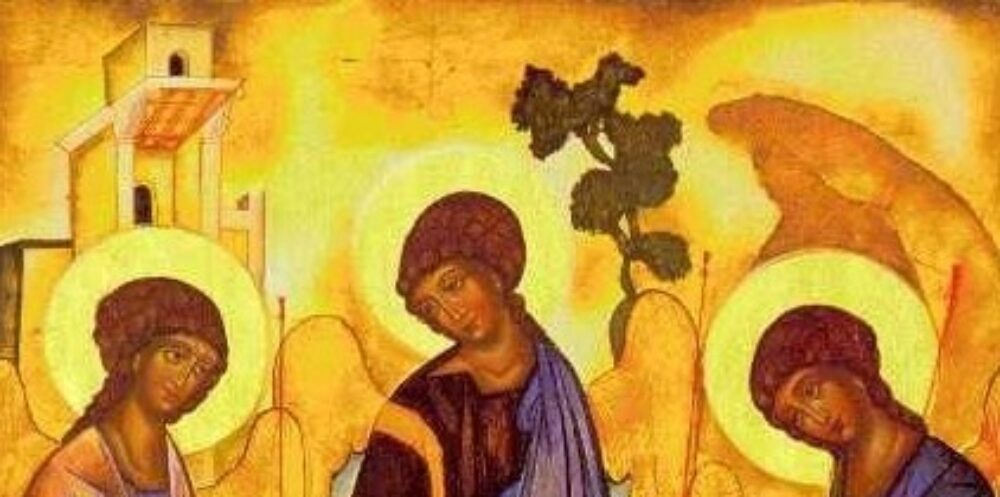
Mark 14:3-9

Welcome and Prayer: Jim Calhoun

Come Lord, join us here today
Most days
We come
With expectation
Joy
And a measure
Of openness
Today some of us
Are feeling
The shadow of overwhelm
Dampening our spirits
And the string of upsets
Pulling us under
And how the,
(Somehow)
still surprising,
Disappointments
Sap our faith

Afraid that we sit
on the brink of nothing
With only ourselves
And not much more
We have learned
that more money
doesn’t cure this
Nor does power
Over others
To get them to do
What we wish
Nor some new distraction
To pull us away
From our own lives

We ask for ourselves
For our friends
The grace to feel your
Good great love
Today
A flicker
A reminder
A connection
A gentle swelling of hope
Just what
We aren’t sure
Still
Join us here today Lord,
Please
Amen

Morning Talk: chuck smith, jr.

Intro: What we’re looking at this morning is an “in between” story

It comes after Jesus’ final day of public ministry and prior to the last supper
– what happens in this narrative is not a significant factor in the central plot of Mark’s Gospel
• it doesn’t add momentum to what’s already underway
• however, if Mark had not included this intimate scene,
◦ we would have lost more than an intriguing vignette,
◦ because this is one of the loveliest events in the life of Jesus
– Mark takes us to a home in Bethany,
• where a dinner was prepared for the Lord and his disciples
◦ what happens here is unique in the life of Jesus
◦ if we look carefully, we see a dark cloud hanging over this event
• like book ends, before and after the main event we see a theme:
◦ in verses 1-2, the “before,” where priests and scribes are plotting Jesus’ death
◦ in verses 10-11, after the dinner, Judas strikes a deal with the same men who want to destroy Jesus
▫ and embedded in the story itself, Jesus himself mentions his burial
– in fact, death is stalking Jesus through the entire chapter

Jesus had friends who lived not far from Jerusalem
“And while he was at Bethany in the house of Simon the leper, as he was reclining at table, a woman came with an alabaster flask of ointment of pure nard, very costly, and she broke the flask and poured it over his head Mark 14:3

Bethany was a village on the backside of the Mount of Olives
– there is speculation about “Simon the leper”– who was he?
• but we don’t have to worry about that right now
◦ he had a home large enough to host Jesus and the disciples
◦ in fact, it may have been able to accommodate other guests too
• it would not be unusual for neighbors to gather in Simon’s courtyard, for a chance to see and hear Jesus
◦ “reclining at table” was quite literally dining etiquette at that time
◦ guests would lie on cushions or couches, resting on their left arm with their right arm in reach of the food
– so here’s the gang having dinner and the normal table conversation,
• then this woman enters with an alabaster flask of perfumed ointment
◦ John identifies her as Mary, the sister of Martha,
◦ but neither Matthew nor Mark mention Mary and Martha
• so for Mark, she remains anonymous
◦ and I believe this enhances the story
▫ she doesn’t have to be someone we know,
▫ someone who has a history with Jesus
◦ she could be any woman and every woman

Later on, in chapter 15, after Jesus has been crucified,
– Mark will tell us
“There were also women looking on from a distance, among whom were Mary Magdalene, and Mary the mother of James . . ., and Salome. When he was in Galilee, they followed him and ministered to him, and there were many other women who came up with him to Jerusalem” (vv. 40-41)
• these women have been present all along, but in the background
• I wonder why Mark introduces them this late in the story
◦ was it safer for women than men to be near the cross?
◦ is it to set up the fact, women were first to the tomb?
◦ or do women have a special role in the life of Jesus?
▫ one that involves them more than only his birth and death?
▫ the woman in our present story is also connected with his death
– during dinner, she approaches Jesus, perhaps surreptitiously
• then she pours this fragrant oil over his head, in his hair and dripping down into his beard
◦ she takes liberties with Jesus, she doesn’t ask permission
◦ she acts as though she is his beautician
• I think she is pouring out her love on Jesus
◦ that in itself would make some people uncomfortable

“There were some who said to themselves indignantly, ‘Why was the ointment wasted like that? For this ointment could have been sold for more than three hundred denarii and given to the poor.’ And they scolded her” Mark 14:4-5

Public demonstrations of affection tend to evoke different reactions
One person will say, “Oh, how sweet” – another will grouse, “Get a room!”
– Matthew says it was the disciples who were indignant
• maybe they were offended by her bold intrusion,
◦ and quickly came up with a reason to criticize her
◦ but what throws me was their question,
“Why was the ointment wasted like this?”
• how could they think that any gift given to Jesus was a waste?
– there is a mentality that is obsessed with monetary value
• it is a mind that is constantly calculating the cost of things
◦ the wise teacher warns us,
“Do not eat the bread of a man who is stingy;
do not desire his delicacies,
for he is like one who is inwardly calculating.
‘Eat and drink!’ he says to you,
but his heart is not with you” (Pr. 23:6-7)
◦ that type of person can’t comprehend the worth of intangibles
◦ the value of mercy, charity, generosity, love
• how can we measure the value of one who gives his life for another?

Now here’s a deception we can learn to recognize:
– when a person masks a bogus criticism with a thin veil of piety
“For this ointment could have been sold for more than three hundred denarii and given to the poor”

Matthew and Mark spread blame for this protest over the other disciples or at least “others,” whereas John lays it squarely on Judas. It would be easy to see how Judas could raise this practical concern regarding finances and the pious possibility of helping the poor, and because his protest made sense and assumed a philanthropic motive it would immediately win the approval and agreement of others. It is doubtful that they were very often so close to something like the ointment which was of such great value.
When someone raises an angry (or emotional) voice of protest, as if deeply moved and therefore concerned to address a wrong action, the sentiments expressed instantly move others to the same furor, and their plausible arguments sound valid, until calmer and more enlightened minds prevail.
At any rate, John exposes Judas, explaining, “He said this, not because he cared about the poor, but because he was a thief, and having charge of the money-bag he used to help himself to what was put in it” (Jn. 12:6).
– “and they scolded her”
• this woman did something that was exclusively for Jesus,
◦ and the disciples got upset
• Jesus had always been the giver – rarely the receiver
◦ I’ve been guilty of having a negative reaction toward another person for loving Jesus extravagantly
◦ now it is clear to me that I’m not in a position to measure anyone else’s love for Jesus

Here is one of the most wonderful things Jesus ever said:
“‘Leave her alone. Why do you trouble her? She had done a beautiful thing to me. For you always have the poor with you, and whenever you want, you can do good for them. But you will not always have me” Mark 14:6-7

“Leave her alone” – Jesus rushes to her defense
– his first sentence is a command, “Stop!”
• his second sentence is a question, “Why do you trouble her?”
◦ if I put myself there, I see the disciples intruding into a private encounter,
barging into Jesus’ personal space
◦ he has this rare moment, and they’re ruining it
• is it even possible to love Jesus too much?
◦ to give him too much?
– what the disciples missed, was this was a rare opportunity
• the woman saw it – and jumped on it
“For you always have the poor with you . . .”
• everyone that evening had the opportunity to express their love
◦ some opportunities return every day
◦ other opportunities have an “expiration date”
• Jesus was there for the evening, and then he moved on
◦ perhaps we’ve wanted to do something for Jesus; we made plans or promises,
◦ but time passed and we never got around to it
“You will not always have me” – he warned them
– and that always burns a hole in my heart

Jesus explained, for their benefit, what her gift meant to him
“She has done what she could; she has anointed my body beforehand for burial” Mark 14:8

“She has done what she could”
– as a woman in that culture, and Jesus being a holy man, her options were limited
• earlier he said, “She has done a beautiful thing to me”
◦ passionate love creates beauty
◦ she did what she could, and it was beautiful
– she could not protect him from the cross
• she could not heal the sick or preach to the crowds,
◦ but she could give what she had
• God will never ask more of you than what you can give
◦ but I also think, he will never expect less
“she has anointed my body beforehand for burial”
– no one else saw that!
• I doubt she even knew what she was doing
◦ Jesus would be dead and in the tomb before his body was properly prepared
• is it possible she noticed something about Jesus that no one else did?
◦ a sadness of expression? a different look in his eyes?
– if we care about others, we pay attention, and we notice

Why does Jesus say wherever gospel goes, her story will go also?
– perhaps because she reflects what happens to a person who opens their heart to Jesus
• and give him whatever they can
• Mark could speak of her future fame, but without mentioning her name
◦ that way she would be remembered for what she did rather than who she was
◦ I don’t doubt that John had another reason for identifying her as Mary, the sister of Martha and Lazarus

Conclusion: I’m going to take from this story just one thought for us to consider

This week, do a good thing for Jesus
And just for him,
because you love him

Hearing God’s Voice (02/15/2026)

Morning Talk: chuck smith, jr.
“. . . the Father who sent me has himself borne witness about me. His voice you have never heard, his form you have never seen, and you do not have his word abiding in you, for you do not believe the one whom he has sent. You search the Scriptures because you think that in them you have eternal life; and it is they that bear witness about me, yet you refuse to come to me that you may have life” John 5:37-40

Intro: We can’t help noticing, that the majority of Jesus’ conflicts

Were with the most religious people in Israel;
– those who believed they had God all sorted out,
• that they owned the Scriptures, owned the temple, owned God
◦ their dogmatism blinded them to what was essential
◦ to actually know God, and to love him and others
• and that faith is more important than “beliefs”
◦ because your beliefs don’t do you any good if you don’t trust them
– Jesus worked at opening their minds,
• but their resistance to him won out
– I’ve read a short excerpt from an argument that fills most of chapter 5
• and in this excerpt, I want to focus on one line”
“His voice you have never heard”
◦ what was missing from their religious life, was direct communication with God
• they could read the Scriptures, yet not hear God’s voice
◦ they had the map, but were still making wrong turns
– from the time Israel left Egypt, God’s message to them was
“Listen to my voice, and do all that I command you. So shall you be my people, and I will be your God” (Jer. 11:4)
• it wasn’t enough to have and to read God’s word, through it, they were to hear God’s voice
◦ their interaction with his word had to be personal
• but that had not happened, and they never heard his voice

What I feel like doing right now is complain and criticize

I’ve had Bible verses thrown at me my whole life
– most of the time, it was by people who had no idea
• what those verses actually meant,
• that the verses didn’t apply to me or my situation
• and in their biblical context, the verses meant something different
– and even though there is way too much mindless quoting of scripture going on today,
• it would not be encouraging or helpful for me to go off on them
• but what might be helpful, would be to talk about,
◦ how we can learn to hear and know God’s voice

God is always speaking and through all sorts of different channels

One of God’s most common means of communication is through nature
“The heavens declare the glory of God,
and the sky above proclaims his handiwork.
Day to day pours out speech,
and night to night reveals knowledge” (Ps. 19:1-2)
– sometimes God speaks to a person in a dream
• or we hear him during a crisis, a loss, or illness
– but God’s voice is heard most often and most reliably in scripture

But if that’s so, why weren’t Jesus’ religious antagonists hearing his voice?
– because they weren’t reading the scriptures to hear him
• they were reading for information, doctrine, wisdom, or rules
• they read words on a page, without hearing the voice of the Author

You and I can tune into God’s voice every day

I realize that not everyone has the opportunity I have
– all my adult life has been wrapped up in the Bible
• I have the pleasure of being able to read it every day
◦ and not only read it, but spend time mulling it over
• God has something to say to me every day
◦ not always what I want to hear, but always what I need
– the way he speaks is hardly ever the same
• at times, God’s voice thunders
◦ other times, it is a gentle whisper
• so I have to be prepared to receive it however it comes
◦ sometimes straining to make sure I heard him correctly

I don’t have a step-by-step method for hearing God’s voice

I’m skeptical of that sort of thing when it comes to relational issues
– what I have are random thoughts,
• and I hope you find something useful in them
◦ something that will help you hear God speak to you

For me, it is very important to settle in before I begin to read
I slow my breath and pay attention to my mind and body
– I must be able to first find rest in God’s presence
• physical agitation can be a serious distraction
– so I notice, and if I’m antsy or uncomfortable, I make adjustments
“I have calmed and quieted my soul,
like a weaned child with its mother;
like a weaned child is my soul within me” (Ps. 131:2)

Again, for me, it is important to discern God’s presence
I won’t pretend that this is always easy
– each of us may have to find what works best for ourselves
• I try notice any tension in typical places like my jaw, neck, or shoulders
• maybe I’ll move them a bit, or tense those muscles for a few seconds and then relax them
– then as I inhale I say, “Here” and bring awareness to the space around my body
• and I exhale and say, “Now,” bringing awareness to how this present moment feels

I mentioned last week, before I begin to read, I listen to hear:
“I will meet you at the entrance, and speak to you there”
– God said that to Moses, not only about the entrance to tent
• but also when he entered the most holy place of the tent,
◦ and stood before the “ark of the covenant”
• the benefit I enjoy from doing this, is that when I read,
◦ I am not merely reading words on a page,
◦ it’s more like I am experiencing what I’m reading
– if I don’t prepare myself like this – if I just start reading,
• I feel the pressure of working at trying to get something out of the Bible
◦ it seems that it’s up to my mind to find a meaning or a message
◦ so it’s not like listening to God for what he has to say to me

I may have a specific concern or question I want God to address
I never insist on a response – I need whatever God chooses to give
– in fact, what matters most is the awareness God gives me of his voice and of himself
• that I am conscious of him speaking to me
– then, I’m not simply learning something, I’m waking up!
• in fact, I may be left speechless, because I have no language for this kind of experience
– in Psalm 34, David said,
“Oh, taste and see that the LORD is good!”
• our experience could also become,
“Oh, look and see that the LORD is good!,” or “Oh, touch and see that the LORD is good!,” or “Oh, hear and discover that the LORD is good!
• how ever the moment comes to us as we read, is what determines how we receive it

When I don’t understand something, I admit it
The same is true if I read something that bothers or upsets me
– the Scriptures don’t have to make me feel good
• I just have to be there
• and afterward, I’m always appreciative that I was there
for whatever it was that God wanted to show or give me
– when I react negatively to something in scripture, it may be God’s Spirit poking a sore spot in my soul
• so I always need to be paying attention

By the way, this is a conversation, a dialogue
I want to hear God’s voice, but he also wants to hear me

Sometimes I get an intuition
An thought or idea will come to me, as if out of thin air
– last week, reading Mark’s gospel, around chapter eight it came to me that he wrote it in the pattern of a “ring structure”
• I had to stop and check (with AI) to see if anyone else had seen this too
• turns out that several biblical scholars saw it long before I did
(only I think my observations are more accurate–ahem)

Don’t be surprised if you get the same message as in a previously reading
We don’t always learn perfectly in our first exposure to a passage
– and frequently there are multiple dimensions to a truth

I always write down what I received
Whether a lot or a little
– and then I also sit in silence for awhile and absorb all of it

Conclusion: Do you see what I’ve been talking about?

This is not just “reading our Bibles” – it’s an ongoing encounter with God
We go into scripture and find Jesus–and there in scripture Jesus finds us

Conspiracy Fears (02/08/2026)

Podcast

Welcome and Prayer: Jim Calhoun

Come Lord, join us here today
Give us today
And let us
Give it back to you

We will receive today
As it comes
With joys
And sorrows
Upsets
And our wins
We will receive
The trials
The temptations
The disappointments
And the fears
Large and small
Spoken and known
And even
Those worries, anxieties and fears
We hide
Hide ourselves

We will receive this day
As a gift from you
Knowing your care in our lives
Knowing that your care is just
As strong in the lives
Of our friends, neighbors
And everyone else.
Dropping our need
To judge others
Our habits of resentment
Our inclination to withhold

And we will give to you
Our trust
That you are with us
Our hope
That all things
Will be made
New and right
Our hard work
As partners
Restoring the world
Our affection
For your abiding care,
For our second chances
For all that is good
In our lives
We will give you all we are
As best we can
This day
Amen

Morning Talk: chuck smith, jr.

“The LORD spoke thus to me . . . .” Isaiah 8:11

Intro: I’ll finish reading the verse in a moment, but first we will pause here
– every morning when I open my Bible, I don’t jump into it
• but at the entrance to the Scriptures, I take a moment to slow my breath, and focus my attention
◦ I bring awareness to God’s presence and let myself hear him say,
“at the entrance of the tent of meeting before the LORD, where I will meet with you to speak to you there” (Ex. 29:42)
• so before I even begin reading, I’m already listening to God
◦ and there is always something in my reading worth writing
◦ (though not necessarily worth sharing with others)
– yesterday morning, when I began, I felt a familiar frustration
• my desperate longing is to actually hear God,
◦ for his voice to be so clearly in my brain, there’s no doubt I’m hearing him
◦ anyway, the first words I read yesterday were, “And the LORD spoke to Moses . . . .”
• normally, my eyes would have glided over that phrase,
◦ especially because what follows is long and repetitious
◦ anyway, reading the opening line, I may have felt a twinge of jealousy
▫ but then, like from a small inner voice I heard,
“See, I do speak to you. Wasn’t this what you were just now thinking? Desiring?”

That experience lacked the intensity of physical sound,
– but it was enough that I realized what I have to do;
• and that is: continue to practice improving my spiritual perception
• I want to tune in to God’s communication more clearly
– I know that every true follower of Jesus hears from him
“My sheep hear my voice, and I know them, and they follow me” (Jn. 10:27)
“Today, if you will hear his voice,
do not harden your hearts . . . .” (Heb. 3:7-15)
• but if, especially, we all receive God’s Spirit and become prophets, then certainly we must hear God’s voice (Acts 2:17-18)
• it’s my strong belief we need to listen to God now more clearly than ever in our nation’s history
◦ here’s why:

A person I don’t know, sent me a link to a YouTube channel

The video was presented as a documentary,
– presenting a history of a false “Latter Rain” teaching in Pentecostal culture
• the narrator spoke with certainty, as if he possessed incontrovertible truth
◦ he credited three men with conspiring to develop and propagate the Latter Rain
◦ Paul Cain, John Wimber, and my dad
• who ever put this together was not simply mistaken, but invented blatant lies
◦ Dad was outspoken in his rejection of the Latter Rain and publicly criticized Paul Cain
– this is not the first time Dad has been defamed by false teachers andsham reports
• in 1970’s John Todd was speaking in churches around LA
◦ he told a story of how he was raised by Satanists
◦ but his big story was that the church of Satan funneled eight million dollars through him which he gave my dad to start Maranatha! Music
• it is now well known that John Todd was mentally unsound and a pathological liar
◦ my point is that back then, his lies were told in churches, and believed people who attended them
• people were pleased to think they had “inside scoop” on Calvary Chapel and Maranatha! Music
◦ all they really had was deception

It seems like gossip is one of human nature’s chief pleasures
“The words of a whisperer are like delicious morsels;
they go down into the inner parts of the body” (Pr. 18:8)

In 1964, Harper’s Magazine published article by Richard Hofstader
– in “The Paranoid Style in American Politics” Hofstader explains,
“American politics has often been an arena for angry minds.” And, “we have seen [in the Goldwater movement] much political leverage can be got out of the animosities and passions of a small minority.”
• he labeled problem he exposes as paranoid, “because no other word adequately evokes the sense of heated exaggeration, suspiciousness, and conspiratorial fantasy that I have in mind.”
And style because “Style has more to do with the way in which ideas are believed than with the truth or falsity of their content.”
• one of his examples was a quote taken from a Texas newspaper published in 1855
Hofstader, European kings joined the Pope to undermine and destroy “our political, civil, and religious institutions. We have the best reasons for believing that corruption has found its way into our Executive Chamber, and that our Executive head is tainted with the infectious venom of Catholicism”
◦ a couple more quotes:
Hofstader, “. . . the modern right wing, as Daniel Bell has put it, feels dispossessed: America has largely been taken away from them and their kind, though they are determined to try to repossess it and to prevent the final destructive act of subversion.”
“The paranoid spokesman sees the fate of conspiracy in apocalyptic terms–he traffics in the birth and death of whole worlds, whole political orders, whole systems of human values.”
– the entire article is well worth reading, and as to how it lines up with what’s been happening in our nation past ten years, which is unnerving to witness
• conspiracy theories create fear, and fear creates conspiracy theories
• examples include: the Illuminati, Masons, Trilateral Commission, and the United Nations

Early in my ministry, I liked to keep up with Evangelical institutions
– I had a subscription to “Christianity Today” and received monthly newsletters from Focus On Family, the 700 Club, and others
• but by late 1970’s I noticed an irritating trend
first, the newsletters weren’t about news, but supposed conspiracies and hidden agendas to undermine Christian faith and family values
second, every one of the “newsletters” was devoted to inciting fear with the goal of increasing their revenue through donations that would go to fight the “agendas” they claimed to be exposing
◦ the culprits were modernists, secular humanists, moral relativists, scientists, socialists, and gays
– the leaders of those organizations were conditioning Christians to live in fear
• none of these issues posed a deadly threat to the average Christian home
◦ but since then, the rise of internet communications and access to social media, even non-readers have become exposed to what had been only on the fringe
• and given the computer skills and savvy distortion of information by influencers,
◦ a great mass of Evangelicals have been sucked into bogus conspiracy theories
◦ again, religious ministries had set their followers up for this

It may surprise you how God spoke directly to this phenomenon
“For the LORD spoke thus to me with his strong hand upon me, and warned me not to walk in the way of this people, saying: ‘Do not call conspiracy all this people calls conspiracy, and do not fear what they fear, nor be in dread. But the LORD of hosts, him you shall honor as holy. Let him be your fear, and let him be your dread. And he will become a sanctuary and a stone of offense and a rock of stumbling to both houses of Israel, a trap and a snare to the inhabitants of Jerusalem. And many shall stumble on it. They shall fall and be broken; they shall be snared and taken” Isaiah 8:11-15

Let’s notice first Isaiah’s emphasis, “with his strong hand upon me”
– that is unusual; in fact, it appears nowhere else in the Scriptures
• given the force of this statement, I think it’s okay to conclude this is a critical warning
◦ what is the heart of the warning?
◦ Isaiah was not to “walk in the way of these people”
• he was to reject a trend that swept through his society
– there are two parts to the warning:
part one: “Do not call conspiracy all that this people calls conspiracy”
◦ conspiracy or “secret plot”
part two: “and do not fear what they fear, nor be in dread”
◦ if God is our greatest fear, then we have nothing to fear

There were two potential outcomes for those who heard Isaiah’s message
– either God could be a sanctuary–a safe and holy place of protection
• or with their nation they could stumble into ruin
– this situation was going on at that very moment
• God wanted to address it, and Isaiah was listening
• our situation today is very much like theirs – who is listening?

Pastors and spiritual leaders have an obligation to their followers
– we’re not prophets, like Isaiah, but we can sound a warning
• I’ve never understood why anyone reacts to the threat,
that someone is trying to take prayer out of schools
◦ anyone who prays, knows how real and how private it is, and that there are no and no circumstances in which we cannot pray
◦ no one can take that from either us or our children or grandchildren
• and no one has taken God out of schools–or anywhere else; it can’t be done!
– but this is why we need to be able to hear God’s voice
• in every anxiety, every set back, every hardship, God is telling us, “Be still and know that I am God”
◦ but that won’t do us any good if we’re not listening
• and if God ever speaks to us “with his strong hand upon us”
◦ we had better be listening

The purpose of having spiritual disciplines and exercises:

To improve our perception and receptivity to God
– to his presence, to his love, to his grace, to his mercy, and to his voice
– the heart of the spiritual disciplines is focused attention
• read with focused attention, meditate with focused attention, contemplate with focused attention, and pray with focused attention

Conclusion: Look, we’re not going to get a phone call from God

That’s why we must practice
And the cool thing is,
even when practicing, we’re experiencing him
So let’s look forward to listening and hearing from God this week
He has much to tell us, and we have much to gain by paying attention

Hosea Chapters 13-14 (02/01/2026)

Welcome and Prayer: Jim Calhoun

Come Lord, join us here today
Teach us kindness
Real world
Flesh and blood kindness
With messy people
full of fear and shame
Angry sometimes
Broken sometimes
Defended
Resistant

Grant us the courage
To be vulnerable enough to care
To be considerate
To slow down
And look up
From our own preoccupations
To learn about their joys
To learn about their pain

And let us be as open
To receive kindness
As to offer it
So we can put aside our
Pride
And our defenses
And our need to control
And enjoy the pleasures
Of being loved
And of loving
And we can experience the joy
Of your life
Your fruit
Growing
Day after day
Coming to life
In the real world
Amen

Morning Talk: chuck smith, jr.

Intro: If there were ever to be a roll-call of Christian heroes,

We’d find a wide assortment of characters throughout history
– and, for all the controversy surrounding his life,
• I’m certain Lonnie Frisbee would be among them
◦ in our first encounter I experienced someone with uncanny
◦ it was like bumping into a New Testament apostle
• Lonnie was the most effective hippie preacher in the Jesus Movement (in my opinion)
– a friend of mind attended a large meeting where Lonnie was speaking
• he later told me, Lonnie quoted the Bible, rambled a bit,
◦ then, fell silent, a few moments later he suddenly, shouted, “Get saved!”
• instantly, a third of crowd jumped to their feet

I’m going to suggest, that the essence of God’s word to Hosea was “Get saved”
– only it is more than what Lonnie meant
• in the narrow evangelical context “saved” means ” from something
• but the broader biblical meaning means to be saved into something
◦ for instance, into a new life with God
◦ and into the potential person God sees when he looks at you
– God presented a living parable through Hosea
• he played back Israel’s history as he viewed it through his divine eyes
◦ he told stories, painted pictures, spoke through poetry,
◦ and delivered an number of prophetic threats and promises
• God wanted his people to see what they had become,
◦ but also what they could have been, and could possibly still become

In today’s chapters, God adds the last pieces of the puzzle

In these verses we learn how Israel failed their destiny
When Ephraim spoke in trembling,
he was a prince in Israel,
but he was guilty with Baal and died.
And now they continue to offend
and make themselves molten images
from their silver in their form of idols
all of it craftsmen work.
To them they say:
sacrifices of man, calves to be kissed.
Therefore shall they be like a morning cloud
and like early dew that melts away,
like chaff whirled out from the threshing floor
and like smoke from a chimney
Hosea 13:1-3

I remind you, “Ephraim” was the chief tribe in the north, and is understood as Israel
– there was a period when he “spoke in trembling”; that is to say with reverence
“Hear the word of the LORD,
you who tremble at his word” (Isa. 66:5)
“Do you not fear me? declares the LORD.
Do you not tremble before me?” (Jer. 5:22)
• but their devotion to God disappeared when they went over to Baal
◦ and with that move, the nation experienced a sad loss of status and wealth
• you think they would realize their decline and return to Yahweh, but,
“And now they continue to offend” (v. 2)
◦ do you remember in chapter 7, they did not discern they were in decline?
“Strangers consumed his strength,
but he did not know.
His hair turned suddenly gray,

but he did not know” (v. 9)
◦ Hosea picks up another theme already mentioned in chapter 8, that idols are the product of human hands (v. 6)
“a craftsman made it, and it is not a god”
– there are many people living in denial regarding the state of our nation
• it amazes me that they cannot see how we are rapidly sliding downhill
◦ we’ve become a divided and troubled nation, and a disgusting nuisance
◦ I wonder how much ruin it will take for more people to wake up

This opening stanza ends with a list of similes (or metaphors)
– all four represent something transient, that quickly evaporates, flies away, or disappears

God’s response to Israel’s deterioration
Yet I am the LORD your God
ever since the land of Egypt,
and no God save Me shall you know
and no rescuer except for Me.
I knew you in the wilderness
in a parched land.
When they grazed and they were sated,
the were sated and grew proud.
Therefore they forgot Me.
And I will become to the like a lion,
like a leopard I spy on the way.
I will meet them like a bear robbed of her cubs
and rip the sinews round their heart.
And I will devour them there like a lion,
the beasts of the field shall tear them apart
Hosea 13:4-8

While they were decaying from being misled by pagan gods and idols,
– the Lord says, “Yet I am the LORD your God”
• here is the same warmth of affection we saw last week
◦ from the time they left Egypt, they were to know only Yahweh
◦ and in the wilderness Yahweh traveled with and knew them
• the Hebrew word translated “know” has several meanings
◦ all related to being “informed” and “familiar with”
◦ I think here we’re to understand in this instance it is an intimate knowing
– v. 6, when Israel settled in Canaan, they became spoiled by God’s blessings
• sadly, God had previously and explicitly warned them of these very things Hosea addresses
“Take care lest you forget the LORD your God . . . lest when you have eaten and are full and have built good houses and live in them, and when your herds and flocks multiply and your silver and gold is multiplied, then your heart is lifted up, and you forget the LORD your God, who brought you out of the land of Egypt . . . and go after other gods and serve and worship them” (De. 8:7-20)
• like the previous stanza this one also concludes with a list of similes
◦ these illustrate the harsh nature of God’s punishment
◦ their shepherd through the wilderness becomes like predatory animals when they’re settled in the land

Now we learn who is to blame for Israel’s ruin
You are ruined, O Israel,
for who will come to your aid?
Where is your king then?
Let him rescue you in all your towns.
And your leaders to whom you said,
“Give me a king and nobles.”
But I will give you a king in My wrath
and take him away in My anger.
Ephraim’s crime is bundled up,
hidden, his offense
Hosea 13:9-11

The “usual suspects” include kings, their appointed leaders, and all other religious and civic authorities
“Woe, negligent shepherds, who scatter the sheep of My flock, said the LORD. Therefore, said the LORD God of Israel, concerning the shepherds who shepherd My people, you have let my flocks scatter . . . and did not attend to them” (Jer. 23:1-2)
“Woe, shepherds of Israel who were shepherding them. Will not the shepherds [feed] the flock? . . . You did not strengthen the weak ones you did not heal nor bind up the one with a broken limb nor bring back the one that had wandered nor did seek out the one that was lost. And by force you held sway over them with crushing labor.” (Eze. 34)
– God locates the fault of Israel’s failure in the realm of human government
• but the people are not innocent either;
◦ these were the leaders they clamored for,
◦ and they stood by them even when abused and led astray
– again, this is relevant to our nation at this dangerous moment in history
• I don’t feel I need to explain or elaborate, it is all too obvious
Those who have ears to hear, let them hear

Israel’s destiny would be a day of debt collection
Birth pangs come upon him,
and the child is not wise.
For now he shall not last
on the birth-stool for children.
From Sheol shall I ransom them,
from death shall I redeem the?
Where are your words, O Death,
where your scourge, O Sheol?
Regret is hidden from My eyes.
Though he put forth fruit in meadows,
the east wind shall come, the LORD’s wind,
from the desert rising up.
And his fountain shall dry up
and his spring shall arid be.
It shall ravage treasure,
every precious vessel
Hosea 13:13-15

First, there will be difficulty with pregnancy and,
– the child born will be defective – and not survive
• the way Robert Alter’s translation reads verse 14, is that God is asking Israel these questions
• if the nation waits to turn to God only when they finally recognize disaster that has come upon them,
◦ will they expect him to rescue their children from Sheol?
(Sheol was the grave, the underworld, the abode of the dead)
– God’s empathy and mercy throughout the Hebrew Scriptures is overwhelming
• but there is a limit – and when Israel has is resisted him to the very end,
he says, “Regret is hidden from My eyes” – no empathy, no recovery
◦ this tragedy is what God had been trying to spare them

This verse belongs to the previous chapter
Samaria is guilty,
for it rebelled against its God.
They shall fall by the sword,
their infants shall be smashed,
and their pregnant women split apart
Hosea 14:1

When Israel would finally be defeated by the Assyrian army,
– their enemies would deal with them brutally, and showing no mercy to anyone

Now, at the end, Hosea’s does not end in despair
Turn back, O Israel, to the LORD your God,
for you have stumbled in your crime.
Take words with you
and turn back to the LORD.
Say to Him, “All crime You shall forgive.
And take what is good,
and we shall offer our speech instead of bulls
Hosea 14:2-3

We will hear three voices in this chapter
first, the voice of Hosea, urging God’s unruly children,
“Turn back, O Israel, to the LORD your God”
• having taken the wrong path for so many years,
◦ they “stumbled” in it, and that is where they now find themselves
• they need to go to God and say what needs to be said
◦ that doesn’t mean their speech is insincere,
◦ or that they’re trying to talk God into accepting them

What comes to mind is the parable of the “Prodigal Son,” who when returning home prepares a speech to deliver to his father. His words are sincere and his willingness to live by them is authentic. This is what Hosea has in mind for Israel. An authentic confession of their need for him and willingness to give him all that he asks.

• the problem is, the rituals of sacrifice no longer work
◦ they had devoted those gifts to pagan deities, and now they’ve become corrupted and meaningless
◦ what they have to do is speak the truth
– there’s a psalm that covers this perfectly:
“For you will not delight in sacrifice, or I would give it;
you will not be pleased with a burnt offering.
The sacrifices of God are a broken spirit;
a broken and contrite heart, O God, you will not despise” (Ps. 51:16-17)

Next, we hear the voice of the people
“Assyria will not rescue us,
on horses we shall not ride.
And we shall say no more ‘our God’
to our handiwork,
as in You alone the orphan is shown pity”
Hosea 14:4

They renounce all the empty commitments they had embraced
– they are orphans, knowing only God would adopt them

Then, third, we hear God’s voice as he imagines welcoming them home
“I will heal their rebellion
I will love them freely,
for My wrath has turned back from them.
I will be like dew to Israel.
He shall blossom like the lily
and strike root like Lebanon.

His branches shall go forth
and his glory be like the olive tree,
and his fragrance like Lebanon.
Those who dwell in his shade shall come back,
they shall give life to new grain,
and like the vine they shall blossom.
His fame is like Lebanon wine.
Ephraim—‘Why more should I deal with idols?
I have answered and I espy Him
I am like the lush cypress.
From me your fruit is found.’”
Hosea 14:5-9

They will flourish, as God has always wanted them to flourish
– living in his presence, enjoying his goodness
– and his promise! “I will love them freely”
• there are many days when I need to be loved freely
• loved generously, without deserving it, built up by it
“love edifies”

Conclusion: The very last verse is not at all in the prophetic style

It is, in fact, straight out of the wisdom literature; that is to say, like the Book of Proverbs
Who is wise and can grasp these things,
discerning, and can know them?
For straight are the ways of the LORD,
and the righteous shall walk on them,
but rebels shall stumble on them
Hosea 14:10

In other words, Hosea requires a careful and intuitive reading
A major portion of the book is analogy,
and some parts have more than one layer of meaning
When we go back over it, we must read each passage with both our mind and heart
But for now, we are invited to run into God’s arms, and belong to him
Only, let’s make certain we are walking in HIS ways
Frederick Buechner, “We have only one life, and the choice of how we are going to live it must be our own choice, not one that we should let the world make for us.”
To “get saved” in this way is not me becoming a better version of myself
Rather, it’s about becoming the person God dreams me to be
And his dream for us, if difficult, or painful, or seemingly impossible, is still fantastic