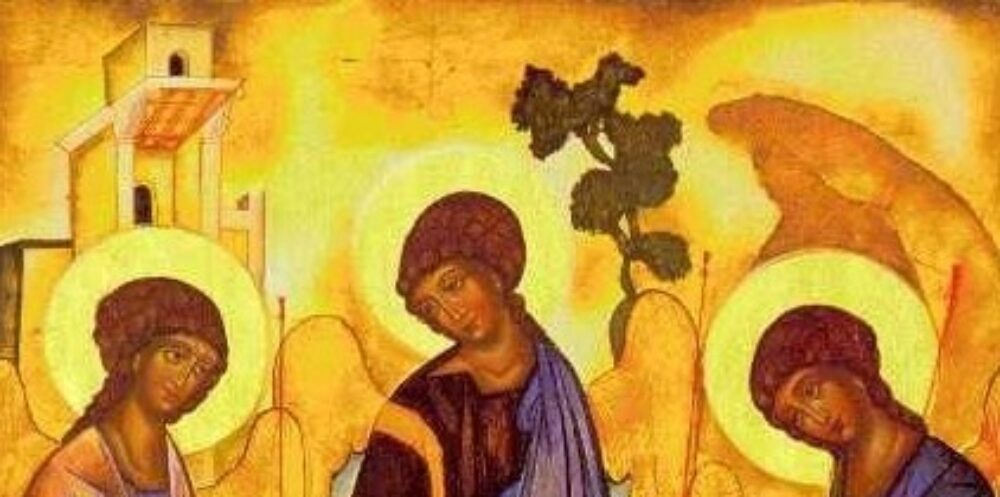
When He approached Jerusalem, He saw the city and wept over it, saying, “If you had known in this day, even you, the things which make for peace! But now they have been hidden from your eyes . . .” Luke 19:41-42 (read vv. 28-48)
INTRO: We have been in the gospel of Luke for almost a year and for a majority of the time we’ve been on a road-trip with Jesus
Various sources of tension have expanded the plot as we’ve traveled along:
- people trying to figure out who Jesus is – and a few of them coming to faith in him
- Jesus’ mission to people on the margin of society
- his conflict with the religious classes
- Jesus’ own dark predictions about what will happen to him in Jerusalem
But now Jesus has reached his destination
– this is the point in the story where everything should resolve
Luke has developed the plot to create the impression now that Jesus has reached Jerusalem, something big is about to happen to him
– but something even bigger is about to happen to Jerusalem
Verses 28-36, We’re so used to hearing this story, we miss one important fact
It is unlike anything else in the story of Jesus – he never went for this kind of attention
– the pace of the story changes when he reaches the villages on outskirts of Jerusalem
– more details are given, and the preparations made for his entrance build suspense
– we are taken back to the importance of fulfilled prophecy as in the beginning of Luke’s gospel
Rejoice greatly, O daughter of Zion!
Shout in triumph, O daughter of Jerusalem!
Behold, your king is coming to you;
He is just and endowed with salvation,
Humble and mounted on a donkey,
Even on a cold, the foal of a Donkey. (Zech. 9:9)
In fact, Luke began his narrative in the temple and that is where it will eventually end
– it was necessary for Jesus to return here – and Luke makes his return BIG
Verses 37-40, For one brief moment, Jesus is the center of attention in Jerusalem
The slogan shouted by the crowd was specific and can be found in Psalm 118
– in times of celebration, pilgrims to Jerusalem would be greeted in this way
– according to the Midrash – people who lived in Jerusalem would welcome the visitors:
Jerusalem: “Save us, O Lord! (Hosanna!)”
Pilgrims: “So be it, Lord!”
Jerusalem: “Blessed is he who comes in his name!”
Pilgrims: “We bless you from the house of the Lord!”
The crowd changed the greeting by directing it to Jesus
– they also added something, which is a variation on the angel’s song in ch. 2
The Pharisees appear in the story one last time – and true to form they tell Jesus to rebuke his disciples
– some believers are always eager to hand out rebukes
– to squelch innovation or anything that doesn’t fit their system
– they are like the people described in Jeremiah who “handle the law” but do not know God (Jer. 2:8)
As we’ve seen before, people who try to tell Jesus what to do, never succeed
– “the stones” – I’m tempted to relate this to John’s statement in 3:8
– the point here: this event is of such cosmic significance that it can’t be silenced
– the people were responding to a divine impulse that ran through the created world
Verses 41-44, Here we come to the heart of this whole episode
I’m going to return here in a moment
– for now we just want to notice what happens when Jesus sees the city
– it is blind – has no idea of the seriousness of its present condition
– no idea of the meaning of this historic moment
– and no idea that the course it is on will lead to its total destruction
Verses 45-48, Jesus makes himself at home in temple, the heart of Jerusalem
Money-changing and selling ritual animals were legitimate services
– but like other legitimate services, they easily could be abused – especially when
- culprits are able to monopolize the services
- it has the advantage of providing a convenience or resolving desperation
- it caters especially to foreigners
Had the temple become too much associated with money and finances?
– during Roman assault on Jerusalem, rebels entered temple and burned the debt records archived there
What Jesus points out in the verses he quotes is related to his reason for weeping over the city
– the temple was a contradiction: what it was designed to be and what it had become
– “you have made it” – they were responsible for the change — they had made it a robbers’ den
This section ends with Jesus teaching in the temple under shadow of his enemies
CONC: Let’s return to the passage for an ariel view
Luke has structured the first part of the story around Jesus’ “approach” to Jerusalem
– he uses the word three times and in each stage it draws a verbal reaction:
- 29, Bethany, “Why are you untying the colt”
- 37, the descent of the Mt of Olives – a dual reaction
1.) The crowd, “began to praise God joyfully”
2.) The Pharisees, “Teacher, rebuke Your disciples” - 41, the city, he wept over it
– and as I’ve said, this is the heart of this episode
Imagine standing nearby when Jesus caught sight of Jerusalem — we’re watching him cry
– what is tearing him up inside?
– the contradiction between what God meant for the holy city to be and what it was
Jerusalem had another name, “Zion”
– Zion was a dream, an ideal – a society of humans where heaven coexisted with earth
– in the same way paradise could be a garden, Zion could be a city
– this was the creative vision God had given to the psalmists and the prophets
But the leaders of Israel had lost the vision, the dream of Zion, and so it became something else
Now imagine Jesus weeping over a human life
– God had a design for this man, but he took a different road – made himself something else
We come to intersections where we can take one road or the other
– from the road we take, we can’t see the other – we do not know what might have been
– “If you had known . . . hidden from your eyes . . . you did not recognize”
– its tragic when we have only one view of our life and it’s a false one
Jesus weeps over the person who ruins a life that could have been meaningful
I have not done everything I’m capable of accomplishing
– the question is, Am I moving in the right direction? Or am I moving further from God’s dream?
What are verses 45-48? They are hope!
- Jesus moves into the heart of what is wrong and shakes it up (greed, etc.)
– this is not a permanent change – it’s up to them to carry on what he started - Jesus gives them the instruction they need to no longer be unaware
– awareness is vital to the process of change
– we must bring awareness to our situation in life
What was Jesus teaching them? He was teaching them to dream
“Creative passion in life depends on the ability to dream, no matter whether the dream be of a society or a great man. A teacher who does not know how to teach us to dream, to conjure up ideal visions, is not worth of the name.” Helmut Thielicke
The NASB did not translate verse 48 literally – the people were not “hanging on to every word he said”
– they were hanging on to him – attentive to his teaching, yes
– but Jesus is salvation and it is by hanging on to him that we move into a position where it is possible to fulfill our destiny