December 26, 2021

Podcast

Facebook

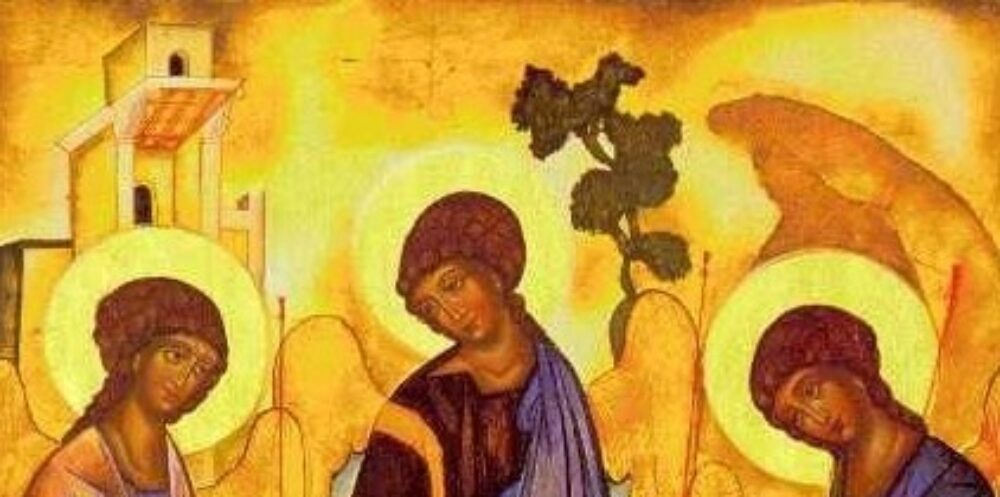
Now after Jesus was born in Bethlehem of Judea in the days of Herod the king, behold wise men from the east came to Jerusalem, saying, “Where is he who has been born king of the Jews? For we saw his star when it rose and have come to worship him.” . . . After listening to the king, they went on their way. And behold, the star that they had seen when it rose went before them until it came to rest over the place where the child was. When they saw the star, they rejoiced exceedingly with great goy. And going into the house they saw the child with Mary his mother, and they fell down and worshiped him. Then opening their treasures, the offered him gifts, gold and frankincense and myrrh. And being warned in a dream not to return to Herod, they departed to their own country by another way. Matthew 2:1-12

Intro: Reading this old familiar story,

I am surprised by how little information we are actually given
– Matthew provides us bare details without embellishment
• we are not the first to recognize its streamlined quality
• over time, various storytellers added their own finishing touch
◦ it’s like an undecorated Christmas tree that looks too plain
◦ so tradition has added lots of ornaments
– for instance, we’ve been told there were three magi (the Bible does not say how many)
• some storytellers went so far as to give them names
◦ we imagine the magi came with a caravan of camels, voila! we have camels
◦ the magi are pictured in nativity scenes, though they arrived much later
• these decorations do not change the story,
◦ they are a poetic attempt to make it more visual

Three weeks ago, I told you these talks would not be profound
– that they would be more like meditations or reflections
• so today I will share some of my thoughts regarding the magi
• I chose them intentionally, because, as Matthew tells us,
◦ they arrived after Jesus was born in Bethlehem
◦ so this is a post-Christmas talk about the post-Christmas visit of the magi

My first thought: These Christmas guests lived worlds apart from shepherds

The shepherds were home-grown
– shepherding had deep roots in Israel’s history: both Jacob and Moses at one time were shepherds
• of course, the shepherd par excellence was David–also from Bethlehem
• it seems right that the first to hear of Jesus’ birth would be shepherds
the magi were foreigners
• the Greeks used “magi” to refer to Persian priests (in the service of kings)
◦ they access to supernatural knowledge for divination dream interpretation
◦ magi is also used of Babylonian astrologers
• the magi not merely foreigners, but they represented nations that had conquered Israel
◦ nations where the Jewish people had been held in exile

The shepherds belonged to the lowest class in Israel
Bruce Malina, “Although shepherds could be romanticized (as was King David), they were usually ranked with . . . tanners, sailors, butchers, camel drivers, and other despised occupations. Being away from home at night they were unable to protect their women and therefore were considered dishonorable. In addition, they often were considered thieves because they grazed their flocks on other people’s property.”
magi, however, were a privileged class and honored as such
• they arrived in Jerusalem asking for directions,
◦ and were soon granted an audience with the king
• they had the world at their feet, whereas,
◦ shepherds were at the feet of the world

The shepherds received the announcement of Jesus’ birth from angels
– the magi were given a star
– both images are related to the heavens
• but they suggest very different connotations

Matthew and Luke tell two different stories
– each has to do with the message they intend to emphasize
• Matthew features the kingdom of heaven
◦ so he tells an episode that gives Jesus royal status
◦ note that the angel addresses Joseph as “son of [King] David” (Mt. 1:20)
• Luke’s concern is to present Jesus as liberator (Lk. 4:18-21)
◦ the champion of the poor, oppressed, and outcasts
– so Matthew and Luke chose the stories that best fit their purpose
• in comparing the two, I think it’s significant that
◦ the shepherds got to Jesus first – the magi arrived quite awhile later

Another thought: The magi are radically out of place in Jerusalem and Bethlehem

They were not descendants of Abraham and did not belong to the “chosen people”
– they were not Israelites – they had their own nationality
• when they left Bethlehem, they returned to their own country (v. 12)
• yet, seeing the star over Judea, they rejoiced exceedingly with great joy
– then, when they saw Jesus, they fell down and worshiped him
• they bow before this two-year-old – WHY?
• he was not their king nor was he a world emperor
◦ what stake do they have in him?
◦ what the heck are they doing here?

Matthew is very careful to point out the fulfillment of scripture in the person of Jesus
– especially in the first few chapters
(e.g., verse 15, This was to fulfill what the Lord has spoken by the prophet . . .)
• but he does not provide a biblical equivalent for the magi
– perhaps he just wants to show us how big this event was
• much bigger than tiny Bethlehem
◦ bigger even than King Herod or all of Judah
• maybe he wants us to see that Jesus’ coming into the world deserves this kind of attention
◦ to get a perspective on how big the birth of Jesus was, consider this:
All this took place to fulfill what the Lord had spoken by the prophet:
“Behold, the virgin shall conceive and bear a son,
and they shall call his name Immanuel”
(which means, God with us)
– Mt. 1:23-24

Another thought: What do we see in the faces around Christ child?

We see the disheveled poor and the manicured wealthy
– we see the very devout–like Simeon and Anna–
• and others who have known only foreign gods
– we see people with citizenship status
• and aliens who have crossed borders to see Jesus
– we see a multicultural mix of races and religions

None of these people were drawn to Jesus against their will
– they came to him, because whatever they had, it was not enough
• they came because their faith was cold and Jesus was fire
• they came because they were thirsty and Jesus is the fountain of living water
• they came because their religion was weak and Jesus is God with us
– they came to Jesus and he opened his arms to them

This is what the kingdom of God looks like
– though you have Jesus, you do not have him exclusively

When we come to Jesus, we’re recruited into kingdom of God
– where there is neither left nor right, resident or alien
For as many of you as were baptized into Christ have put on Christ. There is neither Jew nor Greek, there is neither slave nor free, there is no male and female, for your are all one in Christ Jesus (Gal. 3:27-28)
– I fear for some Christians who assume their spot in heaven is guaranteed
• I am afraid that either they will not like heaven when they get there,
◦ because they will see all the people they’ve tried to keep out of their church, their country clubs, their nation
◦ or they will find themselves on the outside looking in
• this has happened to others who felt entitled to access to God’s kingdom
In that place there will be weeping and gnashing of teeth, when you see Abraham and Isaac and Jacob and all the prophets in the kingdom of God but you yourselves cast out. And people will come from east and west, and from north and south, and recline at table in the kingdom of God (Lk. 13:28-29)

Conclusion: Before we put the magi back in their box until Christmas next year

I have one other thought
– our last look at the magi is when we watch them leave Bethlehem, and
they departed to their own country by another way
– I know Matthew meant they took a different route
• but I want to take liberties with that statement, by another way
• for instance, they were led to Bethlehem by a star, but led back home by a dream
– they left by another way, not only because of Herod, but also because of Jesus
• they came one way, but left another way
◦ they came the old way they had always been and left a new way of being in God
• when they got home, their country was the same, but they were not the same
This is how we know we have encountered Jesus,
when we leave another way; when we become a different person

Henri Nouwen, left his prosperous professions to work with adults with developmental disabilities
– he spent a year in preparation for this work, during which time he kept a journal
• then he set the journal aside after his first year working at Daybreak
• at that time he wrote and epilogue to his journal, which was then published
– I want to conclude this talk with quotes from his epilogue

“If, indeed, Jesus is the center of my life, I have to give him much time and attention. I especially want to pray the prayer of adoration in which I focus on his love, his compassion, and his mercy and not on my needs, my problems and my desires. . . . I want my life to be based on the reality of Jesus, and not on the unreality of my own fantasies, self-complaints, daydreams, and sand castles.”

“It is becoming increasingly clear to me that Jesus led me to where I never wanted to go, sustained me when I felt lost in the darkness of the night, and will guide me toward the day no longer followed by night. As I travel with Jesus, he continues to remind me that God’s heart is, indeed infinitely greater than my own.”

Imagining Christmas 2

To: Yeshua, my step-son and the Light of my life.
My Dear Yeshua,

I write you this letter, because I am dying and I wanted to leave you a record of things you could not know. Your mother and I have kept these things from you, waiting until we thought you were ready. However, it seems that from a young age you already sensed who you are and the destiny that beckons you. Still, I believe you will appreciate knowing certain events surrounding your birth and early life.

I left off working an hour before sundown, the beginning of another Shabbat. Passing through the marketplace I overheard two women talking. I’m sure they raised their voices to make certain I could catch every word.
“She seemed like such a nice girl,” one of them said, with a voice that clucked like a chicken.
“Yes, and from a decent family,” said the other, whose face was round like an owl’s.
“She was supposed to marry the carpenter. Their parents had arranged everything. But it’s just so sad,” clucked the first woman.
“Yes, sad. Sad that she would ruin everything by getting herself pregnant.”

Yeshua, I hope you never experience such heartache and anger. Of course, I did not believe what they were saying, but I was compelled to run straight to your mother’s house. Your grandparents told me your mom had gone off to visit her cousin Elizabeth who was in need of a helper. I thought I would go insane if I did not get answers right then, so even though it was rude, I asked them straight-out, “Is it true? Is Mary pregnant?”

Their sad faces confirmed the worst. “Joseph,” your grandmother cried, “you must listen to us.” But I had already turned my back and was rushing home. I did not care that the sun had set, Shabbat had begun, and running at that hour was unlawful. My world imploded and everything around me was crashing.

I know it’s been hard for you at times; the looks people gave you in the synagogue or the teasing and taunting of other children. But now I will tell you one of the secrets I kept from you from you all these years.

Sleep that night seemed impossible. I cried and cussed and kicked furniture around my room. I laid awake, torturing myself with visions of your mother in the arms of another man. Perhaps exhausted from grief and rage, my body finally relaxed and I slept. But in my sleep I received a visitor. God sent an angel to me. These are his exact words:

“Joseph son of David, don’t be afraid to take Mary home as your wife, because the Child conceived in her is from the Holy Spirit. She will give birth to a son, and you are to give him the name Yeshua, because he will save his people from their sins.”

That’s right, an angel named you.

The next time I saw your mother, her eyes were filled with fear and pain. But before she could speak, I took her in my arms and said, “It’s alright, Mary. God sent an angel to me who explained everything.” That’s all I could say, because my throat grew tight when I felt your mother’s warm tears on my neck.


The trip to Bethlehem was very hard. We had to travel short distances and then rest. Your mother never complained, but she walked bent forward much of the time, and I hear an occasional groan. It was obvious that you were anxious to be born and you were not going to wait for us to settle somewhere comfy.

I was not happy about returning to Bethlehem. My family escaped that dirty, little village a few generations before I was born. We enjoyed the freer lifestyle up north, far away from the city of Jerusalem with it’s stupid politics and pompous hypocrites.

Yeshua, there was only one building in Bethlehem that you could call an inn, and it was crowded with people who got there before us. I went to taverns and even door to door hoping that someone would make room for us. Mary sat all day in the open square where visitors are usually greeted and offered hospitality. But there were too many guests and Bethlehem had no room for them all.

Oh, Yeshua, when a family is worn out and beaten down, even the smallest kindness seem like a priceless gift. I hope you always remember to be kind and good. I know that you will be true and righteous, but what people need more than anything is compassion.

A farmer had seen us on his way to the marketplace and when heading home he noticed we were still by the well. “What? No one has taken you in?” he asked. “Then come with me. you can at least spend a night in my stable.” His friendly voice lifted our spirits, and we thanked him over and over all the way to the stall in the field behind his house.

We had to duck our heads as we stepped inside. Then your mother grabbed my arm and said, “Joseph!” I could hear they urgency of her voice and she eased herself to the floor. Our host quickly drove the animals from the stable and called for his wife. She came running from the house and let out a yelp when she saw your mother tense and contracted on the ground.

I felt helpless and powerless. I took straw from the food trough and carried it outside for the livestock. Soon two or three other women from nearby homes were busy tending to your mother. Clay lamps were brought into the stall, because it was now dark. I stood in the doorway, ready to run and fetch anything they might need. But the women were calm and had everything under control. A short while later—well, there you were.

I had never been present for childbirth, so I thought something was wrong at first. Your face was red and all scrunched up. Your dark hair was flattened to your wet scalp. But the women were fussing over you—how perfect you were, how you had your mother’s eyes and your father’s strong hands. So I assumed you must be alright.

They bundled you warmly and let you nurse at your mother’s breast. It was not long before the two of you were fast asleep. Your mom, exhausted from traveling and travailing and you worn out from squirming your way into this world. I laid you in the food trough, then laid down beside your mother. I started a prayer for her and you, but drifted off into a deep sleep.

It was still early—long before the sun came up—when I was awakened by a blast of cold air. Your mother woke up and said, “Joseph?” There was someone standing in the doorway. “Who’s there?” I asked, and I tried to sound dangerous.

“Please”—it was a man’s voice—“is there a baby in here?”

Again Mary called my name, and she grabbed my hand in the dark. “Who are you?” I asked again. “What are you doing here?”
“We were sent by angels!”
“What?”
“We’ve seen angels and they sent us here.”

By now our host had come from the house with a torch. “You there,” he said. “What do you want?” The door closed and we could hear voices talking indistinctly outside. I struck a light and put on a lamp. You began crying, so your mother took you in her arms and soothed you with her voice and fingertips.

The door opened again and the guest let four scruffy-looking shepherds into the stable. “What are you doing?” I asked.

His face was serious. “You need to hear this,” he answered.

The shepherds were staring at you with these silly grins on their faces. Their eyes looked like alabaster illuminated by an inner joy.

The oldest shepherd spoke, “We saw angels,” he said. “First one, then a whole army of them. Their voices thundered in the hills and if our sheep had not been in the fold, they would have scattered in all directions. The angels sang, ‘Glory to God in the highest, and on earth peace to men on whom his favor rests.’”

A younger shepherd interrupted, “The first angel said he brought us good news that would make everyone very happy. He told us, ‘Today in the town of David a Savior has been born to you; he is Christ the Lord.’ That’s when he informed us that we would find the baby wrapped in cloths and lying in a manger. Isn’t that funny?”

Yeshua, your Father sent his angels to announce your birth. Nothing else about your birth was fancy. Everything was dirt-poor. There was nothing royal, dignified, beautiful or even cutesy about your delivery room. But your Father arranged a huge choir, greater than a Roman Legion, to announce to shepherds that you had come to earth.

And that is the secret I can keep no longer. I wish that I could live to see you begin your ministry. But God has different plans. I leave your mother in your care. Of course your step-brothers and sisters will help when they get a little older. By then you will be on your own.

But I tell you these things to confirm what you feel in your heart and what you have heard in your soul when you’ve walked the hills by yourself. I know that already you are close to God, and he meets you in your prayers. I know he has already told you things, though you’ve kept them from us. I trust your wisdom. But you need to know the miracles that surrounded your birth. you are human, like the rest of us. That is why you feel pain, and sadness, and humiliation. But you are also divine, the Son of God. And that is why you are Yeshua.

I would give you my blessing, but will save them for your brothers instead, because one day soon you will receive a blessing from heaven that will be greater than anything a step-father could give you.

Yeshua, I don’t pretend to know everything God has in store for you. I don’t know what joys you will experience or what pain you must suffer. Your face is still smooth and radiant with the light of youth and your eyes are clear and strong. But one day you will know the full burden of your destiny. When that day comes, be strong. Somehow you will save your people. Somehow you will bring hope to all the earth. Every broken heart, every sick body, every wayward person, every lost child will rejoice in your love and power.

The shepherds said such things. The magi said such things. The angels said such things. And I tell you such things. This is truth. The eyes of the world will be upon you—you who are God’s gift to the earth.

Take care, Yeshua. Know that I have loved you, and that in every way you have made me proud. Never forget that you are a miracle.

Your loving step-father,

Joseph

Imagining Christmas

Midwifery and Cosmology

Your mother’s rapid panting—then a deep breath—more panting—deep breath—panting—breath; so it went on half the night. How many repetitions? I have forgotten. Then, there was You. Your first breath. You gulped life and Your cheeks flushed. Never had I seen anything so beautiful, so perfect. I have never since heard music so lovely as Your first cry.

That night’s business should have been old hat for me. After all, I assisted mothers for fifteen years from Hebron to Bethlehem, and was present for more than two dozens births. You would think a midwife could no longer get caught up in the excitement, be surprised, or bowled over by the stunning splendor of a live birth. But there is always risk and there is always the loving anticipation of the parents. As rough as my heart could get at times, I still marveled at the crowning head and the tiny form of a new life. Though, truth to tell, there was something extra-special about Your birth.

Your father was anxious. If he wasn’t asking me questions, he was telling me what to do. I finally barked at him, “Will you please shut up?” But he would not, he could not. So I sent him to the well for more water even though my jar in the corner was still full. And that is why he was outside when Your mother gave one last grunt and shoved You out of Your warm little nest.

What hour was it when You made Your grand entrance into the world? I cannot remember that either. I only recall the cold. Your father had stuffed fabric from his broad sash and turban into the spaces between the wooden planks of the door. He laid rocks in a small circle and kept a fire in the center of the stall, and then made certain Your mother was comfortably close to the flame.

He must have run from the well when he heard Your cry, because he burst through the door, water sloshing from the jar in his arms. You were lying next to Your mother and if I didn’t know better I would say You were looking in her eyes. I know she was staring into Yours. Your father knelt behind her and both their faces were lined with gentle, joyful smiles. There is no treasure in the world that can purchase the happiness of that moment.

I added wood to the fire. Then, my work being done for the moment, I walked to the doorway. I turned to look once more at Your parents who were cooing in Your ears and gently smoothing Your wispy black hair or touching Your fingers. Their faces were yellow in the flickering light, but even brighter was the inner glow pouring through their eyes. Since it was obvious that I would not be needed for awhile, I opened the door and went out.

The cold air refreshed my weary body. I stretched my tired limbs, tilted my head back, and rubbed my eyes. When I opened them, I was looking at millions of sparkling jewels scattered on a vast, shadowed sky. Had there ever been so many stars? Were new stars born that night? Did old stars hobble out of some dark chamber in space to look at Your ruddy little face?

The chill came through my thick winter cloak, but I was not yet ready to leave the stars. That night each star had a voice. Some were singing, some chanting, a few were preaching, others whispered. A message was pulsating to earth, “Good tidings,” the stars sang. “Great joy,” they chanted. “To you is born a Savior,” the galaxies announced. “Glory to God in the highest,” was whispered through the sky, “Peace on earth.” And those trillions of voices blended in a harmony so delicious that it sucked the air out of my lungs.

Stars had never spoken to me before, and they haven’t spoken to me since—even though I have eagerly listened. But they had a message to deliver to the world when You arrived. And my heart was ready to receive it. I was so lost in their bright voices, that before I had even noticed those noisy, clumsy shepherds crowded around the doorway of Your rustic delivery room. Of course it was my job to keep a secure perimeter, so I was upset with myself that they got past me on my watch.

The stars were still shivering above me when I heard the word, angel! I swung around and saw them, those dirty, awkward shepherds. There’s a reason why us villagers like to keep those perpetual adolescents out on the hillsides and off our streets. But there they were gawking at You and I was too late to stop them. Your father ignored them—he was obsessed with You—, but Your mother listened to them intently, as if treasuring every word.

I know how these things go. Even much later, she would remember every detail of Your birth. She would remember the shepherds well, and most likely each of their names. After many years she would still recall the outrageous story they told. For I was not the only person who heard the stars that night.

Was the world ready for You? The stars were ready. But were kings ready to lay their crowns at Your feet? Were poets ready to dedicate all their works to You? Were soldiers willing to drop their weapons and embrace Your peace? Were celebrities ready to honor You above themselves? Were we ready to stop hating, stop lying, stop cheating, stop pretending, stop grasping for evaporating promises of happiness? Stop the wars and the poverty and begin loving?

Perhaps.

The stars could tell us, but their voices are still. Why did they stop singing, chanting, preaching, and whispering? Because they heard Your voice. They heard Your first cry. They heard Your adolescent wisdom in the temple. They heard Your illuminating discourse on the mountainside. They heard Your invitation to the weary, the poor, the outcast, the prodigal. They heard the silver timbre of Your voice and went silent.

If there is one brightest star in the universe—and certainly there must be one brightest star—then it probably dimmed the night You were born. Nothing was ever brighter than the light You brought into the world. Were we illuminated by Your light, or blinded by it? Why did we feel we had to put it out?

Starry night. Yes, I remember it. I remember the young, dirt-poor woman who had nothing to give You the night of Your birth—nothing but herself. And she gave You that completely. I remember the carpenter with calloused hands and muscular arms, who held You as gingerly as if You were made of crystal. I remember the silly shepherds and the impossible story they told. Most of all—I remember the stars. They sang to me. They sang to the world, but I do not know if anyone else even heard them. I heard. I listened, and I believed them. I believe You.

SPECIAL ANNOUNCEMENT!

If you are planning to join us in person for our Reflexion meeting this coming Sunday, August 8, we are requesting that you wear a mask. This is in compliance with the Center for Disease Control’s recommendation for all indoor meetings. If for any reason you do not want to wear a mask, our service will be available for viewing on Facebook at 10:00 Sunday morning as usual.

We will also have a different seating configuration to maximize social distancing and protect all our members and visitors. I am certain that you understand our decision to make these changes to our normal routine is motivated by the biblical teaching that we are to love others as ourselves. And besides that, we don’t want this damn virus!

So thank you for your kind cooperation. Stay smart, stay well.

July 4, 2021

Podcast

Facebook

Now may the God of peace himself sanctify you completely, and may your whole spirit and soul and body be kept blameless at the coming of our Lord Jesus Christ. He who calls you is faithful; he will surely do it. 1 Thessalonians 5:23-24

Intro: These verses come at end of Paul’s letter to the Thessalonians

He is signing off, leaving them with a benediction – a blessing
– Paul could not give greater force to his thought
• two compound words – both contain the word holos (root of English holistic)
◦ “completely” is holoteles – perfectly complete/whole
◦ “whole” is holokeros – complete in every part
• the blessing is that God would make them sacred through and through
– verse 23 reads like a clear and simple statement
• but hidden within it is a potential for all kinds of confusion
◦ the Bible does not provide precise definitions for soul and spirit
◦ so we have to work our way through a maze of ideas
• we’ve spent three months exploring body parts
◦ today we go inside and look at the life of the body
◦ the hidden energies that enable the parts to function

It would be easy to overlook blood as a vital energy

There is one central statement that explains all other references to blood in the Hebrew Scriptures
– it is attached to a prohibition regarding eating meat with blood in it
For the life of the flesh is in the blood . . . . For the life of every creature is its blood: its blood is the life (Lev. 17:11 and 14)
• life translates nephesh, the Hebrew for soul – but we’ll come to that
Hans Wolf, “Everything that is said about breath and blood in the anthropology of the Old Testament is instruction in an ultimate reverence for life. But this reverence is not derived from the manifestations of life itself; it is based on the fact that the breath and the blood belong to Yahweh, and therefore life without a steady bond with him and an ultimate tending towards him is not really life at all.” Israel was “entitled only to the meat that comes from the earth and returns to the earth, while the life belongs to Yahweh alone.”
• the sacred quality of blood gave it potency in sacrificial worship
– the value given to blood had certain ramifications
. . . you shall not eat flesh with its life, that is, its blood. And for your lifeblood I will require a reckoning . . .
Whoever shed the blood of man,
by man shall his blood be shed,
for God made man in his own image
(Ge. 9:4-6)
• there were serious concerns regarding spilled blood
◦ so it’s not surprising that the first mention of blood in scripture is Able’s crying from the soil
• shed blood produces a serious and special kind of guilt
◦ it violated a taboo that unleashed bad juju
◦ this is referred to as “bloodguilt” (Ex. 24:2-3; Lev. 17:4; 2 Sam. 21:1)

When we come to the soul, we find a strange develoment

“Soul” is not the definition for the Hebrew word translated soul
– the Hebrew nephesh is literally the neck (external) and throat (internal)
Joseph’s neck was put in a collar of iron (Ps. 105:18)
Like cold water to a thirsty [throat],
so is good news from a far country (Pr. 25:25)
• we’ve seen that the meaning of a body part is derived from the activity it performs
◦ the eye is sight, the ear is hearing, the hand is power, and so on
• in the same way, the throat came to have multiple meanings
◦ for instance, it can stand for what passes in and out of the throat:
Throat includes the esophagus that receives food and drink
– by extension, it can be translated appetite
The righteous has enough to satisfy his appetite,
but the belly of the wicked suffers want (Pr. 13:25; cf. Pr. 23:2; 25:25)
Throat also includes larynx and trachea or windpipe that receives and exhales air
– our breathing is affected by physical exertion and psych stress
And the people became impatient on the way (Nu. 21:4)
• literally, their throat was shortened – brief, shallow breaths
What is my strength that I should wait?
and what is my end, that I should be patient (Job 6:11)
• literally, that my throat should be lengthened?
◦ breathe slowly and evenly
◦ or it could also mean, that my life be prolonged? Many more breaths before I die
Six days you shall do your work, but on the seventh day you shall rest; that [you, your livestock, servants and the stranger] may be refreshed (Ex. 23:12)
• literally, take breath – we would say, “take a breather”

Nephesh sometimes means desire (Pr. 23:2; Mic. 7:1)
– desire for food in Deuteronomy 12:15, and desire for wine in Deuteronomy 14:26
• but also desire for non-edibles, like Israel’s longing to return to land (Jer. 22:27)
– because the throat is essential for eating and breathing, it is life (Ps 141:8)
Thomas Staubli and Silvia Schroer, “Just as the nephesh, as the fundamental life force, comes in with the breath, so at death it disappears in the departing breath . . . .” “Thus the nephesh represents life itself. Where there is no nephesh there is no life.” “Thus in the biblical view of humanity the nephesh represents the center of vitality, the life force, and the lust for life.”
• the nephesh is the life force of the body and all of its parts

Eventually, nephesh became “soul”
– the soul experiences the full range of human emotions
Hans Wolff, in the Psalms the soul “. . . is frightened (6.3), it despairs and is disquieted (42.5f., 11; 43.5), it feels itself weak and despondent (Jonah 2.7), it is exhausted and feels defenseless (Jer. 4.31), it is afflicted (Ps. 31.7; cf. Gen. 42.21) and suffers misery (Isa. 53.11).”
• it knows bitterness, rage, distress, hate, love, grief and joy
Staubli and Schroer, “It can suffer, rejoice, be carried away, or be rescued from death; it thirsts for God’s presence and ultimately can only be utterly at rest with God (cf. Jer 6:16; Pss 62:1; 131:2).
• there is one verse that throws a distinct light on nephesh
◦ it has to do with a person who has taken a vow
All the days that he separates himself to the LORD he shall not go near a dead body [nephesh] (Nu. 6:6)
◦ here nephesh cannot mean life – it refers to the person to whom the corpse belonged
• The English Standard Version translates nephesh as person in Exodus 12:15; Leviticus 17:10 and 19:8, and elsewhere
– the human person is a living soul
then the LORD God formed the man of dust from the ground and breathed into his nostrils the breath of life, and the man became a living [nephesh, soul, person] (Ge. 2:7)
• this verse is critical for understanding what we are
◦ the body is not a shell for the soul or the spirit
◦ it isn’t like a banana peel that gets tossed when we die
• the body is a living soul – one whole, complete person
◦ when the nephesh leaves the body, the person dies
◦ when a psalmist says my soul, he is saying, myself
J. Pedersen (quoted in Robinson), “The body is the soul in its outward form.”

With the soul we discover the center of our physical and psychological existence
– this is the inner person
• it includes all of the functions of the body, mind, and heart
– you and I are all of this at once

At last we come to spirit

We have seen that the word for soul is derived from a body part – the throat
– but spirit is not derived from a body part, but from the air!
• specifically, air in motion:
◦ the breeze blowing through trees, the breath in our lungs
◦ spirit is derived from breath – and breath comes from God
When you hide your face, they are dismayed;
when you take away their breath [ruah], they die
and return to their dust.
When you send forth your Spirit [ruah], they are created,
and you renew the face of the ground (Ps. 104:29-30)
• Hebrew thought is definitely rooted in this world,
◦ and it is oriented to the life we have in this world
◦ but Hebrew thought it is also definitely supernatural
neither the world nor life within it sustains itself
– in Old Testament, spirit and soul are flexible and interchangeable
My soul years for you in the night;
my spirit within me earnestly seeks you (Isa. 26:9)
• the New Testament makes more of a distinction between soul and spirit
◦ especially in Paul’s writings
• human spirit is transcendent – it belongs to an added dimension

In John’s gospel, the ministry of Jesus awakens a person’s spirit
born again is the person’s awakening to the life of God
• only God’s Spirit can produce this
That which is born of the flesh is flesh, and that which is born of the Spirit is spirit (Jn. 3:6)
◦ when it happens, the Spirit becomes fountain of life within the person (4:14)
◦ because God is spirit, he looks for people who worship him in spirit and truth (4:24)
◦ the mystery of Jesus’ teaching is that his words are spirit
It is the Spirit who gives life; the flesh is no help at all. The words that I have spoken to you are spirit and life (Jn. 6:63)
◦ Jesus promised the Spirit to anyone who would come to him (7:37-39)
◦ and he gave specific promises to disciples in his final instructions (Jn. chs. 14-16)
And I will ask the Father, and he will give you another Helper, to be with you forever, even the Spirit of truth, whom the world cannot receive, because it neither sees him nor knows him. You know him, for he dwells with you and will be in you (Jn. 14:15-17)

I do not have all the time for Paul that I would like to take
– the main ideas I want to stress are as follows:
• everything God does in our lives is by his Spirit
◦ especially God’s love, which is poured into our hearts (Ro 5:5)
◦ and is a fruit of the Spirit (Gal. 5:22)
• we are God’s children by his Spirit of adoption (Ro. 8:15)
• the Spirit assists us when we pray (Ro. 8:26-27)
– but especially important is the witness of the Spirit
Paul says that we have within ourselves the witness of God’s Spirit
The Spirit himself bears witness with our spirit that we are children of God (Ro. 8:16)
Bernard Ramm, refers to this witness by the Latin term testimonium. “It is the touch of the divine Spirit upon the human spirit.” “In its simplest definition, revelation is God making himself known, and this ‘knowing’ is a spiritual knowing. The Eternal Spirit creates a bridge from his infinitude to the finitude of [human persons]; he imparts to [human persons] a knowledge of himself, and through that knowledge creates a fellowship with the creature.”
The witness is “an opening of the eyes resulting in an intuition of seeing; it is the unplugging of the ears resulting in an intuition of hearing. It is the removal of a veil; it is light dissipating darkness. It is illumination granting the powers of spiritual perception. The total inward [person] now sees revelation as revelation; he [or she] intuits truth as truth; he [or she] hears Scripture as the truth of God.”
Walther Eichrodt, “. . . when the reference is to the spirit of [the human person] in the wider sense, it is concerned predominantly with the higher spiritual functions: the spirit searches out God’s ways; (1) it is despondent when divine help is slow in coming (2); David holds the plans for every detail of the Temple building in his spirit.(3) It is therefore understandable that Yahweh’s direct influence on a [human person] is aimed especially at the ruah as the organ of higher [psychological] activity . . . .”
(1) Ps. 77.7; Isa. 26.9
(2) Isa. 57.16; 61.3; 66.2; Ezek. 21.12; Pss. 77.4; 143.4, 7
(3) 1 Chron. 28.12, cf. Ex. 35.21
• the human spirit is where we connect with God
◦ where all our body parts, our whole self connects with God
• I believe that your spirit is your true self
◦ it does not belong to another universe or reality
◦ it is in this world as much as your body, but in an added dimension
– we can learn to walk in the Spirit (Gal. 5:16)
• God’s Spirit moves through life with us in our spirit
• we can pray with our spirit – with or without words
What am I to do? I will pray with my spirit, but I will pray with my mind also; I will sing praise with my spirit, but I will sing with my mind also (1 Cor. 14:15)

Conclusion: Relax a little and take a deep breath

Can you imagine God’s Spirit in the atmosphere that surrounds you?
We can move a step back
and position ourselves behind our thoughts, feelings, and actions
To the part of ourselves that does the thinking, feeling, and acting
When we do this, we are not only thinking, feeling, and acting,
we are aware of our thoughts as thoughts,
our feelings as feelings,
and our actions as actions
That aware self is your spirit – your true self

Bring awareness to your body as God’s gift
Bring awareness to your breath as an experience of mercy
Bring awareness to your spirit,
because this is our side of the bridge to God
We enjoy interaction with God spirit to Spirit

We can become more conscious of who we are
And in doing so, become more aware of God’s Spirit
and who he is in himself
and who he is for us

Reflexion Returns In Person!

Sunday, July 11, 2021, Reflexion will resume meeting in the Dana Point Community Clubhouse,
24642 San Juan Ave.
Dana Point, CA

As before the COVID quarantine, we will begin at 10:00ish.

If you have not been vaccinated we recommend that you wear a mask. If for any other reason you wish to wear a mask, you are welcome to do so. We will try to be sensitive to seating space, but will not worry too much about social distancing.

Speaking of seating, the clubhouse is still furnished with the same medieval torture chairs, so if you would like to bring your own lawn chair or director’s chair, we’ll be sure to leave plenty of space for that. Just don’t get too relaxed.

Looking forward to seeing everyone face to face again.

Grace and peace,
chuck

Guided Prayer

On Sunday July 20, rather than beginning our meeting with a prayer, I walked us through a prayer. Being that we had reached our twelfth week of talks on body parts, it seemed appropriate to bring attention to one way of “presenting” our bodies to God. I was asked to make that prayer available for others to use in their own quiet time. Since I had not prepared the prayer, this may not be the exact script, but it will be close enough.
I would suggest that you read the prayer onto a recording device in your own voice (there are recording apps for most smart phones). Read slowly and softly, pausing occasionally to allow yourself to feel what is happening in your body.
There is nothing magical, or even unique, about this prayer. It is simply another way to pray that we can add to our collection. As always, the most important part of prayer is the connection with God that occurs in prayer. This is possible through Jesus Christ our Lord.

Begin:
Slowly draw in a deep, cleansing breath, and slowly exhale.
Repeat the cleansing breath, being mindful of the passage of air
into and out of your lungs.
Repeat the cleansing breath.

Imagine a warm oil gently poured over you.
Notice that it covers the entire crown of your head.
Receive this as an anointing of God’s Spirit.
As this warm presence slowly descends, it brings peace.

Feel this warm peace flow down to your eyebrows.
Relax your forehead as your receive this gift.
Surrender to God and the peace of his presence.

The warm peace comes over you eyes,
and the muscles around them relax.
Feel the warmth on your cheeks, over your nose,
and into your sinuses.
At the same time, your ears are covered with peace.

The peaceful warmth spills over your mouth.
Your lips receive it and relax.
Your tongue relaxes.
Your teeth and gums relax.
Now your jaw also is warm and relaxed.
Notice how your entire head and face
are bathed in peaceful rest.
Surrender your head and face to God’s Spirit.

The warmth continues downward.
Your neck receives God’s peace.
Notice the warmth as it moves outward,
over your right shoulder,
down your upper right arm to your elbow;
down your forearm to your wrist.
Feel the peace that flows into the palm of your right hand;
into your thumb,
and out to the tip of each finger.

Now your left shoulder is bathed in warmth;
down your upper left arm to your elbow;
down your forearm to your wrist.
Feel the warmth that flows into the palm of your left hand;
into your thumb,
and out to the tip of each finger.

Take a moment and notice how the warm peace
covers your entire head and neck,
and over your shoulders, arms, and hands.
Rest in God’s Spirit.

As the warmth descends into your chest and upper back,
surrender to the Spirit’s touch.
Relax your neck, shoulders, and upper chest and back.

Feel the warmth cover your stomach and lower back.
Notice how your entire upper body is enveloped in peace.

The soothing oil continues to flow,
down your right hip and into your thigh;
down your upper right leg to your knee;
down your shin and calf, into your ankle;
down to your heel, the sole of your right foot,
and out to the tips of your right toes.

Now your left hip and thigh,
down your upper left leg to your knee;
down your shin and calf, into your ankle;
down to your heel, the sole of your left foot,
and out to the tips of your left toes.
Notice how both legs are relaxed.

Return to the crown of your head,
and follow the flow of peace over your face,
down your neck, shoulders, arms and hands.
Down your abdomen and back,
your hips and thighs;
your legs and feet
to the tips of your toes.
Read in this peaceful presence.

Turning our attention to our insides,
begin with that rational part of your brain.
It is located above your eyes, behind your forehead.
Speak gently to that part of your brain.
Tell it, “For now, there is nothing you need to figure out.
No calculations to make, no riddles to solve.
Be still.”

Moving into the interior of your brain,
tell that emotional part,
“For now, there is nothing to fear.
Nothing to worry about.
No complaints. No arguments.
Peace. Be still.”

Moving down into the brainstem,
where your brain connects with the spinal column,
tell that part of your brain,
“For now, there is no emergency.
There is no need to ring any alarm.
No need to activate the body to any action.
Let your body know that it is in God’s hands;
that it can rest in his love.
All is well.”

Allow God’s peace to move from your spine,
through your peripheral nerves,
into your entire body,
out to the boundary of your skin.

Let your throat relax.
Allow your esophagus to carry warmth
into your stomach
and through your digestive tract.

Feel the air that passes through your trachea,
down into your lungs,
and surrender that part of your body to God’s peace.

As oxygen moves from your lungs to your heart,
say the word “Peace” to your heart.
Say “Peace” to your kidneys and liver.
Say “Peace” to your pancreas and your spleen.
If you have gall bladder and appendix,
say “Peace” to each of them.

Notice how your entire body is in a state of rest.
You trust your body to God.
You surrender it to his Spirit.

Spend a moment enjoying this quiet stillness.

When you are ready,
give thanks to God.
Move into your next activity,
knowing that God is with you,
and you are completely his.

June 27, 2021

Podcast

Facebook

For a voice declares from Dan
and proclaims trouble from Mount Zion.
Warn the nations that he is coming;
announce to Jerusalem,
“Besiegers come from a distant land;
they shout against the cities of Judah.
Like keepers of a field are they against her all around,
because she has rebelled against me, declares the LORD.
Your ways and your deeds
have brought this upon you.
This is your doom, and it is bitter;
it has reached your very heart.”
My anguish, my anguish! I write in pain?
Oh the walls of my heart!
My heart is beating wildly;
I cannot keep silent,
for I hear the sound of the trumpet
the alarm of war.
Crash follows hard on crash;
the whole land is laid waste.
Suddenly my tents are laid waste,
my curtains in a moment.
How long must I see the standard
and hear the sound of the trumpet?
Jeremiah 4:15-21

Intro: Years ago, a woman who was a stranger to me, told me,

“I feel like I know you, because your personality comes out in your talks”
– that caught me off guard – I didn’t know I had a personality
• anyway, reading the prophecies of Jeremiah, I’ve always felt like I know him
• he is truly present in his writings; not only in delivering the word of the LORD,
◦ but in his personal reactions to that word,
◦ his complaints, the difficulties it gets him into with others, and his grief
– he was living in the last days of Judah
• which were bringing to an end David’s dynasty and the temple
◦ he was watching his nation rush to its ruin
◦ he spent his life warning them, “The bridge is out! Stop!”
• but he was ignored, ridiculed, threatened, and assaulted
◦ and all the while, he grieved for his people and his nation

Jeremiah did not actually cry, My anguish, my anguish! but as in the King James Version, My bowels
– the Hebrew word is used in reference to the entire abdomen or torso
• the body cavity and all the organs in it
◦ we can imagine Jeremiah, with his arms crossed over his stomach, crying,
I writhe in pain!
• he felt this traumatic agony in his heart also–that is, its walls
◦ as if his heart were constricted and at the same time beating out of his chest
• extreme stress can cause these sensations of constriction and palpitation

For twelve weeks we’ve explored body parts in the Scriptures

Today we venture inside the body, and specifically to the internal organs
– like other body parts, our organs speak to us, if we’ll listen
• they tell us something about what we’re feeling and how deep it goes
• if we have experienced something similar (rapid heart rate, shortness of breath, anxious stomach) we understand
◦ the Bible doesn’t always label feelings or provide a list of emotions
◦ people at that time did not experience emotion as a mere mental event
◦ they identified its location in a specific organ of their bodies
Thomas Staubli and Silvia Schroer, Israel’s sages and priests “were not content with . . . general statements about the abdomen as a whole. They attempted to make connections between particular feelings and the individual organs, much like the familiar practice of examining the entrails of animals.”
Antonio Damasio, “All emotions use the body as their theater . . ., but emotions also affect the mode of operation of numerous brain circuits: the variety of the emotional responses is responsible for profound changes in both the body landscape and the brain landscape.”
– following the biblical path, we can become more in tune with our feelings,
• and perhaps do a better job of regulating and cultivating them
Jon Kabat-Zinn, “Each region of the physical body has its counterpart in an emotional body or map which carries a deeper meaning for us, often completely below our level of awareness. In order to continue growing, we need to continuously activate, listen to, and learn from our emotional body.”

Jeremiah’s anguish was located in his “belly”

As I said, all the inner parts are located here – the viscera
Staubli and Schroer, The belly, together “with the heart . . . fill the entire space within the torso, the central part of the body. Heart and entrails, thinking and feeling compose a common space of human inwardness out of which we react and make decisions.”
– this space includes the internal reproductive organs
• so compassion, empathy, and mercy are felt here
◦ I think when the King James Version first appeared, people were more in touch with their bodies
(which explains why they weren’t afraid of using words like bowels or womb to locate emotion)
◦ Paul used bowels when looking for compassion among the Philippians (Php 2:1)
(but ESV translates it metaphorically, affection)
John also referred to the bowels when he asks, Where is the compassion for a person in need if we have the resources to meet their need but don’t open up and support them? (1 Jn. 3:17)
– wisdom can also rest in this area of body (Pr. 14:33)
• the brain was not recognized as the organ of thought or feeling
◦ perhaps because it does not feel pain, like the other organs
Hans Wolff, “. . . it was primarily in sickness that Israel learnt to recognize the heart as the central and crucially vital organ (cf. also Isa. 1.5; 57.15; Ps. 37.15).”
◦ so wisdom was carried close to the heart – wisdom works on heart
• but more often, the belly stood for various appetites and desires
Paul warned Philippians of enemies of the cross whose god is their belly (Php. 3:19)
(see also 1 Cor. 6:13 and Job 20:20, 23

When the Old Testament speaks of inner parts, it frequently refers to the belly
– the organs there can be in turmoil (Job 30:27)
• moan (Isa 16:11), melt like wax (Ps. 22:14) or churn (Lam 1:20)
• they can yearn for someone and have mercy (Jer. 31:20)
◦ but God’s law can also be inscribed there (Ps. 40:8)
– another, more general term for inner parts, tucha
• God can place his wisdom there (Job 38:36)
• where God wants truth of who we are to be located (Ps 51:6)
qereb (“within”)is also a general term for the interior of the body (Ps 64:6)
• people sometimes harbor deceit here (Ps. 5:9; Pr. 26:24)
– there are also references to inner chambers
• these are very private places, like a bedroom (2 Ki 6:12)
• although cut off from others, God searches these hidden recesses (Pr 20:27)

Two of the featured organs in the belly refer to the womb

Beten can refer to both male and female reproductive organs
Rechem refers more specifically to female reproductive organs
Staubli and Schroer, “Hebrew rahem means ‘to have compassion’ or ‘to have mercy,’ and rahamim is ‘compassion’ or ‘sympathy.’ All these words contain a still simpler and earlier word, namely rehem, the female lap, uterus, or womb.”
Kathleen McAlpin,Rahamim implies a physical response; the compassion for another is felt in the center of one’s body; it is an upsurge of mercy that also results in action. It is a word frequently predicated of YHWH who has deep mother-love (Isa 49:15; Jer 31:20) or strong father-love (Ps 103:13; Isa 63:15-16) for Israel.” “Mercy, or compassion, is the capacity to be moved, through a depth of feeling, by the vulnerability of another. . . . Mercy is tenderness moved into action for the other.”

It may surprise us to learn the kidneys play large in the interior life

They too are a place where emotion is deeply felt (Ps 73:21)
– rejoicing can come from this inner source (Pr 23:16)
• the kidneys can instruct a person (Ps 16:7)
• sometimes, if God is someone’s mouth, he can be far from this intimate inner space (Jer 12:2)
– in Psalm 139, God formed the poet’s kidneys in his mother’s womb (v. 13)
• even then and there, God was intimately involved in the poet’s inner life

The liver and gall bladder are also relevant to human emotion

The liver can be poured out, emptied out by tragedy (Lam 2:11)
Gall bladder is merrara (Job 16:13) derived from mer, which means “bitter”
Staubli and Schroer, “Different still from the sensitive liver and the vulnerable kidneys is the irritable gall or bile; it is important to prevent this from rising or spilling out. Its name in Hebrew is ‘the bitter’ . . . .”
– this word is used when a person’s experience of life has grown bitter
• or it can refer to someone’s actions that are prompted by impure motives (Acts 8:23)

By far, the word used most frequently for inner life is heart

Henri Nouwen, “In our milieu the word heart has become a soft word. It refers to the seat of the sentimental life. Expressions such as ‘heartbroken’ and ‘heartfelt’ show that we often think of the heart as the warm place where the emotions are located in contrast to the cool intellect where our thoughts find their home. But the word heart in the Jewish-Christian tradition refers to the source of all physical, emotional, intellectual, volitional, and moral energies.” “From the heart arise unknowable impulses as well as conscious feelings, moods, and wishes. The heart, too, has its reasons and is the center of perception and understanding. Finally, the heart is the seat of the will: it makes plans and comes to good decisions. Thus the heart is the central and unifying organ of our personal life. . . . It is this heart that is the place of prayer.”
Staubli and Schroer, “In the Bible the heart is primarily the locus of reason and intelligence, of secret planning, deliberation, and decision. According to Deut 29:4 the human being has eyes to see, ears to hear, and a heart (NRSV ‘mind’) to understand.”

It can be stubborn or hard (Ps 81;12; Ex. 7:3; Mt. 19:8)
– it can also be soft or tender (2 Chr. 34:27)
– it is meant to be pure (Mt. 5:8); united (Ps 86:11); whole (Ps 86:12)
– it can be stricken by hardship (Ps 109:22)
– a person can have a heart of wisdom (Ps 90:12; Pr 14:33)
– the heart can be strengthened with food (Gen. 18:5)
– it can carry sadness (1 Sam 1:8; Pr 15:13) or joy (1 Sam 2:1; Ps 13:5)
– people can lose their hearts (Gen 42:28; 1 Sam 17:22)
– depression can fill the heart (Ps 13:2; 38:8-10)
– the heart holds our secrets and desires (Pr 6:25)
– it can be lifted up (with pride or conceit; De 8:14; Ps 131:1; 2 Chr 32:25)
– everything we think or do comes from heart
Keep your heart with all vigilance,
for from it flow the springs of life (Pr 4:23)
– the heart is the body-part that has understanding (De 29:4; Ps 49:3)
– and wisdom (Pr 14:33; Ps 90:12) and it seeks knowledge (Pr 15:4)
– talking to the heart is talking to one’s inner self (1 Sam 27:1)
– it is the repository of memory (Lk. 2:19)
– its mood affects all of life (Pr 15:13; 17:22)
– it can be agitated (Pr 23:17) or tranquil (Pr 14:30)
– courage, fear, grief, and despair are all felt in the heart (De 28:67; Isa 7:2; Ge 45:26)
– for someone to speak to the heart of another refers to romantic or comforting words (Hos 2:14)
– the heart is private (Pr 14:10), but God knows every heart – he searches every heart
(1 Ki 8:39; Ps 44:21; Pr 15:11 and 24:12; Ps 44:21; Acts 15:8)
– to be without heart means to be lacking wisdom or good sense (Hos. 7:11)
– while humans see a person’s outward appearance, God looks on the heart (1 Sam 16:7)
– the Lord is near the brokenhearted (Ps 34:18)
He heals and binds up their wounds (Ps 147:3)

Staubli and Schroer, “The integrity of a person was preserved by the heart and kidneys, that is, thought and feeling. Even God tests character by shoving both organs, like gold or silver bars, into an oven to test whether they have been mixed with worthless slag in order to deceive. This image from the language of metallurgists appears fairly often in the Psalms; frequently it is those praying who, confident of their innocence, challenge YHWH to test them:
Prove me, O LORD, and try me;
test my heart [kidneys] and mind [heart]! (Ps 26:2).”

In the New Testament specifically:
– adultery can be committed in the heart (Mt. 5:28)
– wherever a person’s treasure is, their heart will be there (Mt. 6:21)
– Jesus seeks to plant his word in human hearts (Mt. 13:19)
– the heart is the place of sincere action (Mt. 18:35; Rom. 6:17)
– a good person has a good heart from which goodness flows (Lk. 6:45)
– as in the Old Testament, the heart can experience anguish (Ro. 9:2; 2 Cor. 2:4)
And it also knows desire (Ro. 10:1)
– a Christian community can have one heart (Acts 4:32)
– a person can hold another in their heart (Php. 1:7)

A vital truth God revealed to his prophets: His people needed heart surgery
– either an new heart or some serious work done on their hearts (Ps 51:10; Eze 36:26; Jer 31:31-34)

Conclusion: I need to bring this to a close

It might as well be with the most shocking statement in the entire Old Testament:

How can I give you up, O Ephraim?
How can I hand you over, O Israel?
How can I make you like Admah?
How can I treat you like Zeboiim?
My heart recoils within me;
my compassion grows warm and tender.
I will not execute my burning anger;
I will not again destroy Ephraim;
for I am God and not a man,
the Holy One in your midst,
and I will not come in wrath (Hos 11:8-9)

God exercises his prerogative as God to show mercy versus justice
– he does it, because his own “inner parts” are roiling within him
– a decision must be made regarding his people
• and it’s as if he is feeling the turmoil that Jeremiah suffered
• God loves too much, cares too much, feels too much to give up his people

How do we respond to such love and mercy?
With our whole heart and all our inner parts
Our everyday lives bring events that affect us
Our internal organs respond to those events,
as our nervous system activates them
Our organs speak to us
butterflies in the stomach
a lump in the throat
a gut feeling
We can learn to respect the wisdom of our bodies
Try to be more aware of what they’re telling us
Allow God, who searches our hearts,
to speak to us through these experiences

Jon Kabat-Zinn, “A number of specialized meditative practices such as loving kindness meditation are specifically oriented toward cultivating in oneself particular feeling states that expand and open the metaphorical heart. Acceptance, forgiveness, loving kindness, generosity, and trust all are strengthened by intentionally centering and sustaining attention in the heart region, and invoking such feelings as part of formal meditation practice. But these feelings are also strengthened through simply recognizing them when they arise spontaneously . . . .”

How to respond to such love and compassion as God shows us?
Bless the LORD, O my soul,
and all that is within me,
bless his holy name! (Ps. 103:1)

How to Read the Sacred Writings – January 10, 2021

Podcast

Video

Thus says the LORD:
Heaven is my throne,
and the earth is my footstool;
what is the house that you would build for me,
and what is the place of my rest”
All these things my hand has made,
and so all these things came to be,
declares the LORD.
But this is the one to whom I will look:
he who is humble and contrite in spirit
and trembles at my word.
Isaiah 66:1-2

Intro: This week Calum, my eight year old grandson, asked to play games on my phone. When I told him the battery was running low, he said, “Let’s see how much battery is left.” He then took my phone, swiped down from the battery icon, and up popped a display of various apps and their status. Surprised, I said, “Wait! how did you do that?” Smirking, he asked, “Grandpa, how long have you had this phone?”

– I admit, that I do not access ninety-nine percent of what my phone can do
• in a similar way, we never access as much help as the Bible has to offer us
• we struggle with the Bible because we don’t know how to read it
– last week, we reminded ourselves that the Scriptures are sacred writings
• that tells us something about how to read scripture
• the big idea today is that we need to
Read the Sacred Writings with Reverence

In the Isaiah passage, God answers an intriguing question

What draws God’s attention to a person (in a positive way)?
– immediately, we can delete any answer having to do with achievements
• that is, given what God has made and what belongs to him
• God is not impressed with the mansions of the wealthy,
◦ the accomplishments of “successful” people, or “winners”
◦ all through Isaiah’s prophecies, God takes aim at arrogance and conceit
The haughty looks of man shall be brought low,
and the lofty pride of men shall be humbled,
and the LORD alone will be exalted in that day.
For the LORD of hosts has a day
against all that is proud and lofty,
against all that is lifted up—and it shall be brought low (Isa. 2:11-17)
Isaiah is explaining that God will level anything that breaks the line of the horizon, and his list of exalted things includes the cedars of Lebanon, the oaks of Bashan, the lofty mountains, all high towers and fortifications, and tall-mast ships
– what draws God’s attention is the person who is:
humble, broken, and that trembles at his word
• in the Old Testament, the word of LORD was considered a divine force
◦ it was the creative power of God
◦ God’s word made things and it made things happen
• many times people who heard it responded with absolute seriousness
◦ at Mt. Sinai, Elijah in the desert, King Josiah hearing the Book of the Covenant read, the returned exiles in Nehemiah chapter 8
◦ it is not that God wants us to be terrified of him or his word,
◦ but he wants us to know our place and to take him seriously

At this point, it may help if we revisit the word “sacred”

For now, dictionary definitions will not suit our purpose
– we need to think about what is like to experience the sacred

My wife, Barbara, grew up in a Lutheran church. In the front of the sanctuary there were three steps that led up to a platform, and on the platform was a low wall or altar rail. In front of the altar was a candle that always burned. The pastor explained that it represented God’s everlasting light. Barbara learned from her mother to always respect the sacredness of the flame and what it symbolized.
While in junior high school, Barbara belonged to the church’s youth group. After their evening meetings, while waiting for their parents to pick them up, she and the other kids would play tag, hide-and-seek, or other games outside the church. One night, she slipped into the sanctuary through a side door, thinking it would be a good place to hide. Once inside, she noticed the change of atmosphere from that outside, and that this environment was silent, still, and engulfed in darkness except for the soft glow around the “everlasting light.” Assuming that this would be the perfect opportunity to take a close look at the candle, she moved toward the platform, but when she placed her foot on the first step, she sensed an overwhelming presence and this realization, “This place is holy.” Reverently she stopped, then slowly backed away. Later she described what she felt in that moment as “a good fear.”

• the feeling evoked by a close encounter with the sacred is reverence
◦ the Bible usually uses “fear” for reverence, but it doesn’t mean “scared”
◦ reverence is not like being afraid of an abusive parent
◦ it doesn’t mean frightened, terrified, or any kind of phobia
• it is what we might think of as a healthy respect
◦ the caution we practice around power tools
(It’s possible to repair a “live” electrical switch,
but don’t try it if you don’t know what you’re doing!)
◦ reverence is mixture of fear and fascination;
of risk and a desire to get closer

Awhile back, a friend of mine was trying to grasp the meaning of sacred, and what it would feel like to experience holiness. One night in a Bible study he said, “I get it now. If someone handed me a book, and while I held it they told me it was the Satanic Bible, I would put it down immediately. I would not want to touch or even be near the thing!”

– he was talking about experiencing something more than the book
• the feeling he referred to is fright,
◦ and it is caused by things that are spooky
• unlike fright, reverence is a positive experience
◦ reverence it what we feel when we encounter that which is truly sacred

We have to learn what reverence is, because it goes unrecognized

Reverence rarely appears in mass culture
Paul Woodruff, “I believe reverence gives meaning to much that we do, yet the word has almost passed out of our vocabulary.”
– reverence isn’t nurtured in schools, corporations, or the media
• movies are sometimes advertised as “an irreverent comedy”
◦ what can you say regarding a culture in which irreverence is an art form?
• we’ve given comedians plenty of material to roast Christians and their leaders
◦ but they sometimes cross the line – blasphemy isn’t funny
– irreverence is blind to many things:
• the value of other lives (God’s covenant with “every living creature”)
◦ to what nature’s beauty, untouched, does for the human soul
◦ to the importance of being faithful to treaties and commitments
◦ to what is sacred to other people – e.g., their beliefs, traditions, rituals
• irreverence diminishes the experience of everyday life
Henri Nouwen, “The issue is no longer how to express the mystery of God to people who are no longer accustomed to the traditional language of church or synagogue; the issue is whether there is anything in our world that we can call ‘sacred.’ Is there among the things we do, the people we know, the events we read about in the newspapers or watch on TV, someone or something that transcends it all and has the inner quality of sacredness, of being holy, worthy of adoration and worship?”

There’s another reason reverence is vanishing and we’re to blame
– we realize it is wrong for Christians to think they are better than others
• our concern is valid concern – but how we deal with that is also a concern
◦ one response has been to erase the distinction between sacred and secular
◦ but the result is not that all of life becomes sacred,
◦ but just the opposite; all of life becomes secular
• God upheld the holy/unholy distinction from Moses to Ezekiel
◦ sacred applies to the realm of the transcendent;
secular applies to the world of material things
◦ “secular humanism” is respect for life apart from acknowledging God
“sacred humanism” begins with God and our being made in his image
Paul Woodruff, “Reverence requires us to maintain a modest sense of the difference between human and divine.”
– in our world, living in complete secularism is all too easy
• as always, living by faith is the challenge
Henri Nowen, “Maybe the distinction between secular and sacred can be bridged when they have both been identified as aspects of every person’s experience of being human.”

Many people have yet to rediscover reverence

Maybe that is included in what Jesus meant by us becoming like a child

I have a friend who is a Russian pastor. He first contacted me after reading There Is A Season. He felt that Russian pastors needed to hear the message of that book and asked if it was alright with me if he translated it into Russian. Sometime later, Slava came to California with his wife Olga and their daughter Nastia. While staying with Barb and I for a few days, we took them to Disneyland. We had a full day in the part, and after the sun went down, there was a spectacular presentation as well-known storybook characters acted out scenes from Disney movies on a huge screen of water. I wondered what seven year old Nastia thought of all this. When I looked, she was sitting on her father’s shoulders, her eyes wide, her mouth open and her face frozen in wonder. Her expression was beautiful and unforgettable. I do not know if she felt reverence, but what she did feel was close to it

– I tried to think of an example of reverence most of us could appreciate
• what came to mind, was being present for birth of your child
◦ I mentioned this to friends in a Zoom meeting last week
◦ one woman said that the hushed tone of her husband’s voice was totally different
◦ then she added, “I also felt reverence when my mom passed”
◦ I remembered feeling the same, sitting my my dad when he breathed his last breath
Jon Kabat-Zinn asks, What is “spiritual”? Science? Taking a walk, painting, playing music? “Obviously, it all depends on how you encounter it, how you hold it in awareness.”
• reverence can be evoked by anything that astonishes us
◦ by immensity – Grand Canyon or the ocean (infinity or eternity)
◦ there is always a transcendent sense, of something more that is present
◦ it overwhelms – it is veiled in mystery

I do not believe we can make ourselves feel reverence

But we can work on being aware of it when it comes
– we can remind ourselves of the sacredness of moments
• of sacred spaces and sacred events
• like baptism, Communion, weddings, and memorials
Paul Woodruff, “Without reverence, rituals are empty.”
– when we experience reverence, we can surrender to it
• reverence naturally draws us to our here and now experience
◦ it tends to elicit a physical response; we bow, remove our sandals, sigh
◦ silence and stillness are tied to reverence
◦ we go speechless, because our experience cannot be put into words

Reverence evokes a constellation of feelings
– humility, it because changes our perception, giving us a sense of proportion
• a subtle and ineffable joy is another common feeling in reverence
◦ a sense of privilege, “Lord, it is good that we are here” (Mt. 17:4)
(Of course Peter could not keep quiet. Mark explains that Peter said this because he did not know what to say. And while he was still speaking a voice from the cloud said, This is my beloved Son; listen to him)
• of course, reverence includes feelings of awe and wonder
◦ there is another feeling we may not have expected,
◦ and that is love — that we are loved and that love is flowing through us

Conclusion: In the sacred writings we encounter God

Hans Ur von Balthasar, “Here and now . . . this encounter is to take place. At this moment in time God’s revelation is addressed, not to people in general, but to me. The light of God’s loving choice falls on me. Christ is born for me. He dies on the cross for me. . . . I need to have a most vivid sense of this here-and-now uniqueness.”
– when Moses was given instructions for the sanctuary,
• God explained that the entrance of the tent was
where I will meet with you, to speak to you there (Ex. 29:43)
Robert Alter, “The gates are the threshold, the point where the pilgrim crosses from the zone of the profane into the sacred precincts of the temple.”
• when I sit down to read my Bible in the morning,
◦ I remind myself of this verse
◦ I inhale and pause in the threshold of breathing in and out
◦ I remind myself that I’m about to step into sacred space of God’s word

I want to be there, in reverence
Reading the sacred writings with reverence,
we receive them into a deeper place in our souls,
a place where they can do the most good
Reverence waters the seed of the word in the soil of our hearts

July 26, 2020

Podcast

For since the law has but a shadow of the good things to come instead of the true form of these realities, it can never, by the same sacrifices that are continually offered every year, make perfect those who draw near. Hebrews 10:1

Intro: The writer of Hebrews has been commenting on the “new covenant”

The first half of chapter ten is a continuation and conclusion of this theme
– he explains how God writes his will into our hearts and minds
• in order to clarify the way Jesus works on the inside of our lives,
• our writer has enumerated contrasts between the old and new covenants
◦ more contrasts appear here, all the way to verse 18
– again, he refers to the old as having only a shadowy existence
• I’m fascinated by this language that he uses:
◦ copy, shadow, pattern, symbol, earthly (versus heavenly)
◦ what seems real to us is a mere silhouette of reality
• a shadow entails a light source – a physical object – and a surface
◦ the physical object prevents light from reaching a specific area of the surface (of the ground, floor, wall, or whatever the surface may be)
◦ a shadow is a darkness that indicates the presence of something else

The shadow of Jesus falls across the surface of the Old Testament
. . . let no one pass judgment on you in questions of food and drink, or with regard to a festival or a new moon or a Sabbath. These are a shadow of the things to come, but the substance belongs to Christ (Col. 2:17)
– New Testament writers discerned the outline of Jesus in the Hebrew Scriptures
– even if a shadow is the absence of light, a shadow is not “nothing”
• a shadow is informative–it tells us there is a light and an object
◦ sometimes we notice the light – like the full moon on a clear night
◦ sometimes we notice the object, and may recognize what it is by its shadow
• shadows cannot sustain our lives – they have no substance
◦ but they point to everything that can support life
◦ the shadow of religion points us to Jesus

I’m going to ask a delicate but sincere question:
– Are we living in the shadows?
• religion is a shadow that some people never get beyond
• take worship, for example; it requires “forms” of expression
– the forms that embody worship include ritual, offering, prayer, song, etc.
• it’s a serious error to mistake the form of worship for worship itself
◦ to mistake the elements for the essentials
. . . this people draw near with their mouth
and honor me with their lips,
while their hearts are far from me . . .
(Isa. 29:13)
◦ “we must distinguish praying from saying prayers,” David Steindl-Rast
• the essence of worship is to draw near (v. 1)
◦ the shadow is saying prayers
◦ the reality is our spirit drawing near to God’s Spirit
. . . the hour is coming, and is now here, when the true worshipers will worship the Father in spirit and in truth, for the Father is seeking such people to worship him. God is spirit, and those who worship him must worship in spirit and truth (Jn. 4:23-24 — not)

Are we living in the shadows?
– Israel’s worship was effective in changing their status with God
• from defiled to clean, from sinful to forgiven, from unholy to holy
• but their worship could not change them!
it could never . . . make perfect — that is, never bring them to completion

How does the writer know this?
Otherwise, would they not have ceased to be offered, since the worshipers, having once been cleansed, would no longer have any consciousness of sins? But in these sacrifices there is a reminder of sins every year. For it is impossible for the blood of bulls and goats to take away sins. Hebrews 10:2-4

Verse 2 is a question
– if the sacrifice worked, why did they have to offer it again and again?
• we’ve seen that worship according to law did not affect their consciousness
cannot perfect the consciousness of the worshiper (Heb. 9:9)
could not, like Jesus’ sacrifice, purify our consciousness (9:14)
• in fact, in these sacrifices there is a reminder of sins
◦ if you memorize Bible verses, memorize this one:
For by the works of the law no human being will be justified in [God’s] sight, since through the law comes knowledge of sin (Ro. 3:20)
◦ this tells us what the law cannot do and what it can do

Imagine a woman who is told she is in critical need of a specific surgery on her heart if she is to survive. The surgery will be painful and the period of rehab will be long and unpleasant. Once she accepts that she must undergo this procedure, the doctor tells her that she must have this same surgery every year. A natural question would be, “Isn’t there one surgery that could fix me for life?” Besides that, your annual surgeries would be an ongoing reminder of your condition and compromised health.
Or what about a medicine that relieved symptoms, but did not heal an infection, so that symptoms keep coming back? You would never have the confidence of your health being one hundred percent.
That was the nature of the sacrificial ritual. On the Day of Atonement Israel’s sins were covered for the past year and the sanctuary was purified for the next year, but then the whole ritual would have to be repeated. Their sins would never be fully resolved once and for all.

As Luke T. Johnson says, “This section concludes with a flat denial,” that is, it is impossible for the blood of bulls and goats to take away sins (v. 4)

I grew up in a religious subculture that was fixated on sin
– preachers and teachers talked more about sin than anything else
• it was constantly thrown in our faces
• our reminder of sins, was not every year, but every Sunday night!
◦ the sermons were designed to make us feel miserable with guilt
◦ and we’d have to make our way back to “altar: to get saved again
Are we sill living in religion’s shadows?

The writer introduces another quotation from scripture
Consequently, when Christ came into the world, he said,
“Sacrifices and offerings you have not desired,
but a body have you prepared for me;
in burnt offerings and sin offerings
you have taken no pleasure.
Then I said, ‘Behold, I have come to do your will, O God,
as it is written of me in the scroll of the book.'”

When he said above, “You have neither desired nor taken pleasure in sacrifices and offerings and burnt offerings and sin offerings” (these are offered according to the law), then he added, “Behold, I have come to do your will.” He does away with the first in order to establish the second. And by that will we have been sanctified through the offering of the blood of Jesus Christ once for all. Hebrews 10:5-10

But notice, the writer does not say the quote comes from scripture, but from Jesus
when Christ came into the world–that is, from birth this was his destiny
• the New Testament does not take aim at Old Testament religion
◦ the writers considered themselves to belong to the same faith
◦ only, in Jesus they had reached a new experience of God
• the critique of Israel’s sacrificial worship was already in the Old Testament
Has the LORD as great delight in burnt offerings and sacrifices,
as in obeying the voice of the LORD?
Behold, to obey is better than sacrifice,
and to listen than the fat of rams
(1 Sam. 15:22)
For I desire [mercy] and not sacrifice,
the knowledge of God rather than burnt offerings
(Hos. 6:6)
– God did not send Jesus to perpetuate more of the same
• he gave him something different from repetitive sacrifices – a body
◦ if you read Psalm 40:6, you will see that it does not say
a body you have prepared for me
but
my ear you have opened
◦ a Hebrew idiom has been, in the Setuagint version of the Old Testament, translated into a Greek literalism
I have come to do your will, O God
◦ this is so much the life of Jesus in the Gospel of John
I can do nothing on my own . . . because I seek not my own will but the will of him who sent me (Jn. 5:30)
I do nothing on my own authority, but speak just as the Father taught me. . . . He has not left me alone, for I always do the things that are pleasing to him (Jn. 8:28-29)
My food is to do the will of him who sent me and to accomplish his work (Jn. 4:32-34)

God prepared a body for Jesus, so Jesus could give it back to him

In verses 8-10, the writer interprets the quotation
– in these verses he discerns a two-stage development
• stage one: God’s rejection of sacrificial worship according to the law
• stage two: Jesus announces what he has come to do
– on the basis of this development, the writer concludes,
He does away with the first in order to establish the second
• that is – he does away with the old sacrificial system
◦ and he establishes the fulfillment of God’s will in the person of Jesus
• then in verse 10 the writer explains:
◦ in doing God’s will, and offering his body, Jesus Christ has made us holy
◦ and the offering of this sacrifice was effective, so he only had to offer it once for all time

The writer reiterates the point he has made
And every priest stands daily at his service, offering repeatedly the same sacrifices, which can never take away sins. But when Christ had offered for all time a single sacrifice for sins, he sat down at the right hand of God, waiting from that time until his enemies should be made a footstool for his feet. For by a single offering he has perfected for all time those who are being sanctified.
Hebrews 10:11-14

The priest stands, because he always has more work to do
– Jesus sits, because his one single sacrifice was for all time
• and where he sits is in ultimate greatness and majesty

Kevin McCruden, in a well-researched essay entitled “The Concept of Perfection In the Epistle to the Hebrews,” examined how the word perfect (perfected, perfection) is used in the Book of Hebrews. He brought out dimensions of Jesus’ perfection, being perfectly human, our perfect high priest, and so on. Then he moves on to talk about the perfecting of Jesus’ followers, and how it is ultimately future (Heb. 12:23). But he also observes, “As experienced in the lives of the faithful . . . perfection also has a present dimension in Hebrews, since those who participate in Christ are pictured as already enjoying access to God in their earthly existence.” He adds, “In keeping with its strongly sacrificial assessment of the death of Jesus, Hebrews tends to relate the perfection of the faithful to the idea of sanctification.”
That is the exact connection that we see in verse 14, where Jesus has perfected for all time those who are being sanctified. Notice how the conditions of our perfection (in salvation) are past tense, where as the process of sanctification (being made holy) is ongoing–we are being sanctified.

The writer returns to the Jeremiah quotation
(only here, it is now the Spirit who is speaking)
And the Holy Spirit also bears witness to us; for after saying,
“This is the covenant that I will make with them
after those days, declares the Lord:
I will put my laws on their hearts,
and write them on their minds,”
then he adds,
“I will remember their sins and their lawless deeds no more.”
Where there is forgiveness of these, there is no longer any offering for sin.
Hebrews 10:15-18

This is a closer examination of new covenant, focusing on one clause
– the writer did not comment on the lines quoted here in verse 17
• in verse 3, the repeated sacrifices for sin under the old system were
a reminder of sins
◦ but now all sins can be forgotten, because God will
remember their sins and their lawless deeds no more
• and where these is forgiveness of these,
there is no longer and offering for sin (v. 18)

Conclusion: When hippies came to faith during the Jesus Movement

They brought their counter-culture values with them
– including peace, love, and a dislike for “the establishment”
• so it was not surprising that when they were asked,
“What religion are you?”
they answered,
“I don’t have a religion, I have a relationship!”

– “religion” refers to the externals of our relationship — the shadows
• you cannot create a relationship out of religion,
• you can only express the relationship you have through it
◦ otherwise, prayers, offerings, and sacrifices of praise are not acceptable
– “acceptance,” in fact, is a primary goal of worship
• so from the beginning, and all through scripture, acceptance is crucial
(see Gen. 4:7; Lev. 1:3; 22:19; Psa. 20:3; Isa. 56:7; Jer. 6:10; Rom. 12:2; Php. 4:18; Heb. 12:28; 1 Pe. 2:5)
• if the sacrifice is accepted by God, so is the worshiper who offers it
◦ the offering, even if otherwise perfect, is not better than the one who brings it
The sacrifice of the wicked is an abomination to the LORD,
but the prayer of the upright is acceptable to him (Pr. 15:8)

Have I been living in the shadows?
Or am I walking in light as he is in the light?
Jesus leads – we follow;
that is how he does his work in us.
We miss a step, and he takes us back to try again.
We slow down,
and he picks up the pace.
Jesus came to do God’s will,
and in him we learn to do God’s will.
We learn to surrender to God’s will
until it becomes our own.
Describing her work in Calcutta, Mother Teresa said, “From the first [day] to this day—this my new vocation has been one prolonged ‘Yes’ to God . . . .”

It is not so much that we have to go and find God’s will;
God’s will finds us us–every day.
It finds us,
and we surrender to it when it comes.
And then we discover
God’s will has always been to love us
as his cherished children.
And through us,
to love the world.