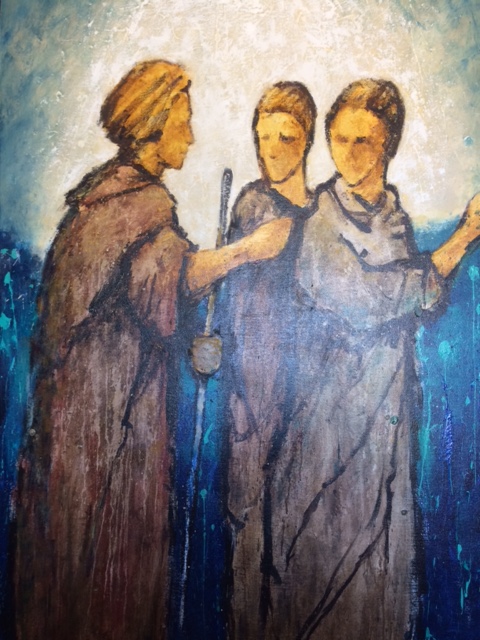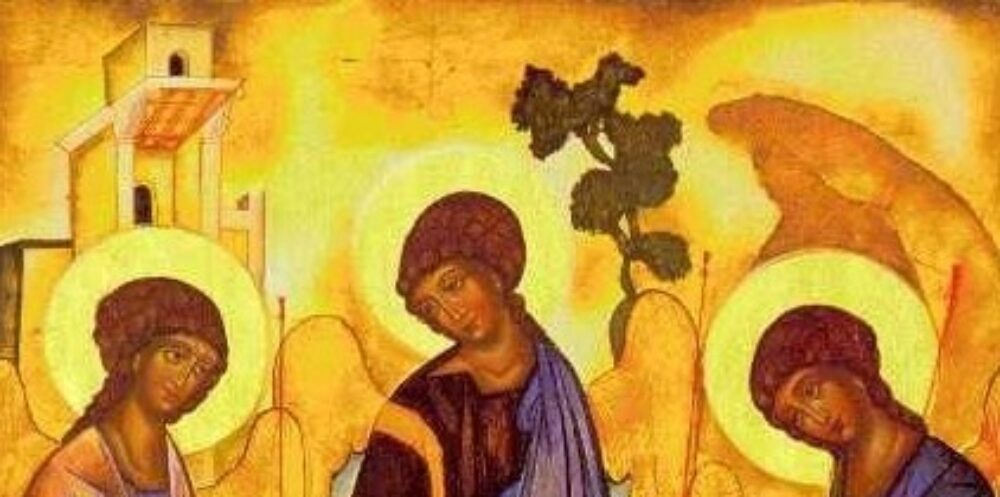
And in the same region there were shepherds out in the field, keeping watch over their flocks by night And an angel of the Lord appeared to them, and the glory of the Lord shone around them, and they were filled with great fear. And the angel said to them, “Fear not, for behold, I bring you good news of great joy that will be for all the people. For unto you is born this day in the city of David a Savior, who is Christ the Lord. And this will be a sign for you: you will find a baby wrapped in swaddling cloths and lying in a manger.” And suddenly there was with the angel a multitude of the heavenly host praising God and saying,
“Glory to God in the highest
and on earth peace among those with whom he is pleased.”
When the angels went away from them into heaven, the shepherds said to one another, “Let us go over to Bethlehem and see this thing that has happened, which the Lord has made known to us.” And they went with haste and found Mary and Joseph, and the baby lying in a manger. And when they saw it, they made known the saying that had been told them concerning this child. And all who heard it wondered at what the shepherds told them. But Mary treasured up all these things, pondering them in her heart. And the shepherds returned, glorifying and praising God for all they had heard and seen, as it had been told them. Luke 2:8-20
Intro: I’m going to begin by asking you two questions
First, What makes you feel happy?
– take a moment and give this some thought
Second, What makes you feel joy?
– again, take a moment with this question
I don’t think it’s possible to separate joy from happiness
– but I do believe it’s helpful to make the distinction
• we could spend a lifetime in the pursuit of happiness,
◦ pile up a lot of good times,
◦ but never experience joy
– so, how do they differ?
• happiness depends on external factors–what “happens”
joy depends on internal processes–response and reflection
• happiness is temporary
joy has a long shelf-life
• happiness fluctuates
joy is stable
• happiness is loud
joy is quiet
• happiness feels good
joy feels content and grateful
• happiness expresses itself with enthusiasm
joy expresses itself with a smile, a hug
• happiness is at home with entertainment
joy is at home with deep thought
This third Sunday of Advent we celebrate joy
The angel’s presence evoked great fear; their message was of great joy
In first century Israel, a shepherd’s life was not enviable
Bruce Malina provides some cultural background to the story:
“Although shepherds could be romanticized (as was king David [sic]), they were usually ranked with . . . tanners, sailors, butchers, camel drivers, and other despised occupations. Being away from home at night they were unable to protect their women and therefore were considered dishonorable. In addition, they often were considered thieves because they grazed their flocks on other people’s property.”
– shepherding was a bottom-rung occupation
• some jobs today are treated with a noticeable lack of respect
◦ we don’t even mention them by name, but activity
◦ “flipping burgers,” “scrubbing toilets,” “washing dishes”
“bagging groceries,” and so on
• in Luke’s gospel, Jesus gravitated towards these people
◦ more than once, he is criticized for socializing with them
– the world of these shepherds was hard and unpleasant
• authoritarian governments create a culture of oppression
◦ that is, people who are oppressed by “higher-ups”
◦ typically oppress others who are “lower-downs”
• shepherds were fair game for everyone’s contempt
WARNING: This will be a brief tangent. To me, a sad example of ugly religion is when people who claim to be Christians treat with contempt or condescension waiters in restaurants, clerks in stores, fast-food servers, gardeners, janitors, and people other similar professions. And some ugly religion people do this just because they can. In the reconstructed world of Jesus, no person is above or below anyone else.
But whoever would be great among you must be your servant, and whoever would be first among you must be slave of all (Mk. 10:43-44)
The angel promised a joy that will be for all the people
– as if giving proof this was true, the announcement came to shepherds
• those dirty outcasts became the first messengers of the good news
In scripture, God is the source of all human joys
Israel celebrated annual feasts in which they worshiped with rejoicing
(see Deut. 16:11, 14, 15; 26:11; 27:11)
– they rejoiced at harvest time, sheep-shearing, weddings, etc.
• in all joyful occasions, they lifted their eyes to heaven
◦ every good thing that comes from the natural world is God’s gift
◦ and every gift is cause for joy and rejoicing with thanksgiving
There are many who say, “Who will show us some good?
Lift up the light of your face upon us, O LORD!”
You have put more joy in my heart
than they have when their grain and wind abound (Ps. 4:6-7)
• in that same psalm, the poet celebrates other gifts of God
◦ relief from distress – peace, and safety
– after returning from exile, Israel renewed their covenant with God
• when they gathered to hear the reading from the Scriptures,
◦ the people wept over their past sins and what that cost them
• but Nehemiah and the Levites told them not to grieve
Go your way. Eat the fat and drink sweet wine and send portions to anyone who has nothing ready, for this day is holy to our Lord. And do not be grieved, for the joy of the LORD is your strength (Neh. 8:10)
Israel also rejoiced in God for their liberation from slavery and exile
– after fleeing Egypt and crossing the Red Sea,
Then Moses and the people of Israel sang this song to the LORD, saying,
I will sing to the LORD, for he has triumphed gloriously;
the horse and his rider he has thrown into the sea.
The LORD is my strength and my song,
and he has become my salvation
this is my God, and I will praise him,
my father’s God, and I will exalt him (Ex. 15:1-21)
• looking forward to the time they would return from captivity,
◦ Isaiah sang,
And the ransomed of the LORD shall return
and come to Zion with singing;
everlasting joy shall be upon their heads;
they shall obtain gladness and joy,
and sorrow and sighing will flee away (Isa. 51:11)
– but most frequently in scripture, especially in the New Testament,
• joy comes from relationships with other people
◦ so Paul could say to the believers in Thessalonica,
For what is our hope or joy or crown of boasting before our Lord Jesus at his coming? Is it not you? For you are our glory and joy (1 Thes. 1:19)
The Book of Joy was one of my favorite reads in the past two years
In it, Douglas Abrams reports a week-long conversation between the Dalai Lama and Desmond Tutu
– both men have suffered extreme hardships
• yet both men are fountains of joy
– through their conversation they discerned eight pillars of joy:
Perspective – “There are many different angles”
Abrams, “A healthy perspective really is the foundation of joy and happiness, because the way we see the world is the way we experience the world. Changing the way we see the world in turn changes the way we feel and the way we act, which changes the world itself.”
Humility
– we are not as big as we think
• and, we are not as small as we think
Desmond Tutu, “God uses each of us in our own way, and even if you are not the best one, you may be the one who is needed or the one who is there.”
Humor – “Laughter, joking is much better”
Abrams, “Humor is one of the best ways to end conflict, especially when you are able to make fun of yourself or admit that you are overreacting or being silly.”
Acceptance – “The only place where change can begin”
Forgiveness
Tutu, “Forgiveness is the only way to heal ourselves and to be free from the past.” “Without forgiveness, we remain tethered to the person who harmed us.”
Gratitude
Compassion
Generosity
– in his instructions to the leaders of the church of Ephesus, Paul said,
In all things I have shown you that by working hard in this way we must help the weak and remember the words of the Lord Jesus, how he himself said, “It is more blessed to give than to receive” (Acts 20:35)
Conclusion: And that brings us back to where we began
The good news of great joy had to do specifically with Jesus
– Peter said that in him we rejoice with joy that is inexpressible and filled with glory (1 Pet. 1:8)
• something Jesus said to his disciples their last night has stuck with me
These things I have spoken to you, that my joy may be in your, and that your joy may be full (Jn. 15:11)
When the shepherds got over their fear,
– and their rational minds kicked in,
• they decided, “If this is true, we better go check it out”
This is all I really have to say today
– we can find our way to Jesus if we sincerely want to
• we can open our hearts fully to him
• allow him to pour his joy into us – and then begin to live it
What I know for sure,
is that there is more in Jesus to lift us up
than there is in this world to bring us down
Now after Jesus was born in Bethlehem of Judea in the days of Herod the king, behold, wise men from the east came to Jerusalem, saying, “Where is he who has been born king of the Jews? For we saw his star when it rose and have come to worship him.” When Herod the king heard this, he was troubled, and all Jerusalem with him; and assembling all the chief priests and scribes of the people, he inquired of them where the Christ was to be born. They told him, “In Bethlehem of Judea, for so it is written by the prophets:
‘And you, O Bethlehem, in the land of Judah,
are by no means least among the rulers of Judah;
for from you shall come a ruler
who will shepherd my people Israel.'”
Then Herod summoned the wise men secretly and ascertained from them what time the star had appeared. And he sent them to Bethlehem, saying, “Go and search diligently for the child, and when you have found him, bring me word, that I too may come and worship him.” After listening to the king, they went on their way. And behold, the star that they had seen when it rose went before them until it came to rest over the place where the child was. When they saw the star, they rejoiced exceedingly with great joy. And going into the house, they saw the child with Mary his mother, and they fell down and worshiped him. Then, opening their treasures, they offered him gifts, gold and frankincense and myrrh. Matthew 2:1-11
Intro: I was young and foolish the first time I visited Bethlehem
I was not prepared for the Church of the Nativity
– an ancient cathedral built over a cave
• the guide told us this was the shelter where Jesus was born
– a large icon screen stood behind the altar reaching almost to the top of the vaulted ceiling
• brass candle-holders and incense censers hung between the pillars
• an assortment of meaningful symbols dangled from the ceiling,
◦ including bulbs that looked like gigantic Christmas tree ornaments
– you see, this is what we do
• we decorate Christmas with symbols that are meaningful to us
• for instance, we have painted the magi into a warm and cozy scene
◦ in reality, the mood Matthew describes was tense and dangerous
◦ and in spite of the danger, the magi found Jesus and worshiped him
This is the second Sunday of Advent
– and this morning we light the “Bethlehem candle”
• different meanings have been attached to it
• you and I might as well attach our own meanings
– for me, this year, the candle represents the light that led the magi to Jesus,
• and the faith that enabled them to persevere until they found him
In the movie, “Jesus of Nazareth,” Peter Ustinov played Herod the Great
He was an excellent choice! I remember him fuming,
“King of the Jews? King of the Jews? I am the king of the Jews!”
– we know from history that “When Herod ain’t happy, ain’t nobody happy”
• Matthew handles this rather delicately,
When Herod the king heard this, he was troubled and all Jerusalem with him
• Herod consulted the biblical experts
◦ where did the prophets say the Messiah was to be born?
◦ they answered, “Bethlehem,” and supplied a quote from Micah
– so at this point in the story, who all knows where to look for Messiah?
• the chief priests and scribes, King Herod, and now the magi
◦ but of the three, only the magi go off to find him
• this is the first lesson I learn about the faith of the magi:
It belongs not to the person who knows,
but to the person that goes
Many books have been written on what Christians believe
– and arguments over our beliefs have raged for 2,000 years
• but beliefs do not necessarily bring us to faith
– beliefs are static–that is, they do not live, change, or evolve
• we can pick up new beliefs or throw out old beliefs, but they stay the same
◦ they can be discussed, analyzed, defined, and repeated
◦ they can branch out, but they don’t reproduce
• James points out the limits of belief with a measure of sarcasm,
You believe that God is one; you do well. Even the demons believe–and shudder! (Jas. 2:19)
Faith, on the other hand, is dynamic – it moves, grows, and changes
Helmut Thielicke, “. . . faith does not consist in ‘believing something is true’ . . . . It consists in a struggle, a conversation with God.”
– I am convinced that you have to struggle with faith to make it your own
• beliefs that have been handed down to us belonged to someone else
• faith, however, can only belong to us
Faith is a journey or quest – like that of the magi
Faith moves toward what it believes
– and once faith begins to move, it sets other things in motion
• faith makes other things happen
• the magi’s journey of faith was not an easy one
T. S. Eliot imagined their journey in poetry
One of the magi narrates:
‘A cold coming we had of it,
Just the worst time of the year
For a journey, and such a long journey:
The ways deep and the weather sharp,
The very dead of winter.’
And the camels galled, sore-footed, refractory,
Lying down in the melting snow.
There were times we regretted
The summer palaces on slopes, the terraces,
And the silken girls bringing sherbet.
Then the camel men cursing and grumbling
And running away, and wanting their liquor and women,
And the night-fires going out, and the lack of shelter,
And the cities hostile and the towns unfriendly
And the villages dirty and charging high prices:
A hard time we had of it.
At the end we preferred to travel all night,
Sleeping in snatches,
With voices singing in our ears, saying
That this was all folly.
(T. S. Eliot, “Journey of the Magi” — first stanza)
– but I do not believe our journey is much easier
• for them, Bethlehem was hundreds of miles
◦ for us it is thousands of miles
◦ and even more, it’s thousands of years away
• we have to travel the distance of credibility
Helmut Thielicke, “Are we to entrust ourselves and our questions about life to a man who road a donkey in a legendary far-off time in a [distant] corner of the world?”
◦ of course, the answer is yes
◦ only Jesus did much more than just ride a donkey
On Wednesday night, our Lexio Divina meditation was John the Baptist’s question to Jesus, Are you the one who is to come, or shall we look for another? John had struggles of his own when it came to placing his faith in Jesus. Perhaps he expected a Messiah who would drive Rome out of Israel, restore the ancient dynasty of David, and establish Jerusalem as the super power and political center of the world, bringing peace to God’s people and all the nations.
Jesus’ answer to John’s disciples was, “Just go back and tell him what you’ve seen”
– then he added a caption to the picture they would paint for John
And blessed is the one who is not offended by me (Lk. 7:23)
• to be offended is to be “stumbled,” “put off,” or “disappointed”
– Jesus was saying,
“This is who I am. These are the things I do. The blessing I bring is for the one who will accept me without disappoint me, but take me for who I am”
– this is the struggle of faith — we are at times struggling with Jesus
Faith is what links us to God
There is a verse of Hebrew Scripture at heart of Paul’s theology
– it is a statement about Abraham
And he believed the LORD, and he counted it to him as righteousness (Gen. 15:6)
• again, righteousness means right-in-relation to the other person
• faith in God is what makes a person right with God
◦ all through the Scriptures, God is saying, “Trust Me”
– some students are good at taking tests
• but there’s one test no one enjoys taking
◦ it’s what James called the testing of your faith (Ugh!)
. . . for you know that the testing of you faith produces steadfastness (Jas. 1:3)
◦ Peter says the genuineness of our faith is tested because it’s
more precious than gold that perishes though it is tested by fire (1 Pe. 1:7)
Jesus tested the faith of his disciples more than once
– and when it broke down, he called them on it
• when he calmed a storm at sea,
Why are you so afraid? Have you still no faith? (Mk. 4:40)
• when they asked why there were unable to cast out a demon
Because of your little faith (Mt. 17:20)
– God doesn’t test our faith in order to break us
• to show us that we’re hypocrites, that we didn’t make the cut
• if school tests merely reveal what students don’t know,
◦ they’re worthless
◦ if they’re tools to help us learn, they’re invaluable
God’s purpose is to deepen, strengthen, and increase our faith
Conclusion: In our list of Christmas preparations,
Do we need to include a trip to Bethlehem?
– Can’t we just say,
“I have all these other things to get done.
And I still have presents to buy,
cards to address, dinners to attend.
And I know all that stuff about Bethlehem already.
Is it all that important that I think about it–again? ”
– Yes, it is, because there is where our faith was born
Faith can come to people in different ways
– sometimes it comes spontaneously, as in crisis when people cry out for God
• or it comes naturally, in times of desperation
◦ as when parents will try anything to save the life of their child
– sometimes it comes as the last or only solution to a problem
• many people have to be talked into surgery
◦ or driven to it by pain
◦ “I don’t trust doctors” or “I don’t trust hospitals”
• but one day they have to go, because there is no other hope
Our day to day faith in Jesus, the faith we live by, Paul says
comes from hearing and hearing through the word of Christ (Ro. 10:17)
• hearing again, we create a path for faith in our brains
Andrew Newberg and Mark Walden, in How God Changes Your Brain, tell us, “When you intensely meditate on a specific goal over an extended period of time, your brain begins to relate to your idea as if it were an actual object in the world by increasing activity in the thalamus, part of the reality-making process of the brain. The concept begins to feel more obtainable and real.”
• what is the goal we’re stretching for here?
◦ to build ourselves up in our faith
But you, beloved, building yourselves up in your most holy faith and praying in the Holy Spirit, keep yourselves in the love of God (Jude 20)
This week there will be plenty of reminders of Jesus’ birth
– slow down, press the pause button on your day, and think
• not your typical busy brain thoughts
• but quiet reflective thoughts
The sort of thought that is rooted in awareness
and gives you new eyes to see,
and opens you up to the touch of Jesus
Be with Jesus in that present moment
in such a way that you allow yourself to be changed
But there will be no gloom for her who was in anguish. In the former time he brought into contempt the land of Zebulun and the land of Naphatali, but in the latter time he has made glorious the way of the sea, the land beyond the Jordan, Galilee of the nations.”
The people who walked in darkness
have seen a great light;
those who dwelt in a land of deep darkness,
on them the light has shown.
You have multiplied the nation;
you have increased its joy;
they rejoice before you
as with joy at the harvest,
as they are glad when they divide the spoil.
For the yoke of his burden,
and the staff for his shoulder,
the rod of his oppressor,
you have broken as on the day of Midian.
For every boot of the tramping warrior in battle tumult
and every garment rolled in blood
will be burned as fuel for the fire.
For to us a child is born,
to us a son is given;
and the government shall be upon his shoulder,
and his name shall be called
Wonderful Counselor, Mighty God,
Everlasting Father, Prince of Peace.
Of the increase of his government and of peace
there will be no end,
on the throne of David and over his kingdom,
to establish it and to uphold it
with justice and with righteousness
from this time forth and forever more.
The zeal of the LORD of hosts will do this Isaiah 9:1-7
Intro: Should we celebrate Christmas?
– irritable Christians who write blogs or post on social media,
• remind us that it’s not likely Jesus was born in December
◦ that the “church” took over a pagan holiday,
◦ and to this day much of the Christmas celebration is still pagan (1)
• if that’s so, should we not celebrate the birth of Jesus?
◦ not return to the old, old narrative of announcements, angels, stable, shepherds, star and magi?
◦ should we, like the Gospels of Mark and John skip over all that?
– God entered our world – that is an event worth celebrating
• we don’t want to forget what our lives were like without him
◦ or that Israel spent long years waiting, looking, hoping
• and what better time to celebrate his first coming
◦ than in the cold, dark days of winter?
◦ at Christmas we reconnect with a sacred moment in time
Advent season is four weeks of preparation
– our attention is focused on the first and second coming of Jesus
• but it’s more than remembering he came once and will come again
• we prepare ourselves for Jesus,
◦ as if he were to return at any time – next week. tomorrow, tonight
◦ or in this present moment
Isaiah 9 is one of the standard texts for first Sunday of Advent
The first word in chapter 9 is a conjunction, “but”
– it joins two ideas, but indicates a difference – a turn
• so what came before this turn?
– at that time, Ahaz was the king of Judah–he was not a good man
• two other nations had allied themselves to invade Judah
• everything Ahaz did to prepare for the invasion was wrong
◦ instead of turning to Israel’s God,
◦ he turned to another nation and its gods
In the time of his distress he became yet more faithless to the LORD—this same King Ahaz. For he sacrificed to the gods of Damascus that had defeated him and said, “Because the gods of the kings of Syria helped them, I will sacrifice to them that they may help me.” But they were the ruin of him and of all Israel (2 Chr. 28:22-23)
God sent Isaiah to the people of Judah with a message of doom
And they will look to the earth, but behold, distress and darkness, the gloom of anguish. And they will be thrust into thick darkness (Isa. 8:23)
– hearing this, Isaiah’s audience would feel,
• the utter hopelessness of their situation
– this is the point where Isaiah’s message turns
• the gloom does not spread everywhere
◦ and it’s not for all time
But there will be no gloom for her who was in anguish
Are you familiar with the lands named, Zebulun and Naphtali?
It’s okay if you aren’t–in fact, this is the only place in Isaiah where they are mentioned
– they were two of Israel’s tribes who settled on the northeast border
• we are more familiar with “the Jordan” and “Galilee”
◦ here, Galilee is associated with “the nations”–i.e., Gentiles
• the point is, this region was considered compromised
– these territories were far from the capital city of Samaria
• they were the least likely places to find God at work
• so it is shocking that Isaiah would point to them and say,
◦ “This is where God’s salvation will be revealed first”
If we jump to the New Testament, Zechariah, father of John the Baptist,
– prophesied that John’s mission would be to
go before the Lord to prepare his ways and
to give light to those who sit in darkness and in the shadow of death (Lk 1:76-79)
• and in Matthew, when Jesus began his ministry, he began in Galilee
And leaving Nazareth he went and lived in Capernaum by the sea, in the territory of Zebulun and Naphtali, so that what was spoke by the prophet Isaiah might be fulfilled:
The land of Zebulun and the land of Naphtali,
the way of the sea, beyond the Jordan, Galilee of the Gentiles—
the people dwelling in darkness
have seen a great light,
and for those dwelling in the region and shadow of death,
on them a light has dawned (Mt. 4:12-16)
◦ Jesus began his ministry in these most unlikeliest of places
– Isaiah said God was going to turn the fate of his people around
• and he was going to do in their darkest moment and darkest places
The people who walked in darkness
have seen a great light
In the Hebrew Scriptures, light is associated with glory
A brilliant radiance appeared on Mt. Sinai, over the sacred tent and in the temple
– if you want a visual image, think back to a brilliant sunrise
• this light was how God revealed his immediate presence to them
As soon as Aaron spoke to the whole congregation of the people of Israel, they looked toward the wilderness, and behold, the glory of the LORD appeared in the cloud (Ex. 16:10)
• this is what Isaiah announced was on its way,
◦ the glory of God’s presence
– it is as if Isaiah could see it happening already
• already he could feel the joy of it – hear the rejoicing (v. 3)
• to be set free is a wonderful feeling
◦ whether we’re liberated from an oppressive situation or from our own small selves — our bad habits and addictions
◦ the joy of salvation is the kind of joy that celebrates
The heart of this hope is verse 6 (we’ll come back to it)
There is a key statement at the end of verse 7
The zeal of the LORD of hosts will do this
– Israel’s salvation would not result from human ambition or be a human achievement
• God is not neutral when it comes to his people
◦ to talk about his zeal or his jealousy, is to say that he is passionate
• of course, in a unique way, because he is God
◦ but, still, we can understand – he cares – and deeply
◦ and God’s passion is a powerful force
– God makes things happen – the things he wants to happen
Now verse 6, and I want to read this with Jesus in mind
For to us a child is born,
to us a son is given
– my dad liked to stress that a child was born, but the Son was given
• the Son, who had been with the Father from eternity, was given to us
For God so loved the world, that he gave his only Son, that whoever believes in him should not perish but have eternal life (Jn. 3:16)
in the previous chapter, a name was given to the child
• in a previous chapter, a name was give to the child born of a virgin
◦ Immanuel (Isa. 7:14), which Matthew translates for us, “God with us” (Mt. 1:22-23)
– and the government will rest on his shoulders
• this was Isaiah’s vision and Israel’s hope
• a new government in which God’s will would be done on earth as in heaven
And then, that blessed list of titles:
Wonderful Counselor – no more wrong turns for the nation
– no more guessing, no more mistakes, or foolish decisions
Mighty God – the power Israel’s Savior wields is unlimited
– this is the might that liberated Israel from Egypt
Everlasting Father – before King Ahaz, Israel had a good king
– Ahaz was not good, but after him King Hezekiah was good
• but after Hezekiah, his son, Manasseh was Judah’s worst king ever
• there was no consistency in the succession of kings from one generation to the next
◦ but with God’s Savior, there would no longer be a a succession of unreliable rulers
And to him was given dominion
and glory and a kingdom,
that all peoples, nations, and languages
should serve him;
his dominion is an everlasting dominion,
which shall not pass away,
and his kingdom one
that shall not be destroyed (Dan. 7:14)
– when we are given the Son, we have the Father also
Jesus said, Whoever has seen me has seen the Father (Jn. 14:9)
Prince of peace – history tells the story of this war-torn planet
– political candidates can promise peace and try to pursue peace,
• but none of them can deliver peace
– Jesus is the “prince” of peace
• he makes the promise and he delivers
Verse 7 combines the last two themes, “everlasting” and “peace”
– his government of peace will continue to spread, expand, and never end
• again, this is something God is passionate about
• his zeal will make it happen
– do not forget, God begins his work in the unlikeliest of places
When Jesus’ ministry got underway, one of his first followers ran to tell his friend Nathanael that he had found the One, whom Moses and the prophets had written about, Jesus of Nazareth. Nathanael answered, “Can anything good come out of Nazareth?” (Jn. 1:46). He was expressing the common opinion that northern Israel was less devout and further from the spiritual heart of the nation.
When the Pharisees first tried to arrest Jesus, Nicodemus spoke up in his defense, that they should not condemn him without a fair trial. Their response was, “Are you from Galilee too? Search and see that no prophet arises from Galilee” (Jn. 7:52).
God is pleased to shine his light into these dark corners. God’s work begins where his light is most needed and can do the most good–places like my own dark heart.
Conclusion: What is it that shines in the darkness?
In a word: Hope – even a wire-thin ray of hope can keep a life going
– in recent years a lot of people have written books and essays on hope
• most of it is common-sense wisdom
◦ they offer a number of things we can do to ignite hope and keep it alive
◦ they all say the same thing: hope is something we have to crank out for ourselves
• but Christmas is about gift — we are given a hope
◦ or better, we are given a hope
◦ it’s like a life preserver that has been tossed to us
– we do not create hope for ourselves
• what we do is hold on to the hope that is given to us (Heb. 3:6)
The Christmas promise is as lovely and life-changing as ever
But it won’t do us any good unless we personalize it
It is a matter of getting beyond our thoughts,
whether intensely rational or devotional,
and going down deeper than our emotions
It is about being there
in that dark place where the baby is born,
and the strangers adore,
and the light now shines.
For Jesus has shown us a Father who cares
and who has dropped us a ray of hope,
hope that is ours,
hope that can anchor itself in God,
a hope that holds onto us and will never pass away
__________________
(1) Frequently, the Roman Catholic Church is blamed for setting the date for the annual celebration of Christmas. However, in the fourth century, there was no distinction between Roman Catholic, Eastern Orthodox, or Protestant church (the later two did not yet exist)–there was only one Church and all Christians belonged to it.
Therefore do not be foolish, but understand what the will of the Lord is. And do not get drunk with wine, for that is debauchery, but be filled with the Spirit, addressing one another in psalms and hymns and spiritual songs, singing and making melody to the Lord with your heart, giving thanks always and for everything to God the Father in the name of our Lord Jesus Christ, submitting to one another out of reverence for Christ. Ephesians 5:17-21
Intro: When I was twenty years old, I moved to 29 Palms
A group of young married couples wanted a Calvary Chapel there
– so I drove out there to speak at a Christian concert,
• and the next day when the bands went home,
• I stayed behind and we had our first Sunday morning service
While living there, I would drive to a church in Palm Springs on occasion for their Wednesday night Bible study. Sometimes I would also hang out at a Christian coffee shop–The Ark–, where Brother Harold spent a lot of time. Brother Harold was a wonderful, little old man with white hair and a long white beard. He was something of a Christian guru to the young Christians who frequented The Ark. People referred to him as a “walking concordance,” because he knew the Bible so well that he had almost all of it memorized.
Brother Harold sometimes visited the same Bible study I enjoyed. After the night’s teaching, the preacher would take questions. One night a question came up regarding 1 Thessalonians 5:18, . . . in everything give thanks; for this is God’s will for you in Christ Jesus. The preacher explained, “Notice that it says in all things, not for all things.” Suddenly, Brother Harold blurted out, “In Ephesians 5:20 it does!” Taken back the preacher paused, then, with embarrassed smile, said, “Yes, Brother Harold, but right now I’m talking about 1 Thessalonians. Stay out of Ephesians!”
We have made November “Thanksgiving Month”
– and today we come up against an impossible challenge
Does the Bible say we must give thanks to God for bad things?
There are Christians whose interpretation of this is rigidly literal
– they will tell parents who have lost a child,
• even if it feels wrong or is difficult to do, they must give thanks
• “It’s what the Bible says, so that’s what you must do”
– since this is their belief,
• they have to somehow justify this practice
◦ the authoritarians might say, “God moves in mysterious ways”
◦ the rationalists might say, “Giving thanks changes your perspective”
It is true that, eventually, we have to accept everything that comes
– but do we have to give thanks for everything
There is an upside-down facet to Jesus’ worldview
Blessed are you poor . . . hunger now . . . weep now (Lk. 6:20-23)
You know that those who are considered rulers of the Gentiles lord it over them, and their great ones exercise authority over them. But it shall not be so among you. But whoever would be great among you must be your servant (Mk. 10:42-43)
– we do have to learn new attitudes about some things
• Christians are not guaranteed immunity from pain
◦ our trust in God does not exempt us from suffering
◦ but it does teach us to respond to it in a new way
• if we give thanks for things we do not understand,
◦ it creates in our minds room for mystery
◦ mystery is the paper in which gifts are wrapped
when the wrapper is removed, we have the gift
David Steindl-Rast, “Once out of a hundred times we will be challenged to respond fully and gratefully to something which we cannot enjoy. This, too, is given reality; it, too, is gift. Although I cannot enjoy it, will I still be grateful? It all depends on whether or not I have learned to unwrap the gift-within-the gift: opportunity — the real gift — is always opportunity to grow.”
– when Martin Laird addresses hindrances to contemplation,
• he argues that they turn out to be helpful
• like resistance exercises for the spirit,
◦ handling hindrances properly strengthens our contemplation
Distractions: if we meet them “with stillness and not commentary,” they contribute to our training in . . . awareness and stillness”
Boredom: reveals that “our prayer is going deeper than where our thoughts and feelings reach”
Negative emotions: when they come up in contemplation, we can follow them to their roots, where they can be weeded out. “The inner calm that is slowly cultivated by the practice of contemplation encourages and enables us to see right into the mind.”
Intellectual struggles: bring us to mystery – freedom does not come when all our questions are answered, but when we stop allowing our intellect to filter and control what God wants to pour into us
– I was reminded of this last week reading Mark 6:1-6
• when Jesus visited his hometown, his old neighbors asked,
Where did this man get these things? What is the wisdom given to him? How are such mighty works done by his hands? Is not this the carpenter, the son of Mary and brother of James and Joses and Judas and Simon? Are not his sisters here with us?” And they took offense at him. . . . And he could do no might work there . . . . And he marveled at their unbelief
• relying on what they knew about him,
◦ they never guessed there was much that they did not know
• what Jesus could do for them was limited by their unbelief
◦ unfortunately, our rational mind can sometimes get in the way
So, okay, God uses hardship and suffering to work good in us
But does that mean we thank him for everything?
– No! And why not?
First, we draw the line at absurdity
– if our interpretation of scripture suggests a ridiculous response,
• we look for a more accurate interpretation
• otherwise, a lot of Christians would be going around,
◦ with one hand or foot cut off and one eye gouged out (Mk. 9:43-48)
– true, God’s prophets were sometimes told to do some strange thing
• but those actions were meant to grab attention
◦ and to emphasize their message
◦ the fact that their action was strange is what made it work
• but even then, there were limits
◦ Ezekiel told not to grieve the death of his wife
◦ but he was not told to give thanks for it (Eze. 24:16)
Second, if we’re not even to mention certain evil actions,
• how much less are we to give thanks for them in prayer?
But sexual immorality and all impurity or covetousness must not even be named among you, as is proper among saints. Let there be no filthiness nor foolish talk nor crude joking, which are out of place, but instead let there be thanksgiving (not for these things, but instead of them, vv. 3-4)
Take no part in the unfruitful works of darkness, but instead expose them. For it is shameful even to speak of the things that they do in secret (vv. 11-12)
Third, Because God isn’t responsible for everything that happens
– I imagine thanking God for something terrible,
• and him saying, “Don’t thank Me! I didn’t do this.”
• in Job, Satan challenged God,
Stretch out your hand and touch all that he has, and he will curse you to your face
But God’s answer was, Behold, all that he has is in your hand (Job 1:11-12)
◦ God did not have a hand in the evil that fell on Job
◦ we also learn from Job it is okay to be silent
okay to grieve, okay to be angry, and okay to complain
– are we supposed to give thanks for:
• the sex-slave trade? drug trafficking? child abuse?
• God is not pleased with humans spreading violence on earth (Gen. 6:13)
◦ through Jeremiah, God addressed child-sacrifice
[They offered as sacrifice] their sons and daughters to Molech, though I did not command them, nor did it enter into my mind, that they should do this abomination (Jer. 32:35)
Fourth, because God’s gifts are good
Every good gift and every perfect gift is from above, coming down from the Father of lights, with whom there is no variation or shadow due to change (Jas. 1:17)
Conclusion: In Job’s first round of trials, he did not give thanks
However, he did bless God – and that’s different
Fr. Romuald, “Bless God for everything that comes, even painful things”
– it is a way to rise above what comes at us
• we forget that everything matters to God
• our sorrows and suffering, our fears and anxieties
◦ so we are told,
casting all your anxieties on him, because he cares for you (1 Pe. 5:7)
– you see, we need to connect everything to God
• I have been with parents who have lost children
◦ you don’t say, “This isn’t bad,” or “This isn’t wrong,” or “This doesn’t hurt”
◦ Jesus’ prayer from cross was not thanksgiving,
My God, my God, why have your forsaken me? (Mt. 27:46)
• Job grieved: he tore clothes, shaved his head, fell on the ground
◦ but he blessed God
◦ because by blessing God we connect the bad thing to him
– we experience a tragedy and we say,
• “O God, I hate this loss. I can’t live with this pain”
◦ but you are connecting it with God
◦ we do this even with our sin
Romuald, “If you cannot connect something with God, then you’re lost”
• you’re stuck with having to deal with it on your own
There is a great irony here
Because we do give thanks for the suffering and death of God’s Son
We give thanks because:
the cross was not a dead end, but an open door
it is the mystery of good defeating evil,
of love love prevailing over hate,
and the ultimate victory of life over death
God does not expect us to give thanks for bad things
but we can always give thanks,
because God is good
even if everything else is not
And if we find it possible
to give thanks through our tears,
it will be for this reason,
that because God is good,
our story doesn’t end in sorrow and pain,
but in never ending joy and life
For the wrath of God is revealed from heaven against all ungodliness and unrighteousness of men, who by their unrighteousness suppress the truth. For what can be known about God is plain to them, because God has shown it to them. For his invisible attributes, namely, his eternal power and divine nature, have been clearly perceived, ever since the creation of the world, in the things that have been made. So they are without excuse. For although they knew God, they did not honor him as God or give thanks to him, but they became futile in their thinking, and their foolish hearts were darkened. Claiming to be wise, they became fools, and exchanged the glory of the immortal God for images resembling mortal man and birds and animals and creeping things. Romans 1:18-23
Intro: Growing up, in my hope, we gave thanks for every meal
My parents had us bow our heads and close our eyes
– if my brother tried to rat me out–“Chuck didn’t close his eyes!”
• Mom would ask him, “How do you know?”
– a prayer of thanks before eating is not a bad habit,
• so long as it is heartfelt
One year we were at my grandparents’ home for Thanksgiving. A football game played on their old black and white TV, but the volume was turned down when the time came for Dad’s prayer before dinner. Suddenly, in the middle of Dad’s prayer, Uncle Bill shouted, “Touchdown!” After the “Amen,” Grandpa told Bill, rather sternly, “Never interrupt a prayer!” Then he added, “Besides, there was a penalty on the play and the touchdown was called back.”
Last week I suggested November would be “Thanksgiving month”
Paul has a lot to say about giving thanks in his letters
– in fact, he sums up God’s will for us with these basic practices:
. . . always seek to do good to one another and to everyone. Rejoice always, pray without ceasing, give thanks in all circumstances; for this is the will of God in Christ Jesus for you (1 Thes. 5:15-18)
• in our passage, Paul says something about not giving thanks
• he sees ingratitude as the beginning of a downward slide
◦ in fact, a sign of the last days is that people will be ungrateful (2 Tim. 3:2)
– the problem wasn’t that unbelievers did not know about God
• the universe reveals him–even his invisible attributes
◦ the problem was that knowing about God,
they did not honor him as God or give thanks to him
• for Paul, this is a serious spiritual malfunction
◦ one that sent society in the wrong direction
◦ he illustrates its downward spiral in a list of worldly vices that includes envy, murder, strife, deceit and maliciousness
◦ these are symptoms of the wrong turn taken by society
There may be a variety of reasons people are not thankful
Years ago, watching the Italian Westerns,
– it bothered me that Clint Eastwood never said ‘Thanks’
• not even when someone saved his life or shared food with him
– he was too cool, or tough, or independent for that
• he wasn’t a polite cowboy–he was a hired gun
Us ordinary people have different reasons for lacking gratitude
– there are some people who seem to feel entitled
• they deserve what is given them or done for them
• they don’t think to say “thank you” to people who get paid to wait on them or check their groceries
– then there are those who take credit for all they have
• why should they be grateful?
◦ didn’t they work hard for the comforts they enjoy?
• it doesn’t occur to them that no one who comes into this world
◦ is guaranteed health, strength, and energy
– other people don’t think they have any reason to be grateful
• they have experienced so much abuse,
◦ or so many losses, or so many illnesses, or failures,
◦ that being thankful doesn’t enter their minds
– I suppose there are people who have been left in the dark
• who never learned the social rhythm of “please” and “thank you”
Giving thanks is not just a courtesy–a proper and polite habit
Most of us learned to be polite when we were still small children
– but polite does not touch the heart of gratitude
It has been suggested, there are two movements to giving thanks
– in first movement we acknowledge God and what he’s done
• we thank him for ordinary blessings:
◦ food, shelter, good health, family
• and we thank him for extraordinary blessings:
◦ kindness and compassion, mercy, comfort in our sorrows
– the second movement is deeper and comes through reflection
• what kind of God is this,
◦ that shows me such kindness, compassion, and mercy?
• or, in the words of C. S. Lewis,
“One’s mind runs back up the sunbeam to the sun.”
People who have spent much time thinking about gratitude tell us
– giving thanks wakes us up to our world and its many joys
(Ann Voskamp demonstrates this well in her book, One Thousand Gifts)
David Steindl-Rast who wrote, Gratefulness, the Heart of Prayer
• in his introduction tells us this is a book about waking up
Rast, “We run the risk of sleeping through life, of never waking up at all. Or else we wakefully rise to the risk of life, facing the challenge of life, of love.”
C. S. Lewis, says that to praise and give thanks “is simply to be awake, to have entered the real world; not to appreciate [the Object admired] is to have lost the greatest experience, and in the end to have lost all.”
• when he first thought about praise as it appears in the Psalms,
he had thought “of it in terms of compliment, approval or the giving of honor. I had never noticed that all enjoyment spontaneously overflows into praise . . . . I had not noticed how the humblest, and at the same time most balanced and capacious, minds, praised most, while the cranks, misfits and malcontents praised least.”
– what do we hear Paul saying about this?
• either you wake up and give thanks, and then wake up some more
• or you do not give thanks and you go blind
For although they knew God, they did not honor him as God or give thanks to him, but they became futile in their thinking, and their foolish hearts were darkened (vv. 21-22)
I am going to run through this again
– the first movement of gratitude is noticing and saying thank you
• For instance, I’m walk the dog and hear a bird-song
◦ thoughts immediately come to mind:
◦ what kind of bird is that? where is it perched?
• there’s something more comes to me – not thought, but a feeling
◦ the pleasure of that song, or the sound of a wind chime or a wave breaking on the shore
◦ it is the pleasure I feel that prompts me to give thanks
– the second movement is turning my attention to the Source of that pleasure
• this is what the Psalms of nature are constantly doing
◦ looking from creation and creatures to their Creator
– I could miss all of this
• I have a busy day and I’m rushing to be on time
◦ I don’t notice beauty, so I don’t feel its joy, and I don’t give thanks
◦ I don’t wake up, because, “I’m too busy for that right now”
• if anything, I just put a label on every site and sound
◦ “Oh, a tree,” “a child,” “a sunset–that’s nice” — and I hurry on
◦ a heart not filled with thanks is frequently filled with anxiety
We can wake ourselves up by practice
– for instance, we can start giving thanks for little things
• even if the small grace is not a miracle or direct act of God
• merely a natural event – clear traffic on a busy morning
◦ Mom would give thanks for parking spaces near the entrance of a store
Conclusion: Jesus was once traveling between Samaria and Jerusalem
Entering one village, he heard voices shouting from a distance. Ten men, who because of their leprosy were not allowed to go near other people, where shouting to get his attention. When he looked in their direction, they begged him, “Jesus, Master, have mercy on us.” All Jesus did was speak a single sentence to them, “Go and show yourselves to the priests.”
According to the Law of Moses, if people with contagious skin conditions that had healed, they had to be examined by a priest to verify that they were “clean” and could re-enter society.
As the ten men hurried away, they sat that their skin had become clear. One of them came to a dead stop. He held out his arms and examined both of them. He looked back at Jesus, then looked at his arms again (okay, I’m embellishing this part of the story a little). He turned around and ran back to Jesus, “praising God” with that same loud voice he had used earlier to get Jesus’ attention. Falling on his face at Jesus’ feet, he began giving him thanks. (Lk. 17:11-19)
– Luke makes a point to tell us the one who gave thanks was a Samaritan
• Jesus remarked on this fact too
◦ and he wondered why he was the only one to give thanks
• then Jesus told the leper, your faith has made you well
– I believe the one who gave thanks received more from Jesus than the others
• all of them were cleansed and received their certificate or whatever
• but this one man was made well–translating the word that means saved
◦ it also means healthy, sound, or whole
Giving thanks takes us to a fuller spiritual experience of life,
of God’s love and grace
This does not mean we receive more love or grace,
but we perceive more
and perceiving more, we have a richer, fuller experience of it
Giving thanks is a pivot point in our daily relationship with God
In giving thanks,
we make a sharp turn in our day,
and find our way back to Jesus
We wake ourselves up to his presence
again and again
Oh give thanks to the LORD, for he is good;
for his steadfast love endures forever!
Let Israel now say,
“for his steadfast love endures forever.”
Let the house of Aaron say,
“for his steadfast love endures forever.”
Let those who fear the LORD say,
“for his steadfast love endures forever.” Psalm 118:1-4
Intro: My grandchildren have invented a birthday tradition
It began when Calum announced:
“It’s my birthday and you have to do whatever I say all day”
– then Adrianna told me, “Grandpa, you have to get me something”
• I argued, “But you’re birthday was yesterday”
◦ but she explained, “This is my birthday week”
◦ of course, then Addison had to have a birthday month
• you can see where this is going
– though I refuse to extend birthday privileges to an entire month,
• I see no problem in making November “Thanksgiving Month”
• so my talk today and next two weeks will be on giving thanks
Psalm 118 opens with a chorus that has a long history
We first hear it immediately following a big event
– the day King David brought the ark of the covenant into his city
• the ark was the heartbeat of Israel’s religion and relationship with God
• David wanted to place it at the geographical center of nation
– he invited all Israel to participate in the procession
• we are told that afterward, David
appointed some of the Levites as ministers before the ark of the LORD, to invoke, to thank, and to praise the LORD, the God of Israel. [some] were to play harps and lyres; Asaph was to sound cymbals, and [others] were to blow trumpets regularly before the ark of the covenant of God. Then on that day David first appointed that thanksgiving be sung to the LORD by Asaph and his brothers (1 Chr. 16:4-7)
• David also composed a song for his worship leaders
◦ and the last stanza of the song was,
Oh give thanks to the LORD, for he is good;
for his steadfast love endures forever (1 Chr. 16:34)
◦ this became a “liturgy of the ark”; so to speak (1 Chr. 16:41)
This chorus represented Israel’s life of worship before God
– so later on, during spiritual revival or preparing for battle,
• these were the lyrics of their prayer (cf. 2 Chr. 20:21)
• hundreds of years later, when Jeremiah prophesied Israel’s return from exile,
◦ he predicted they would once again know joy and gladness
◦ they would come to the temple with thank offerings, singing,
Give thanks to the LORD of hosts, for the LORD is good,
for his steadfast love endures forever! (Jer. 33:11)
Psalm 118 is not only another song with this chorus – it is a script
It outlines an event of music and movement
– parts were written for three groups of people
• this is laid out in the introduction:
◦ Israel–i.e., the people who were present; the worshipers
◦ the house of Aaron–i.e., the priests
◦ those who fear the LORD–everyone else who was present for worship
– by the way, I’m not happy with translation, “steadfast love”
• like many words in biblical Hebrew, hesed has multiple meanings
◦ it is a loving benevolence, it is to treat someone with kindness
◦ in KJV hesed is frequently translated mercy and loving-kindness
• think of all the ways God expresses his goodness toward us
◦ hesed is behind God’s every act of love, mercy, and grace
Out of my distress I called on the LORD;
the LORD answered me and set me free. Psalm 118:5
Perhaps this verse was sung by a soloist
– still it is the collective voice of the people
• it summarizes their story
• this is typical of the Psalms of Thanksgiving
Walter Brueggemann explains a Psalm of Thanksgiving this way:
“. . . these psalms tell stories of going into the trouble and coming out of the trouble.” “The speaker is now on the other side of a lament or complaint.”
The LORD is on my side; I will not fear.
What can man do to me?
The LORD is on my side: I will not fear.
I shall look in triumph on those who hate me
It is better to take refuge in the LORD
than to trust in man.
It is better to take refuge in the LORD
than to trust in princes. Psalm 118:6-9
Here we learn what Israel has gained from their experience
– a firm confidence in God
– a clear lesson regarding who they can trust
All nations surrounded me;
in the name of the LORD I cut them off!
They surrounded me, surrounded me on every side;
in the name of the LORD I cut them off!
They surrounded me like bees;
they went out like a fire among thorns;
in the name of the LORD I cut them off!
I was pushed hard, so that I was falling,
but the LORD helped me. Psalm 118:10-13
These verses sing the story of what had happened
Artur Weiser, in his commentary on the Psalms, notes the poet’s use of metaphor and “exaggerated word-pictures which on the one hand describe the threat from which there was, humanly speaking, no escape, but on the other hand bring into prominence against this very background the greatness of divine deliverance.” (emphasis added)
The LORD is my strength and my song;
he has become my salvation.
Glad songs of salvation
are in the tents of the righteous:
“The right hand of the LORD does valiantly,
the right hand of the LORD exalts,
the right hand of the LORD does valiantly!” Psalm 118:14-16
Here God’s help is celebrated
– first, what God has become to them
– then, what God has done for them
I shall not die, but I shall live,
and recount the deeds of the LORD.
The LORD has disciplined me severely,
but he has not given me over to death. Psalm 118:17-18
At this point, a confession is made
– although severely disciplined, even here God is merciful
Artur Weiser, “His life has been granted to him anew and filled with a new meaning.”
Open to me the gates of righteousness,
that I may enter through them
and give thanks to the LORD.
This is the gate of the LORD;
the righteous shall enter through it.
I thank you that you have answered me
and have become my salvation.
The stone that the builders rejected
has become the cornerstone.
This is the LORD’s doing;
it is marvelous in our eyes.
This is the day that the LORD has made;
let us rejoice and be glad in it. Psalm 118:19-24
We can imagine the procession singing this as the approach the temple
– they call to the gatekeepers stationed at entrance
• they have come to the temple where they will give thanks
• in response, the gatekeepers sing,
This is the gate of the LORD;
the righteous shall enter through it
◦ the people can enter if they meet the criterion
◦ having entered the temple, they do what they came for (v. 21)
– the “stone” may stand for the entire temple
Robert Alter, “The speaker, having entered the temple gates and now standing within the courts of the resplendent building, compares himself in his former abject state to a stone at first considered unfit by the builders but then made the chief cornerstone of a grand edifice.”
• in the New Testament, Jesus is the cornerstone
• at first rejected by men, but ultimately honored by God (Mt. 21:33-42)
Save us, we pray, O LORD!
O LORD, we pray, give us success!
Blessed is he who comes in the name of the LORD!
We bless you from the house of the LORD.
The LORD is God,
and he has made his light to shine upon us.
Bind the festal sacrifice with cords,
up to the horns of the altar! Psalm 118:25-27
The prayer of the people
– their request for salvation
– their joy in anticipating the arrival of their savior
You are my God, and I will give thanks to you;
you are my God; I will extol you.
Oh give thanks to the LORD, for he is good;
for his steadfast love endures forever! Psalm 118:28-29
A vow of praise and thanksgiving
– they commit themselves to ongoing thanksgiving
– then brings the song comes full circle and ends where it began
Have you noticed how gratitude has been promoted in recent years?
By emphasizing it’s health benefits
– we are better off physical, mental, and in relationships if we give thanks
• it has even been said that being grateful increases our productivity
(as if we’re not going to say Thank you unless there’s something in it for us)
• the Bible provides us with another motive
It is good to give thanks to the LORD,
to sing praises to your name, O Most High (Ps. 92:1)
• giving thanks to God carries its own good within it
– it’s one of the ways we enjoy what God’s does for us
• when we realize circumstances did not have to go this way
◦ they could have turned out worse–very much worse
• but we have to let ourselves feel gratitude long enough for it:
◦ stir up in us the full energy of its joy
◦ to sink in and affect our mood
Ann Voskamp, “Thanks is what multiplies the joy and makes any life large, and I hunger for it.” “It’s ridiculous how much joy a moment can hold.”
Giving thanks opens our eyes
David Steindl-Rast, says it is a way to wake ourselves up
“As I express my gratitude, I become more deeply aware of it.”
Ann Voskamp, “In naming that which is right before me, that which I’d otherwise miss, the invisible becomes visible.”
– thanksgiving is one half of the rhythm of our relationships
• we receive something and we give something
◦ we cannot always be doing only one or the other
• we receive grace and we give thanks
Conclusion: If we learn anything from the Psalms,
We learn that always returning to God to give thanks changes us
– it takes us from despair to hope, from mourning to dancing
– so here’s my recommend:
• every day until Thanksgiving Day,
◦ focus on one thing for which you are thankful
◦ write it down
◦ pause to feel it
◦ then pray it
• avoid generalities — be specific
For example, I thank God for:
• “Books that bring God near, and make this seem like the most natural thing”
• “What breathing can tell us about our current mood”
• “Sleep that lasts all night”
• “Learning to let go of heartache and despair through prayer”
If you can’t think of anything in particular,
– you can always fall back on this:
Oh give thanks to the LORD, for he is good!
We really can learn to sink into this truth
and find that it is enough to satisfy us
When we do this,
our gratitude increases
and we find ourselves not only content
but happy over even the little things
“Wow! I have Jesus AND enough to eat”
or “make my car payment”
or “have a butterfly land nearby”
because gratitude opens the faucet of joy
I commend to you our sister Phoebe, a servant of the church at Cenchreae, that you may welcome her in the Lord in a way worthy of the saints, and help her in whatever she may need from you, for she has been a patron of many of of myself as well.
Greet Prisca and Aquila, my fellow workers in Christ Jesus, who risked their necks for my life, to whom not only I give thanks but all the churches of the Gentiles give thanks as well. Greet also the church in their house. Greet my beloved Epaenetus, who was the first convert to Christ in Asia. Greet Mary, who has worked hard for you. [The list of names and what these people have meant to Paul and others goes on for ten more verses] Romans 16:1-12
Intro: Thirteen years ago, I stopped going to church
That summer, our church was listed in a survey of Christian ministers
– we rated among forty of the most creative and influential in the U.S.
• but I was broken, burned-out, feeling alone and like a failure
– Barbara was with me and helpful through a slow process of healing
• conversations with Fr. Romuald steered me closer to Jesus
• Barb and I spent Sunday on long walks
◦ we were refreshed as we followed a trail near the ocean
– towards the end of 2006, I found myself missing my church friends
• people, who for thirty years had been my life
◦ a few of them had written to say, missed my teaching
• a year later, I began sending a handful of people Reflections
(personal meditations from my daily reading in the Scriptures)
◦ two years later, Reflexion began with meetings in our home
Romans 16 shows us that Paul never lost sight of the people he loved
In Romans 16, Paul is signing off
– but in doing so, he affirms his connection with his readers
• he mentions names, like Phoebe, Prisca and Aquila
◦ and he adds personal comments:
a servant of the church – my fellow workers – my beloved
◦ he also makes reference to various “churches”
• all the churches of the Gentiles and all the churches of Christ greet you
◦ and churches that met in the homes of Priscilla and Aquila, and Gaius (v. 23)
– it’s obvious that for Paul, “church” was not a building
• at least, not one made of brick and mortar
• You have heard this before:
◦ the church is not an organization, it is an organism
◦ Paul’s favorite metaphor for the church is the body of Christ
When I woke up that one morning, realizing that I missed my friends,
– I realized there was a very clear distinction in my mind
• I missed my community, but I did not miss the institution!
◦ in fact, when I thought about the institution we became, I felt oppressed
• last year, I met up with a close friend from long ago
◦ back then, I glommed on to him for his brilliance
◦ when we talked about my departure from my church, he said,
“I wondered how you lasted so long. You were never cut out for that”
– he was so right
Institutions form naturally within large or growing groups of people
A team, a club, a corporation needs a certain amount of organization
– once organization begins, a structure forms (and an infrastructure)
• systems are needed to maintain the structure
◦ for instance, facility upkeep and formal lines of communication
• then the organization has to be staffed and capitalized
-institutions take on a life of their own
• church institutions initially form to serve the community
• but it does not take much to turn that around
◦ then the community has to maintain and pay for the institution
Why is that a problem?
– first, because community is what defines church, not “business”
• second, institutions must be managed – people must be led
◦ for people to be led, they have to give their consent
◦ managers assign jobs and employees do the jobs they’re assigned
• third, the institution’s goals are survival and not spiritual
◦ in our culture, institutional goals tend to be financial
◦ it’s a tragic day when that gets confused
For example, someone gets in front of the church to “sell” the spiritual value of an event to guarantee a good attendance so the income from the event meets the budget.
Helmut Thielicke, “. . . there is not institutional structure which is in complete accord with the nature of the church. Just as we cannot be justified through works so the church cannot become pleasing to God through institutional perfection.”
– church management became big deal in 70s through 90s
• books and articles were written on it
◦ the job of the Senior Pastor was equivalent to being a CEO
◦ some people assume you manage your way to any goal
Thielicke, “The kingdom of God can use any form of institution as its opportunity if its people are sufficiently quick to hear. The devil too can use any institution as his chance if its members are deaf, indifferent, or too blindly and trustingly content with its well-oiled machinery.”
• Thielicke says this became clear to him when visited America
◦ at first he thought we had the solution to growing large and lively churches
◦ that is, until a closer look revealed the soft underbelly of the beast
Thielicke, “This too, of course, is an opportunity for God. For here he can test the faithfulness and steadfastness of his servants. But, as we said, it is also a chance for the devil: the temptation to be opportunistic, to compromise, and to cover up is always near.”
◦ his conclusion:
“So we should do some thinking about the institutional structure of the church. Their importance, however, should also not be overestimated, for we must remember that they are human ‘works’ on which our salvation does not depend.”
This is why I’ve wanted to avoid using “church” to describe us
Not because of it’s biblical meaning, but because in the larger culture,
– “church” is inevitably linked to “institution”
• institutions are all about the three M’s
◦ Management, Marketing and Money
• the way I see the church in the New Testament is all about
◦ a spiritual community that
◦ glorifies God, builds up its members, and is a witness to the world
– church in the New Testament existed in relationships and interactions
• two Greek words may be helpful here
◦ ekklesia, translated church: a group of citizens called to a public assembly
◦ koinonia, from koine, “to share in common”
◦ translated fellowship, partnership, communion – community
◦ koinonia (community) defines ekllesia (church)
. . . that which we have seen and heard we proclaim also to you, so that you too may have fellowship [koinonia] with us; and indeed our fellowship [koinonia] is with the Father and with his Son Jesus Christ (1 Jn. 1:3)
Loving and serving people, Paul also works to protect them
In verses 17-20, a danger comes by way of troublesome people
– the problems arise from what they “cause” and “create”
• they cause divisions
◦ they exploit disagreements – or invent them
There as six things that the LORD hates,
seven that are an abomination to him:
haughty eyes, a lying tongue,
and hands that shed innocent blood,
a heart that devises wicked plans,
feet that make haste to run to evil,
a false witness who breathes out lies,
and one who sows discord among brothers (Pr. 6:16-19)
• they create obstacles (sometimes translated “stumbling block”)
◦ they make it difficult for others to live simple life of faith
A few weeks ago, Esther mentioned “high conflict people”
– I learned that term from Jim in our first conversation
• as Paul indicates, these people tend to be charismatic personalities
◦ their smooth talk and flattery are deceptive
◦ though they are charming, there’s venom in their bite
• these characteristics can make them difficult to detect
◦ but when we do detect a high conflict person, then what?
◦ what is the best way to deal with them?
• best way to deal with them, “avoid”
– Paul says, avoid them
Martha Stout, in The Sociopath Next Door says, “The best way to protect yourself from a sociopath is to avoid him, to refuse any kind of contact or communication.”
• these people deceive the naive
• I think we tend to make ourselves naive
◦ we want to trust those who call themselves Christian
◦ but these others create chaos, stir up suspicion, ruin relationships
“Shouldn’t we love everyone?” you ask,
– Yes, but love has a big toolbox, with lots of tools
When I first met Jim it at a coffee shop. As we got to know each other, he told me about his work in anger management, conflict resolution and reconciliation. In the process, he made reference to high conflict people. Everything he said made sense; in fact, I felt like he had been reading my mail. He explained that some of my burnout had come from not having sufficient boundaries for dealing with this type of person, that I had allowed them to get too close to me. Jim spent seven months consulting with Barb and I, teaching us how to discern the of high conflict people. At the end, he said, “Okay, we’ve pretty well covered the profile and behavior of high conflict people. Next week were going to talk about loving them.”
I was shocked. “What?! You’ve been telling us all about these people, how the wreck churches and ruin the lives of pastors. You’ve also helped us learn how to establish firm and healthy boundaries. Now your telling us we need to learn how to love them?”
“Of course,” Jim replied, “we have to love them. But what do you think love is? Do you think you have to be best friends with them? give them whatever they ask? trust them? High conflict people require a certain sort of love. For instance, many of them have never learned to respect boundaries. So by setting boundaries for them, you are loving them by helping them to learn something socially and spiritually important and useful.”
• I’ve met Christians, devastated by a church that split
◦ it was traumatic, like a painful divorce
◦ disillusioned, they vowed never to get involved with another church
• eventually, God will deal with those charming deceivers
◦ he will put an end to their activity it at the source (v. 20)
Let’s leave that unpleasantness and jump to the end of the chapter
Now to him who is able to strengthen you
according to my gospel
and the preaching of Jesus Christ,
according to the revelation of the mystery that was kept secret for long ages
but has now been disclosed
and through the prophetic writings has been made known to all nations,
according to the command of the eternal God,
to bring about the obedience of faith—
to the only wise God be glory forevermore through Jesus Christ!
Amen. Romans 16:25-27
Paul ends his letter with a “doxology”
(a doxology is praise of God and usually includes the word doxa, “glory”)
– this is what worship does – it glorifies God
• Paul loads his worship with theology
◦ perhaps the best we can do with theology is turn it into worship
• theology without worship is like
◦ a lab full of research papers and dead specimens
◦ worship without theology is like the Samaritans
You worship what you do not know (Jn. 4:24)
or the Athenians who built an altar to the unknown god (Acts 17:23)
– notice that three times Paul says, “according to”
• this shows us how he tracks his message back to its source, the command of the eternal God
Conclusion: If you’ve ever been in a group photo before–
Perhaps your team, you and your coworkers, a graduation class–
– when you got a copy of the photo, did you look for yourself in it?
– I wonder if the when the believers in Rome received this letter,
• hoped to hear their names when this last chapter was read
Your names are known here in this little community
You are wonderful people – you live and demonstrate love
And because of you,
I have never enjoyed ministry more than I do now
So, as we move on together in our spiritual journey,
out of our love for God, let’s continue to
know and worship him,
love one another, caring for and serving each other,
as witnesses to God’s love for the world,
To God our Father be glory forevermore through Jesus Christ
Amen
Bel bows down; Nebo stoops;
their idols are on beasts and livestock;
these things you carry are borne
as burdens on weary beasts.
They stoop; they bow down together;
they cannot save the burden,
but themselves go into captivity.
Listen to me, O house of Jacob,
all the remnant of the house of Israel,
who have been borne by me from before your birth,
carried from the womb;
even to your old age I am he,
and to gray hairs I will carry you.
I have made, and I will bear;
I will carry and will save. Isaiah 46:1-4
Intro: I haven’t prepared a sermon today or a Bible study
What I have is more like a personal meditation
– a thought, not so much for the analytical mind,
• as for the thirsty, needy soul
– depth psychology tells us that the thoughts that move us most,
• that motivate and influence us,
◦ are not our most logical or even conscious thoughts
◦ but stories, symbols and images in our unconscious
• for instance, what stirs a patriotic heart
◦ is not an essay on the philosophical government of democracy
◦ but seeing the American flag raised and hearing “The Star Spangled Banner”
This passage in Isaiah is a piece of prophetic poetry
The Hebrew Scriptures use humor at times
– their most frequent forms are puns, sarcasm, and irony
• their favorite targets are pagan gods and especially idols
Walter Bruggemann tells us Isaiah 46 gives us “a reflection upon the decisive contrast between Yahweh and the other gods”
• Bel and Nebo were two of Babylon’s chief deities
– when the poem describes them as bowing and stooping,
• it paints a picture: these are the larger than life idols of Bel and Nebo
◦ Babylon has been conquered and its idols are being carted off to the foreign land of their enemies
◦ as the wheels of the carts hit bumps and potholes, the idols and rock back and forth, and looked as though these gods were themselves bowing
• gods that the Babylonians assumed could not be defeated,
◦ were not only unable to save Babylon, but were themselves taken captive
◦ they were, in fact, “burdens” on the weary beasts that pulled them
Idolatry, was a big issue for Israel, yet seems irrelevant to us
I read through 1 John this week and saw a similar irrelevance
– the last line of John’s letter says,
Little children, keep yourselves from idols (1 Jn. 5:21)
• nowhere in his letter had John talked about idols
◦ the last chapter is full of Jesus Christ, God’s son
◦ for John, Jesus is not past tense – in him, we are in God (1 Jn. 5:12-15)
• his warning seems about idols out of place
◦ but maybe an idol is anything that comes between us and Jesus
◦ especially any material thing (cf. 1 Jn. 2:15-17)
– in Colossians, Paul lists behaviors we need to get rid of
• last in the list is, greed, which is idolatry (Col. 3:5)
• I think greed maybe our nation’s most prevalent sin
◦ people will make or sell anything to get rich
◦ many people have sold their souls
Like the Babylonians, our god of greed has not saved us
– instead, like the others, this idol has become a burden
• it has put the cost of owning a home out of reach for millions
• it has burdened many people with poor health
◦ it has been a burden on our families, friends and co-workers
◦ and our poor planet is burdened with its toxicity
The Lord our God is everything that idols are not
The “decisive contrst” Brueggmann mentioned is clear in this passage
He says, “Yahweh is an active subject and agent, whereas the gods of Babylon are passive, immobile, mute objects.”
Notice how verse 2 is like a negative image of verse 4
The idols: They stoop
Yahweh: I have made
The idols: they bow down together
Yahweh: I will bear
The idols: they cannot save the burden
Yahweh: I will carry
The idols: [they] themselves go into captivity
Yahweh: [I] will save
To get attention of his people, God says, Listen to me, O house of Jacob
– if they pay attention to what God says, they will learn something
• even more, they gain something
• something of real value
– from “birth” to “old age” signifies the span of Israel’s existence
• although the message is collective and for the nation,
• it speaks to individuals as well
◦ what concerns the community concerns the individual
The idea of God carrying his people is deeply symbolic
It is one of those important archetypes of Jungian and depth psychology
– one of the earliest representations of Jesus is a shepherd carrying a sheep on his shoulders

• being carried in the arms of God is a cherished image from ancient times
◦ for example, from the time of Moses:
The eternal God is your dwelling place,
and underneath are the everlasting arms (De. 33:27)
• this was still an effective symbolic metaphor in Isaiah’s time
He will tend his flock like a shepherd;
he will gather the lambs in his arms;
he will carry them in his bosom,
and gently lead those that are with young (Is. 40:11)
– it was still effective all the way into the 19th century
• in 1887 Anthony Showalter, who wrote many gospel hymns,
◦ published “Leaning On the Everlasting Arms”
What a fellowship, what a joy divine, Leaning on the everlasting arms;
What a blessedness, what a peace is mine, Leaning on the everlasting arms;
Leaning, leaning, Safe and secure from all alarms;
Leaning, leaning, Leaning on the everlasting arms.
Oh, how sweet to walk in this pilgrim way, Leaning on the everlasting arms;
Oh, how bright the path grows from day to day, Leaning on the everlasting arms;
What have I to dread, what have I to fear, Leaning on the everlasting arms;
I have blessed peace with my Lord so near, Leaning on the everlasting arms;
Leaning, leaning, Safe and secure from all alarms;
Leaning, leaning, Leaning on the everlasting arms.
• and it still worked in 1955, 1995, and 2010, where that hymn was used in the following movies:
◦ The “Night of the Hunter,” “Wild Bill,” and “True Grit”
◦ and the television series “House of Cards,” “Law and Order: Special Victims Unit,” and, my favorite, “The Simpsons”
I’m convinced that this specific imagery can still resonate in our hearts
How can wake myself up to being in God’s arms?
I think we can begin with the bare experience of life
– the problem is, we have to get out of the house,
• put away our cell phones, and see what’s here with our own eyes
• it is too easy to lose ourselves in mediated experiences
◦ watching other people engage in sports
◦ watching the adventures of others, scripted by human minds
– the world of people, pets and other living things is full of surprises
• full of wake-me-up moments
Yesterday I walked Kona, our yellow Lab, along Salt Creek Beach. As soon as we came within sight of the ocean, I saw dolphins. The number of dolphins in the pod was unusually large for as close as they came to the shore. It was a special moment that I wanted others to experience too. A man and woman passed us, walking the other direction with their heads down. I asked them, “Did you see dolphins?” She said, “Really?!” and he asked, “Where?” The woman did not see them at first, so he pointed to them for her. I left them to their own excitement and walked on.
It bothered me that so many others on the beach were missing the show. Some were tanning themselves, others throwing a football or frisbee, and others were staring into their cell phones. I wanted to yell at them through a megaphone, “You’re missing a miracle!”
I did not give myself this life I have
– I have not earned it, do not deserve it, and I do not sustain it
– life is a gift — “and underneath are the everlasting arms”
Conclusion: God reminded Israel that from birth he carried them
And even to their gray hairs he would carry them
– I wonder what will become of me,
• as I age and continue to decline in strength, mental acuity, mobility and influence?
– I have memories from childhood of falling asleep in the family car
• when we would arrive home, Dad would gather me into his arms, carry me into the house and put me to bed
• I can remember being in his strong arms
◦ feeling secure, comfortable, relaxed
That was my first helplessness
– in old age I’ll come to my last helplessness
• again someone take my hand and lead me
◦ feed me, dress me, and help me into bed
◦ all through, from birth to old age, God holds me
• and I am secure in God’s everlasting arms
◦ his arms are my symbol of trust
Trust the arms of the One
who made,
who carries,
who rescues,
and who loves us beyond imagination.
Lord, you have been our dwelling place
in all generations.
Before the mountains were brought forth,
or ever you had formed the earth and the world,
from everlasting to everlasting you are God (Ps. 90:1-2)
This is what the Lord GOD showed me: behold, he was forming locusts when the latter growth was just beginning to sprout, and behold, it was the latter growth after the king’s mowings. When they had finished eating the grass of the land, I said,
“O Lord GOD, please forgive!
How can Jacob stand?
He is so small!”
The LORD relented concerning this:
“It shall not be,” said the LORD.
This is what the Lord GOD showed me: behold, the Lord GOD was calling for a judgment by fire, and it devoured the great deep and was eating up the land. Then I said,
“O Lord GOD, please cease!
How can Jacob stand?
He is so small!”
The LORD relented concerning this:
“This also shall not be,” said the Lord GOD.
This is what he showed me: behold, the Lord was standing beside a wall built with a plumb line, with a plumb line in his hand. And the LORD said to me, “Amos, what do you see?” And I said, “A plumb line.” The the Lord said,
“Behold, I am setting a plumb line
in the midst of my people Israel;
I will never again pass by them;
the high places of Isaac shall be made desolate,
and the sanctuaries of Israel shall be laid waste,
and I will rise against the house of Jeroboam with the sword.
Amos 7:1-9
Intro: Amos has an unusual story, as he explains later
I was no prophet, nor a prophet’s son, but I was a [shepherd] and a dresser of sycamore figs. But the LORD took me from following the flock, and the LORD said to me, “Go, prophesy to my people Israel.” (Amos 7:14-15)
God put him on this mission after Israel passed the point of no return
– they had strayed so far from God, they were no longer “his people”
• God showed Amos the consequences of their betrayal
◦ but the way God delivers the vision is rather interesting
• it is as if he was trying out various possibilities with Amos
◦ there is an obvious pattern here, as if they were following a script
– God described a catastrophe; first, a locust invasion, then a fire storm
• Amos protested to both with the same words (with one exception)
◦ such disasters would result in Israel’s extinction
◦ so both times, God relented, “It shall not be” — or “Okay, not that”
• this sort of conversation has been referred to as “prophetic dialogue”
◦ here the drama is played out to underscore God’s goal
◦ it was not to decimate Israel or destroy them completely
This is explicitly stated near the end of Amos:
Behold, the eyes of the Lord GOD are upon the sinful kingdom,
and I will destroy it from the surface of the ground,
except that I will not utterly destroy the house of Jacob . . . .
All the sinners of my people shall die by the sword (Amos 9:8-10)
The third vision reveals how God would judge his people selectively
– Amos, what do you see? – a plumb line is a string weighted on one end
• holding the other end, the hanging string would delineate a true vertical
◦ today, building a wall we would use a bubble level or laser
• in the vision, the walls were already built
◦ the plumb line was being used to test the integrity of the walls
◦ the idea: God had a criterion for determining his true followers
– when meditating on this passage, what came to me was this
• almost any object or event can embody a revelation
◦ a carpenter’s tool, a farmer’s harvest, a produce stand
• if we look, we’ll notice; if we notice, we can observe
◦ the language here is important:
“showed me,” “Behold” (4x), and “what do you see?”
◦ asking ourselves, “what do you see?” can take us to a deeper place
◦ into the moment and into ourselves
But do not try to force a meaning on things
Simply listen and whatever God has to show you come to you
I did not choose this passage today to share my meditation on it
Something else is on my mind, and it has bothered me for a long time
– I have always been drawn to Christian mystics
• to those souls that have hungered and thirsted for God
◦ and devoted their entire lives to pursue him in script and prayer
◦ who gave up everything, taking on vows of poverty and chastity
• but on occasion, I’ve been creeped out by their beliefs or practices
◦ an easy example is the severe asceticism of some
(to rivet their attention on God and avoid sin, they abused their bodies)
◦ what bothers me is the absence of support from or correlation to scripture
– I’ve wondered, What is the source of their insights if not Bible?
• their own experience? culture? philosophy? other influences?
• there is a sad history of mystics within the church who went too far
◦ for instance, the Gnostics, Arians, and Montanists
Recently I’ve been reading an author whose name I won’t mention
(because I really enjoy his books and don’t want to discourage anyone from reading them)
– he is insightful, inspiring, helpful and encouraging
• but he describes the awareness gained through contemplation
◦ as “the ground of awareness itself”
◦ and “the flowing luminous vastness that is interior silence”
• years ago I read Paul Tillich’s definition of God as “the ground of all being”
◦ I get it–the statement is true, but it’s an intellectual concept
◦ and it isolates one facet of God while excluding others–
others that are equally important
– what concerns me is the vagueness of these formulations
• Tillich also stressed the idea of God as “the wholly other”
◦ it is true, God is transcendent
◦ but the other half of the truth is that God is immanent
• I realize God is beyond the ability of the human brain to define
◦ but does that bring me any closer to him?
I read somewhere that much of our theology is negative
– we say that he is invisible, intangible, immutable, immortal
• we also refer to him with absolutes
• omnipotent, omniscient, omnipresent, all-loving
– but these statements don’t do much to connect us to him
• they do not spell out the ways he is here for us
• Christian spirituality includes a great breadth of truth
◦ the journey will take us deep in to some regions,
◦ but each region is one vein of an infinite matrix from which no other vein can be excluded
We have to be exercise caution with theology
It can be a short step from truth to heresy
– this happens when one half of a truth is overemphasized
• G. Campbell Morgan referred to St. John as a “contemplative”
(others have used the term “mystic”)
◦ in his gospel, he says the logos that came “was God”
◦ in 1 John, he says God is phos (light), zoe (life), and agape (love)
• these represent multiple aspects of God’s nature
◦ they work because John does not insist on one to the exclusion of any of the others
– read 1 John closely – John’s theology is emphatically personal
• his reference to the “blood of Jesus” is concrete not abstract
◦ the application of Jesus’ blood is mystical
◦ but the shedding of his blood was literal
• in fact, the biblical revelation of God as Person is so strong,
◦ it risks anthropomorphism (describing him in human terms)
◦ yes, there’s the cloud that obscures our vision (Mt. 17:1-8)
but there’s also the voice from the cloud–
the voice of a Person who owns Jesus as his Son
God is not an abstraction nor is he a concept
(and you are not a concept, and I’m not a concept)
I think many Christians pray to their concept of God
– we cannot dispense with our concepts,
• we just have to remember that God is person
◦ he has a name
◦ and he’s revealed it to us so we can call on him
• the prophets’ and apostles’ encounters with God,
◦ were never like floating in a vast luminescence
◦ they were a meeting of minds, conversations, I-Thou
– last week Kelsey reminded us, God is not an object
• we cannot study him under a microscope or find him through telescope
◦ we can’t make images of him, because God is Spirit (Jn. 4:24)
◦ our exp isn’t something we can carve in wood or sculpt in stone
• but we can make this positive and definite statement:
◦ God is person
◦ that is what makes it possible to be in relationship with him
There’s one other facet that needs to be clarified
It has become popular in some circles to stress monism–oneness
– this is obviously important because God is One
• Jesus and the Father are One
◦ we are One with Jesus and One with each other
• but oneness does not obliterate our individual selves
◦ and it does not obliterate dualism
◦ Kelsey pointed out last week that dualism is important
but some believers don’t see it’s importance
and some are even anti-dualism
– we’re told that dualism is a Greek idea, derived from Plato’s philosophy
• that monism was the Hebrew worldview
• but read the first chapter of Genesis
◦ God brought order to the original chaos by dividing things
◦ first light and darkness, then an expanse separating waters,
then the dry land and oceans
• dualism AND monism are two halves of the same whole
◦ we are looking at the reverse sides of the same coin
◦ “diversity within unity” describes both the triune God and his church
– I regret there isn’t enough time to go over this as much as I would like
• but give dualism some serious thought
• the basic categories of scripture are: heaven and earth
◦ God and humankind–i.e., God and us!
Conclusion: What is the true heart of Christian spirituality?
You see, this is the wrong question
– the correct question is Who is the heart of Christian Spirituality?
• there is one obvious answer: Christ!
• not a vaguely defined universal Christ-consciousness
◦ but the man Christ Jesus (1 Tim. 2:5)
– what our souls hunger and thirst for,
• what we are striving for in Christian spirituality is to know Jesus (Php. 3:7-11)
• our progress is measured by our growth in the grace and knowledge of our Lord and Savior Jesus Christ (2 Pet. 3:18)
In my first lengthy conversation with Fr. Romuald, he told me,
“In the Hebrew language, there are no abstract or impersonal words. Everything is concrete and down-to-earth language. All Hebrew says is ‘you’ and ‘me.’ There is no verb in between us. It is, ‘I for you, you for me.’”
This has been my primary concern today
to remind you, make certain your contemplation
is an opening to the Person and to his presence
And that our spirituality is definite
and therefore we speak openly and clearly (2 Cor. 3:12)
Our goal is not to become more spiritual
or mystical,
but to know Jesus Christ
And then, to get to know him even better,
until knowing him, we are fully transformed by him
This week we were fortunate that Kelsey Kapauff was able to be with us and share what she has learned and experienced in her spiritual journey.
Contemplation
Set an Intent: Welcoming Prayer
Thank you for the honor of being here with you today.
I am going to be talking with you about contemplation! The funny thing about me sitting up here is that to be honest I wouldn’t call myself a contemplative. I have been on a path that has led me to the contemplative tradition the past couple years, but I am very much still a student of the tradition.
When I started learning about the idea of contemplation I was captivated.
I almost immediately took a class to learn more and the thing I loved about this class was that we weren’t only learning about contemplation intellectually but we were encouraged to explore the contemplative practices as well.. Meditation being one of them.
Now I have two kids… and trying to meditate in the mornings is almost impossible with them around.
I would sit to meditate, and the kids would come rushing in, interrupt me. And I would be left with a feeling of frustration that I didn’t get what I needed, and then I would react to my kids often in a short and frustrated way.
Until one day I was listening to an interview one of my teachers did with a young mom. She was having the same issue as me. She was so excited about her contemplative journey, and she would wake up with this longing to connect with God, but inevitably her kids would come in and interrupt her, leaving her left with a sense of frustration.
My teacher responded to her like this- “I want you to imagine for a moment that I am God, and then talk to me about what been going on….”
Talking to the professor as “God” she then explained her predicament. He then said now I want you to imagine I am God talking to you…
As “God”, he responded with something like, “I see your longing for me, your love for me… and it so delights me. The thing is…. I love you so much that I want to hold and be held by you, so I jump into the bodies of you kids and run out to you so that we can simply embrace each other.”
As I heard this story I wept.
It made me realize in that moment that my pursuit and my “trying” to connect with God can become the very thing that get in the way of me seeing that we are connected…..
What if the very thing that is interrupting, or distracting us, is in itself a part of how we can connect with God, instead of a thing getting in the way of our connection to God?
God comes to us disguised as our very lives.- Paula D’Arcy
So…
Next morning I tried seeing differently but I just ended up:
• Responding “better” on the outside
• Rejecting and suppressing my feelings and thoughts…
• Praying it away- note: sometimes prayer can distract us from the present…
Eventually I could do nothing but
Surrender- let go of everything I was holding onto. I simply stopped trying to change myself and the situation. In doing so I just chose to be present to what was.
In the letting go, in my relinquishing of control I experienced something I couldn’t describe. My kids ran out and its as if a layer was lifted from my eyes and I saw God in them. I felt this deep connection to God in their presence.
I was overwhelmed with love, my eyes welled with tears, and I breathed in deep this indescribable moment.
Its as if I saw love living and moving within and around me…
In the letting go, I realized what I was looking for, striving for, was simply there all along. On the outside nothing had changed, but internally I experienced a shift in how I saw, a shift in my awareness.
I had been learning about contemplation, but this was one of my first moments experiencing it. _______________________________________________________________________ Contemplation is something that story can describe a lot better than hard definitions can…
Its hard to define because much of it is truly beyond our understanding, and therefore beyond our descriptions. So as we talk about contemplation today I want to start off by saying that no explanation of contemplation can touch the depth of what it is.
Its like talking about an orgasm- you can explain the crap out of it, but experiencing it is a whole other thing.
In Philipians 2:5, Paul says, “Let the same mind be in you that was in Christ Jesus”
I love this.
Paul isn’t saying
May you know the same things as Jesus knew He isn’t saying
May you have a mind that is similar to Jesus mind He is talking about
A merging of minds
May the “same” mind be in you that was in Christ Jesus… He is talking about acquiring the consciousness of Christ.
This is contemplation.
It is a mode of perception that is in tune with the divine…
An encounter with pure awareness itself, an encounter with the greater truth. Thomas Merton describes Contemplation like this:
“It is life itself, fully awake, fully active, and fully aware it is alive. It is spiritual wonder. It is spontaneous awe at the sacredness of life, of being.”
It is this way of seeing that goes beyond our normal observable realities.
Most of us function from a lens of object awareness most of the time.
We are focused on something. A person, a place, an emotion, a though, and we spend our conscious energy on the thing that is the object of our attention.
Right now the object of your attention can either be me, or a daydream you are going with in your mind, or maybe its something else your looking at in this room…
Our “normal” conscious state splits and focuses, splits and focuses…
But when it comes to God there is no splitting.
He is omnipresent with all.
God doesn’t function with object awareness, and if he did that would really suck for all of us if he could only focus on us one at a time…
But what we know and believe to be true about God is that he is simultaneously with us all, present to us all. And not only us, he is present to all of creation…
This kind of consciousness is objectless.
Its a whole other kind of perceiving, and seeing…
Another phrase to describe this mode of awareness is: _________________________
Non-Dual Seeing.
Which is a mode of seeing that doesn’t separate.
As we know dual thinking is thinking that splits. good and bad
Us and them
Weak and strong
Conservative liberal Beautiful ugly
Dual thinking is important as we are first forming concepts.
For example when my daughter was learning about temperature, she learned it in the context of its opposite.
She knew something was hot because she had felt something cold. But now that she is getting older she’s realizing that those two opposing extremes cannot hold the breadth of the various temperatures.
So although dual thinking serves a purpose for all of us, it can only take us so far… Especially with religion.
If we view God as being out there, then we wont spend time learning to pay attention to what he is saying in here, we will simply be waiting and looking out.
If we only expect to feel near to God at church, or at the beach, or wherever it is we seem to look for God, then our eyes can be blind to Gods movement in other spaces.
Non dual consciousness takes away the lines, God is no longer out there, or in here, or over there.
God is in all. Immanent in you and I, yet simultaneously transcendent and above you and I… This way of seeing opens us up to so much more than our categories allow.
Non-dualistic thinking allows us to get outside of the mind that wants us to split and categorize and allows us to simply hold what is.
Its a wider more expansive view that is awake to deeper realties… __
I do want to make clear that the purpose of non-dual consciousness isn’t to diminish our differences… or to be blind to them…
That line of thought can be unhelpful and even destructive…
Being color-blind is a good example of this. When we are “color blind” we fail to recognize both the beauty in a person of color and the pain that has been caused by systemic systems of oppression… which then can keep us from doing what we can to build a more loving world.
Non-dual consciousness, simply expands our view and takes the attention off of what separates.
In this sense we can more fully celebrate the unique beauty of our differences when they are not all that we see, when they are not the objects of our attention…
This state of awareness that taps into the deeper streams of truth that our categories can blind us to…
As humans most of us have experienced what it is like to see with these non-dual eyes… even if we have just had small glimpses…
We often experience these non-dual moments when we experience great pain, or great love because these experiences often have the ability to shatter our comfortable categories…
For example:
When you fall in love with someone of a different race than you, that you once looked down upon.
Category of us and them shattered.
When you do something that really hurt someone else, that you never though you would do. Category of good and bad shattered.
When your baby is born with special needs, and your previous perceptions are shattered because that baby is the most beautiful person you have ever laid eyes on…
When you go through something that is beyond painful, yet it ends up being one the most beautiful inner experiences…
When we experience something that simple categories simply cant describe… It often encourages us towards a more non-dual mindset…
I experienced this when I was with my dear friend who recently lost her husband to suicide.
We were packing up her home, putting in boxes her memories, he life that was permeated with her husband Andrews presence. It was a painfully sacred experience. We packed, and cried. Packed and cried. At the end of the day, after packing all of their things, it was time for her three beautiful boys to go to bed. The thing about life is that even in midst the greatest pain, it doesn’t stop. I wanted to help, but they understandably wanted their mom. I waited in the other room as my exhausted (on every level) friend, then put her boys to sleep. After some time, she walked out of their bedroom.
I watched as she walked over to where I was sitting and simply collapsed to the ground. I had never experienced anything like this before. I watched as the pain in her heart manifested in her body, and all she could do was fall to the floor.
We sat there on the floor together weeping, holding each other. I can’t come close to imagining all that was happening within her in that moment. The pain that I was feeling was deep, but nothing close to what she was sitting in. It was just too much. We started to ask God Why? Confused, angry, and utterly broken. Simultaneously bewildered by God, His presence permeated that moment. Love was alive. Love was alive in the questions, in the pain, in the embracing of each other, in every confusing piece, love was there. It was one of the most raw and real moments of my life.
In the brokenness the thing that was so apparent to me was the sacredness of it all. To be with her in that moment, will always be one of my most dear memories. Which sounds odd… How could one fo the most painful moments of my life be one of the most beautiful?
There is no explanation that could make sense of it all, it simply was.
It was this moment of expansive embrace of the whole.
A moment of intense oneness with each other, and with God.
The difficult thing is that this way of seeing cant be forced. We cant just put on these new eyes whenever we want…
But we can offer up a posture of least resistance, so that we may be overcome- as James Finley describes…
Paul goes on in Phil 2 to describe that what that posture of least resistance looks like…
5 Let the same mind be in you that was in Christ Jesus,
6 who, though he was in the form of God,
did not regard equality with God
as something he should cling to,
7 instead He emptied himself,
So in order to enter into the consciousness of Christ, Jesus emptied himself…
The greek word for this emptying being (kenosis)- the act of self- emptying, this beautiful act of Surender..
And he says the opposite of self emptying is clinging.. I mean visually think about the difference…
Cling- crouch over, protective stance, holding tightly, often holding of breath Emptying- a release, openness, vulnerable, exhale
This is why breathing exercises are so powerful in our path of surrender, when we pay attention to our breath we recognize were again and again, releasing…
This process of kenosis.. can often bring up some scary things within us that can make us pull back into clinging…
We all have things that we are currently clinging to… things that are not easy to release…
Things that our Ego does not want to let go of, things we cling to our of our desire to protect ourselves, things we cling to that make us feel comfortable…
- It’s interesting because in my own process of surrender, one of the hardest thing for me to let go of was my certainty about God.
- I was taught to read the Bible in a certain way.
- I was taught that God moved in specific ways.
- And I was taught that if you had deep faith, you surely wouldn’t doubt the doctrines that my
specific tradition taught… - I studied theology and I came out of bible school pretty confident.
- I quickly became a pastor and I watched as people clung to my confidence about what I
believed and made it their own.. I not only felt truly confident that I held many truths, My ego loved, I mean loveddd feeling important.
Little by little as time went on I realized that I spent a lot of time being spoon-fed what to believe, and I was taught very little about how to believe. - I was asked one time about my thoughts on heaven and hell and as I confidently answered I listened to myself speaking so confidently, and my inner voice was saying “you don’t really know!!!”
I was clinging more to what I knew about God than to God himself…. That was and still is a very humbling realization….
How comical that I had to let go and surrender some of my certainty about God, in order to “put on this mind of Christ” Paul is talking about.
This was a surrendering of a large part of what I thought was my identity too.
The process of letting go for me felt scary because I felt like I was losing myself. I was the one with wisdom (for my very small group of people mind you)
Who would I be if I wasn’t that person?
What I continue to learn and re-learn is that even thought at times surrender feels like a losing of self, the opposite happens. I find my true self in the process…
A self that is free.
The self that simply is, the self that is loved, the self that no longer has to prove anything.
This is our true selves. The self that cannot be offended. The self that is loved by God for simply being.
But none of us live out of this self all of the time, and probably never will while we’re alive.
This is why Self emptying isn’t this one time thing, its an every day thing…
Which I find very encouraging in my own contemplative path…
Im not going backwards when I start to cling, it’s simply another opportunity for me to return to the ever present God.
Contemplative practices are super helpful tools that can help us grow these muscles of surrender, so that we may tune into this divine awareness…
But before I jump into what some of those practices are I want to make clear that contemplative seeing is not simply about intellectual understanding.
It’s about integrated awareness. Full being awareness…
This attunement to Gods resonance is not simply in tune through our
Mind- that thinks about God
or our heart- that lovingly embraces God or body,- that senses God
because in this non-dual state of consciousness there is no separation of self.
Which is what Jesus is speaking to when he says, “Love the lord you’re God with all your heart soul and mind.”
It’s this whole being connectedness to the whole…
This was super helpful for me to recognize when I started doing more contemplative practices…
We can think our way to God,
But we can be our way to God, because it’s in our whole undivided being where God Himself dwells.
This is the point of many of the practices. To show up, and simply be present. Without expectation of what we desire God to do….
If we are trying to enter into practices with specific goals and hopes, those things can become the very things that keep us from truly entering in.
Even if they are good things!!! Again Kenosis, Kenosis, Kenosis
The practices are helpful because they help us enter into the present moment, and offer up that position of least resistance:
Contemplative practices are not contemplation in themselves, they simply work our muscles of consent, and can help us enter into that contemplative divine seeing.
Some of those practices being:
Stillness practices: Centering prayer Meditation
Creative Practices: Painting, journaling, singing Relational Practices: Deep listening, storytelling Movement Practices: dance, yoga, labyrinth walking
Truly Contemplation can be found anywhere though, because as we talked about its a way of being and seeing.
Sometimes ill sit and try and surrender and enter in and I just feel more and more distant from God even if mentally I believe thats impossible…
But then other times in my surrender to the moment I am simply overcome by this contemplative mind.
I had a contemplative moment gazing at a bell pepper once! Finley describes contemplative moment like this:
In the quietness of the attentive gaze, one comes upon a certain presciousness, an immediate worth, that which no words can be found….”
Contemplation does not simply stop at conscious awareness.
Some people think that the opposite of contemplation is action, but that’s just not true…
The opposite of contemplation is reaction… an acting out of our small self..
True contemplation will always result in active and dynamic love.
Which makes sense right?
If God is the source of love could entering into the consciousness of Christ result in anything less than love?
I want to end with this picture of The Trinity.
This is Perichorseis. Which is the greek word for the relationship between father son and spirit, whom are continually in relationship with each other both pouring out and receiving love from the other.
And our lives are a part of this sacred dance.
Every day, every moment we are participating in the sacred dance of love.
In
Our waking Our being
Our seeing
Our connecting Our trying
Our failing
Our longing Our searching
All of it, all of life, is steeped in the love of God…
Contemplation is simply a waking up to this reality that is already true.


Daily Meditations From the Scriptures