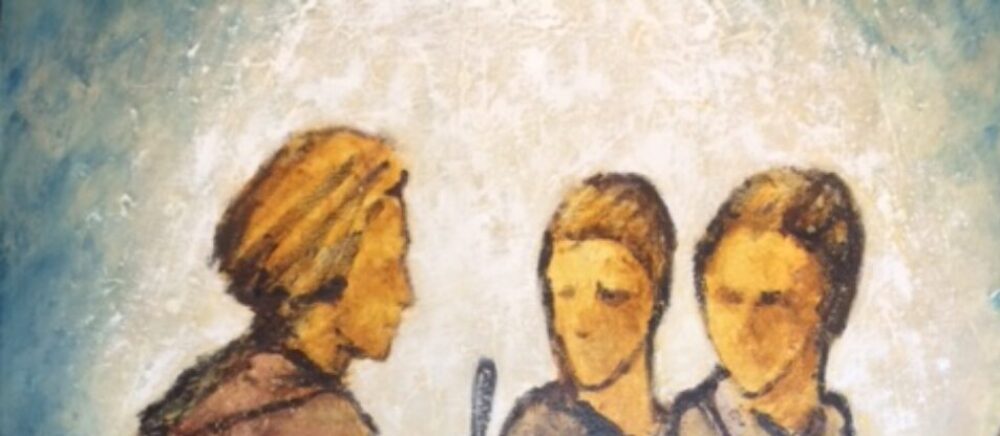
Bigger Than Time
While the Israelites were still in the land of Egypt, the LORD gave the following instructions to Moses and Aaron: “From now on, this month will be the first month of the year for you. Announce to the whole community of Israel that on the tenth day of this month each family must choose a lamb or a young goat for a sacrifice, one animal for each household. If a family is too small to eat a whole animal, let them share with another family in the neighborhood. Divide the animal according to the size of each family and ow much they can eat. The animal you select must be a one-year-old male, either a sheep or a goat, with no defects.
Take special care of this chosen animal until the evening of the fourteenth day of this first month. Then the whole assembly of the community of Israel must slaughter their lamb or young goat at twilight. They are to take some of the blood and smear it on the sides and top of the doorframes of the houses where they eat the animal. That same night they must roast the meat over a fire and eat it along with bitter salad greens and bread made without yeast. Do not eat any of the meat raw or boiled in water. The whole animal—including the head, legs, and internal organs—must be roasted over a fire. Do not leave any of it until the next morning. Burn whatever is not eat before morning. Exodus 12:1-10
Intro: When I was a child, Dad would occasionally play one of his vinyl LP’s
A favorite was Tennessee E. Ford’s gospel songs album
– the first time I heard, “Were you there when they crucified my Lord?”
• I thought, “No, I don’t remember! I’m only seven years old”
◦ I did not yet understand that sacred history can alter time
• we’ll learn something about this today
– in our journey through Exodus, we have come to the climax of the plagues
• but something odd happens
◦ the main event is overshadowed by a different sort of narration
◦ a bit of story telling is surrounded by a lot of instructions
• God has his own ideas about what is most important
1-13 What was about to happen had a meaning
Where the chapter begins: While Israelites were still in … Egypt
– but the narrative won’t stay here
• it will move forward in space and time (cf. v. 25)
• for now, they have not left Egypt; they have not been liberated
– Regardless, God’s instructions point to the future
• this moves them forward
◦ and they’re able to live in the reality of it, even here and even now
• there’s a way for us to do the same
◦ asking for something we know is God’s will, then give thanks
◦ if we can feel gratitude, it becomes real for us now
From now on…first month – this line is one of several indicators of newness
(spring is the beginning of nature’s new year)
– in previous plagues, they weren’t asked to do anything,
• other than keep themselves out of harm’s way
• now they’re not automatically protected just because they’re Israelites
– what God points to is bigger than the plague event
• it’s their salvation – a revelation and the beginning of a tradition
• God is creating a nation, a people
◦ at the heart of its origin and foundation is his salvation
“I’m not freeing you for the sake of freedom;
I’m buying your freedom for you to become Mine”
Instructions for their protection – a ritual that includes:
- selection of a lamb or goat
- killing it at twilight
- apply blood to sides and top of doorway
- preparing the meal (vv. 8-10)
- what to wear (v. 11) – not dress-up, but for travel
- what will happen (read vv. 12-13)
– two thoughts before moving on:
1. Liminal space (from: Latin for “threshold”) Continue reading