Apologies for how clumsy this was done, but if you find it really frustrating but you are intensely interested in the material, you can find this book on amazon.com. There Is A Season, by chuck smith, jr and published by WaterBrook.
Monthly Archives: May 2016
May 22, 2016 – Acts 14
Effective Communication, Effective Lifestyle
At Lystra a man was sitting who had no strength in his feet, lame from his mother’s womb, who had never walked. This man was listening to Paul as he spoke, who when he had fixed his gaze on him and had seen that he had faith to be made well, said with a loud voice, “Stand upright on your feet.” And he leaped up and began to walk.
When the crowds saw what Paul had done, they raised their voice, saying in the Lycaonian language, “The gods have become like men and have come down to us.” And they began calling Barnabas, Zeus, and Paul, Hermes, because he was the chief speaker. The priest of Zeus, whose temple was just outside the city, brought oxen and garlands to the gates, and wanted to offer sacrifice with the crowds.
But when the apostles Barnabas and Paul heard of it, they tore their robes and rushed out into the crowd, crying out and saying, “Men, why are you doing these things? We are also men of the same nature as you, and preach the gospel to you that you should turn from these vain things to a living God, who made the heaven and the earth and the sea and all that is in them. In the generations gone by He permitted all the nations to go their own ways; and yet He did not leave Himself without witness, in that He did good and gave you rains from heaven and fruitful seasons, satisfying your hearts with food and gladness.”
Even saying these things, with difficulty they restrained the crowds from offering sacrifice to them. Acts 14:8-18
Intro: Two times in this chapter people are trying to influence the souls of others
The Greek words that appear in both instances are tas psuchas tōn, “the souls of the”
- The first scene: (opponents of the apostles) stirred up the souls of the Gentiles to poison them against the brothers
- Near the end: (the apostles were) strengthening the souls of the disciples, encouraging them
– two different ways that religion is used to affect the souls of others:
• to stir up and poison people or to strengthen and encourage people
◦ encounters with one kind of religious person will embitter people
◦ encounters with another kind of person will encourage people
– sadly, both types can be found within Christianity
Paul effectively communicated God’s message
• in so doing, he provided us with an excellent model
• but at the heart of his effectiveness was love
Vv. 1-7, A sequence of events we have come to expect
Paul started in synagogue, conflict ensued, he enlarged his target audience, he was chased out of town
– of interest here is God’s extraordinary support:
. . . the Lord, who was testifying to the word of His grace granting that signs and wonders be done by their hands (v. 3)
• in John 5, Jesus explained:
If I alone testify about Myself, My testimony is not true. There is another who testifies of Me, and I know that the testimony He gives about Me is true. (Jn. 5:31-32)
• he then lists his witnesses: John the Baptist, his works, the Father and the Scriptures
– this seems like an awesome way to advance the gospel, but miracles don’t do what we expect
• they do not convince everyone
• the effect of a miracle can wear off without effecting a transformed life
Vv. 8-18, Paul breaks his ministry pattern
There is no mention of a synagogue in this story
– the message he gave was to a Gentile audience
• the events that led up to his brief “emergency sermon”
Reading this story, two slogans come to mind:
– “A case of mistaken identity” and “Lost in translation” Continue reading
May 15, 2016 – Acts 13:13-52
Going Somewhere?
Now Paul and his companions put out to sea from Paphos and came to Perga in Pamphylia; but John left them and returned to Jerusalem. But going on from Perga, they arrived at Pisidian Antioch, and on the Sabbath day they went into the synagogue and sat down. After the reading of the Law and the Prophets the synagogue officials sent to them, saying, “Brethren, if you have any word of exhortation for the people say it.”
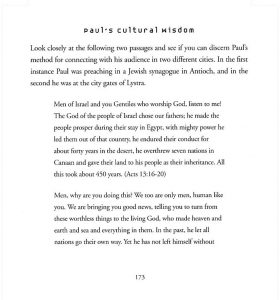
Paul stood up, and motioning with his hand said, “Men of Israel, and you who fear God, listen . . . .” Acts 13:13-16
Intro: Every couple of weeks I meet with a friend at Heritage Park overlooking the Marina
Embedded in the concrete is a large compass
– my friend tells me that he used to work with troubled teens
• he one time brought them to that same park and instructed them:
◦ “Go stand on the point that indicates where you’re from and tell us about that”
◦ afterward he said, “Now stand on a point that indicates where you hope to go and tell us something about that”
To know a person, we have to know where they’ve come from and where they’re going
– our instant assessments of people say little about who they really are
• “He’s a used car salesman” or “She’s a single mom”
• some of us realize that our history is blurred and our destiny lies in an unknown future
◦ so who am I?
– today we’ll get to look into our history and our destiny
13-16, Paul is breaking new ground
Luke’s footnotes regarding John-Mark seem like trivial details (12:12, 25; 13:5)
– but they “foreshadow” a coming storm
• foreshadow is a literary device in which a detail is given special attention
◦ later it returns as an important plot detail or piece of the puzzle
• the equivalent of foreshadowing in movies is the flash forward
◦ in this instance, the camera provides a close-up on an object, statement or character’s expression
The Antioch mentioned here is not same city where they began journey (in Syria)
– the Sabbath and the synagogue – were consistently stage one of Paul’s strategy
• sacred time and sacred space belonged to God
◦ for Paul, this became his beachhead in each new area he entered — it was a place to start
• the reading of the Law and the Prophets were staples of the synagogue service
(the church took the synagoge as the model for its services)
◦ the emphasis on scripture provided Paul a foundation for his message
◦ he had spent a lot of time discovering Jesus in the Hebrew Scriptures
– somehow it was obvious Paul had training in Judaism — cultural clues, perhaps unfamiliar to us
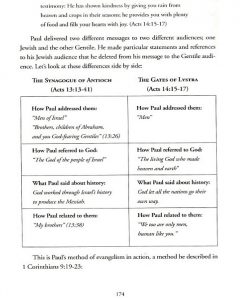
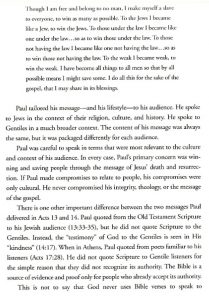
• when he speaks, it is obvious that he is a Jewish teacher addressing a Jewish audience
◦ he addresses them as Men of Israel, brothers and refers to the fathers of their race and religion
• Paul made a point to establish a common ground with them
◦ they had a shared ancestry, shared scripture, shared history and a shared hope
17-23, Paul’s brief overview of Old Testament history
Paul tracks their history from Egypt to David, jumps over the other kings, the exile, and the return
– in verse 23 he makes a quick transition fro David to Jesus
• Israel’s history is recounted in almost every section of the Bible (Law, Psalms, prophets, etc.)
• usually, a pattern emerges that is meant to make a point Continue reading
May 1, 2016 – Acts 13:1-2
The Magician, the Apostle and the Roman Proconsul
Now there were at Antioch, in the church that was there, prophets and teachers, Barnabas, and Simeon who was Niger, and Lucius of Cyrene, and Manaen who had been brought up with Herod the tetrarch, and Saul. While they were ministering to the Lord and fasting, the Holy Spirit said, “Set apart for Me Barnabas and Saul for the work to which I have called them.” Then they laid their hands on them and they sent them away. So, being sent out by the Holy Spirit, they went down to Seleucia and from there they sailed to Cyprus. When they reached Salamis, they began to proclaim the word of God in the synagogues of the Jews; and they also had John as their helper.
When they had gone through the whole island as far as Paphos, they found a magician, a Jewish false prophet whose name was Bar-Jesus, who was with the proconsul, Sergius Paulus, a man of intelligence. This man summoned Barnabas and Saul and sought to hear the word of God. But Elymas the magician (for so his name is translated) was opposing them, seeking to turn the proconsul away from the faith. But Saul, who was also known as Paul, filled with the Holy Spirit, fixed his gaze on him, and said, “You who are full of all deceit and fraud, you son of the devil, you enemy of all righteousness, will you not cease to make crooked the straight ways of the Lord? Now, behold, the hand of the Lord is upon you, and you will be blind and not see the sun for a time.” And immediately a mist and a darkness fell upon him, and he went about seeking those who would lead him by the hand.
Then the proconsul believed when he saw what had happened, being amazed at the teaching of the Lord. Acts 13:1-12
Intro: If you weren’t paying attention or your skipped over the passage above, please read it again
Take your time with it, then notice the impression it leaves on your mind or heart
– what we want to notice is our immediate response before we begin analyzing it or asking questions
• so what gets your attention?
• do you have a definite thought or feeling? or do you swing from one thought or feeling to another?
– make a (mental or written) note of your initial reaction
Acts chapters 13 and 14 record Paul’s first travelogue
So Luke identified this unit with a literary “envelope” structure
– the way he did this is by using markers–sort of like book ends
• the section begins in 13:3 when the church fasted and prayed over Barnabas and Saul
• it ends in 14:23 when Paul and Barnabas prayed and fasted over elders
(in the newly formed churches)
In Paul’s on-the-road experience a pattern emerges
– at first, the message of Jesus receives a positive response
• but soon they face Jewish opposition
• so they turn their efforts toward Gentiles who are more receptive
Right away we notice a geographical shift
Now there were at Antioch, in the church . . .
– it makes sense that Jewish Christians still saw Jerusalem as the center of the world
• it had been God’s “holy city” ever since the time of David
◦ God, however, did not share this conviction (see Jeremiah 7:1-15)
◦ his acceptance of the temple had always been provisional (1 Ki. 9:1-9)
• eventually, Antioch did not hold the central place either
– where is the heart of God’s work?
• in the heart of person who is devoted to it
Church (ekklesia) referred to people being called to assemble
– then it came to refer to the assembly itself
• in the New Testament, it means the communities that formed around Jesus
– the cosmopolitan church in Antioch was served by prophets and teachers
• this is a healthy combination that has passed the test of time
- Prophets: spoke to circumstances that affected believers in a particular place and time
◦ their message, which was local and spontaneous, had a dynamic quality
◦ they addressed immediate situations, providing direction and encouragement - Teachers: interpreted and explained the Scriptures
◦ this included oral communication regarding Jesus’ life, teaching, miracles and death and resurrection
◦ their message was universal and foundational
Prophets and teachers exercized their gifts in a context — While they were ministering to the Lord
– our English word “liturgy” (a fixed form of worship) comes from the Greek word translated ministering
• worship or the church’s service to God
• this is the context in which Spirit usually spoke (and speaks) to believers
We also notice that it is the Spirit who sets the plot in motion
Set apart for Me Barnabas and Saul . . . .
– Luke does not say, “And this was a first!”
• nor does he say, “This sort of thing was happening all the time”
◦ we do not know if this was a normal occurrence or something unusual
• what is clear is that in this whole adventure God is present
– for the work to which I have called them
• this probably entailed the work they were already doing there in Antioch
• it was just that now they were to take it to others
In verse 4, we discover that the Spirit continues to move the plot forward
– for Barnabas, going to Cyprus was returning home
• at first, synagogues were the natural place to go
◦ the message was for them — it was their Messiah who had come at last
◦ God’s kingdom had arrived and become a here and now reality
• it was God’s message to his people
– as a footnote, we’re informed that John-Mark was with them assisting them
• he is not a central character, yet Luke does not want us to lose sight of him
Barnabas, Saul and John crossed from one end of island to other
Before leaving for the mainland, they received a summons from the proconsul
– but Luke doesn’t begin with him–they first encountered another man
• he is described as a magician and false (pseudo) prophet
◦ false prophets are as common in scripture as God’s prophets
• this magician’s name was Bar-Jesus (Bar means “son of”–like Barnabas)
◦ this was mostly likely his given name — Jesus was a common name at that time
◦ or it may have another meaning and that is why he adopted it
– he was connected with the proconsul (governor)
• the proconsul is described as a man of intelligence
• he may have wanted to investigate what Barnabas and Saul were spreading
◦ but it is just as likely that he heard enough about their message to be interested
Details of this story begin to get a little tricky
– Bar-Jesus had another name: Elymas the magician
• I’m not sure why Luke wanted us to know this
• perhaps it’s to intensify the contrast between him and Paul
◦ the magician with two names stood over against the apostle with two names
◦ also, we see there are two men with the same name, Sergius Paulus and Paul
– Elymas began to interfere with Paul’s message
• attempting to turn the proconsul away means to corrupt, to twist
• I am guessing that Elymas took personally Paul’s efforts to turn the proconsul to the faith
• if Sergio embraced the message of Jesus, Elymas would lose his influence
At this point, Paul explodes out of the gate
It is as if until now, he had been holding back
– filled with the Spirit is an explanation
• it explains why he cursed Elymans–what prompted or inspired him
• and what empowered his words to have the effect they did
– straight ways of the Lord is what God’s ministers try to provide people
• the goal is to make it easy for people to find their way to God
Therefore, strengthen the hands that are weak and the knees that are feeble, and make straight paths for your feet, so that the limb which is lame maynot be put out of joint, but rather be healed. (Heb. 12:12-13)
Paul exposed the magician, and with emotionally charged language
– he does not give evidence for his accusation that Elymas was twisting the truth
• and if he did, it would not have carried any weight
• the game-changer is what came next
What do you think about this curse of temporary blindness?
– could it be Paul thought it was the best hope for Elymas?
• this is exactly what happened to Paul when he opposed Jesus
◦ he too had been blinded and needed to be led by the hand (Acts 9:8)
• that’s when Paul began to see through new eyes
◦ even if Elymas didn’t benefit from this sudden, temporary blindness, Sergio did
The thought that strikes me is, this is how it ought to be!
– if we stand for God and proclaim truth, then we should have God’s support
• like Daniel’s three friends who took a stand for their God and were not harmed by the flames
• or Esther risking her life to rescue God’s people
◦ the bad guys were defeated and the good guys won
– but then again, this is not the kind of authority that just any Christian should be able to wield
• for the same reason God hasn’t answered my prayer for a laser weapon mounted on the hood of my car
◦ one that could, on my command, vaporize any vehicle that did something stupid on the highway
• we know people, who if they are contradicted by logic they can’t refute, immediately leap to irrational argumentation
◦ they raise volume and emotional intensity of their speech
◦ so maybe it’s better God doesn’t always make things go the way we think it ought to be
Conc: Who is the hero–the protagonist–in this story?
The person in Antioch who first heard Spirit is not even named
– Barnabas wasn’t the hero – we could say Paul was
• but in biblical history, isn’t God always the Hero?
• and here we see the Father, Son and Spirit present throughout
◦ the Spirit spoke when they were ministering to the Lord
◦ it was the word of God they preached
◦ it was the word of God that the proconsul wanted to hear
◦ the hand of the Lord blinded Elymas
◦ and the teaching of the Lord amazed the proconsul
Pro athletes frequently have company logos plastered prominently
– on their clothing, surf boards, race cars, etc.
• they are happy to let the world know who sponsors them
– your spiritual life has been, is now, and always will be Sponsored By God!
• the Spirit’s energy in the church moves upward, inward and outward
◦ your life in Christ will move primarily in one of these directions
◦ and as you move:
upward in worship
inward in service to the church
or outward in taking the message to others
You will be sponsored by God
Don’t be afraid — you have his support
April 24, 2016 – Acts 12
Prison Breaks and Prayer Meetings
Now about that time Herod the king laid hands on some who belonged to the church in order to mistreat them. And he had James the brother of John put to death with a sword. When he saw that it pleased the Jews, he proceeded to arrest Peter also. Now it was during the days of Unleavened Bread. When he had seized him, he put him in prison, delivering him to four squads of soldiers to guard him, intending after the Passover to bring him out before the people. Acts 12:1-5
Intro: If I made up chapter titles for Acts, this one would be “God’s Comical Church”
Three scenes in this story are funny (four, perhaps, if you’re into dark humor)
– ever since Norman Cousins’ Anatomy of An Illness, research has confirmed that humor is healthy
• this is especially true if we are able to laugh at ourselves
• in this chapter, I see a church doing this very thing; laughing at itself
Vv. 1-5 The story doesn’t begin like a comedy
In fact, “put to death with a sword” was very serious and not at all funny
– it is almost shocking how Luke streamlines James’ death
• there is none of the detail he provided in recounting Stephen’s death
• the execution of a martyr is a “good death” — a noble way to die
◦ in the early centuries of Christianity, many believers considered it a privilege
– however, martyrdome should not be overplayed
• like Luke, we can take note of the death, grieve the loss, be inspired the individual’s heroism, and move on
• ours is a resurrection religion — it is about life, not death
◦ the specter of death has been greatly diminished for us (e.g., 1 Cor. 15:54-57; Heb. 2:14-15)
Herod’s assault on the church was a new development
– until now, the religious institution launched was behind the sporadic attacks
• this new wave of government-sponsored persecution:
◦ significantly increased the threat level
◦ made it more widespread and aggressive
◦ enlisted a new set of trained agents to carry it out
◦ had both the authority and the means to imprison and harm more people
• King Herod was in a position to criminalize Christianity
– rounding up believers, Herod happened to arrest James
• not only the first apostle to be executed, but one who with, Peter and John, belonged to Jesus’ inner circle
• Herod found that James’ death pleased those he wanted to impress and win over
◦ So he went after Peter–an even bigger fish
Meanwhile, the church was fervently praying for Peter
On the very night when Herod was about to bring him forward, Peter was sleeping between two soldiers, bound with two chains, and guards in front of the door were watching over the prison. And behold, an angel of the Lord suddenly appeared and a light shone in the cell; and he struck Peter’s side and woke him up, saying “Get up quickly.” And his chains fell off his hands. And the angel said to him, “Gird yourself and put on your sandals.” And he did so. And he said to him, “Wrap your cloak around you and follow me.” And he went out and continued to follow, and he did not know that what was being done by the angel was real, but thought he was seeing a vision.
When they had passed the first and second guard, they came to the iron gate that leads into the city, which opened for them by itself; and they went out and went along one street, and immediately the angel departed from him. Verses 6-10
Peter was in an impossible situation
Four squads of four soldiers took shifts guarding him
– Peter was chained to two guards around the clock
• there was no way out of this
– incredibly, Peter was sleeping – not wringing his hands or writhing in fear
• is it possible he accepted this situation and his impending death?
• he knew that one day this would happen (Jn. 21:18-19)
And behold – imagine hearing this story being told rather than reading it
– the “behold” is an invitation to use our imagination, to visualize what is happening
• an angel appeared and light filled the cell
• the angel struck Peter’s side to wake him up (this works! Barb, uses this technique when I snore)
Richard Longenecker, “Then the angel, like a parent with a child awakened from sound sleep, carefully instructed the groggy apostle to get dressed.”
– the angel did not do everything for Peter — for example, he had to get himself up and dressed• angels never did what people could for themselves
• the angel that appeared to Cornelius did not deliver the message he needed to hear
• angels assisted mostly by doing what people could not do for themselves
Peter goes along with the anger quite casually
– because he didn’t think it was real
• remember, this was not his first experience with a vision
• the voice that spoke in that vision began with the same word the angel speaks here
◦ anasta, “Get up”
– Peter was probably wondering, “Okay, so what’s message this time?”
Luke adds a detail that is not absolutely necessary: the prison gate was “iron”
– this intensifies the atmosphere of impossibility
• this unbending, unbreakable metal was not going to yield to Peter’s strength
• in fact, Luke refers to the gate with a repetition of the definite article “the”
“the gate, the iron one, the one that leads to city”
◦ as great an obstacle as it was, the gate opened by itself
Now comes the first funny scene
– the angel disappeared as suddenly as he had appeared
• and Peter is left standing alone on a cold city street
◦ now, without the angel directing or leading him, Peter came to himself
• “Huh? What? This is real?!”
◦ he had not taken his liberation seriously until this moment
And when he realized this, he went to the house of Mary, the mother of John who was also called Mark, where many were gathered together and were praying. When he knocked at the door of the gate, a servant-girl named Rhoda came to answer. When she recognized Peter’s voice, because of her joy she did not open the gate, but ran in and announced that Peter was standing in front of the gate. Verses 12-14
The next funny scene comes immediately
The servant girl is so excited to hear Peter’s voice she doesn’t think to let him in
– he could easily walk out of prison–the iron gate opened by itself–
• but he couldn’t get through the door into a prayer meeting
• and they were praying fervently for him!
– comedy frequently plays out in tense moments
• this moment is tense, because Peter’s escape would be discovered at the changing of the guard
• if Herod’s soldiers were roaming streets, he’d soon be caught
◦ but there he is, knocking at a gate and calling to those inside
This reminds me of my three year old grandson, Calum, when he gets up in the morning. He goes to the top of the stairs and calls, “Granpa!” If there is no answer right away, he calls, “Somebody?” And then, “Anybody?”
Peter stands at the gate calling for anyone who might here him and be kind enough to lift the latch and let him in.
And the comedy doesn’t end there
They said to her, “You are out of your mind!” But she kept insisting that it was so. They kept saying, “It is his angel.” But Peter continued knocking; and when they had opened the door, they saw him and were amazed. Verses 15-17
When Rhoda ran back into room and announced, “It’s Peter! He’s here!” they don’t believe her
• at first, they thought she had flipped out
• remember, to them she’s only a young servant
“Don’t interrupt us with this nonsense. Can’t you see we’re in fervent prayer–for Peter!”
– Rhoda’s insistance that it is Peter forces them to draw another conclusion
• “Well, it must be his angel”
– all this discussion is going on, when what they needed to do was get up and go open the gate
• meanwhile, Peter continued knocking
• when they finally opened the gate and saw Peter, they were amazed
“Yes, we were praying for this, but we didn’t think it would actually happen!”
In verses 18-25, Luke wraps up the story
Two times in this chapter someone was “touched by an angel”
– Peter woke up when he was struck, Herod collapsed and within a week was dead when struck by the angel
• and in contrast to Herod’s ignominious death, the word of the Lord continued to grow and to be multiplied
• it was never “the king versus the apostle”
◦ but “Herod versus the word of the Lord”
◦ it was inevitable that Herod would lose
– the chapter break could have easily been made before verse 25
• but the point is that Luke is determined to keep John-Mark in our sites
• we will learn why a few chapters further on
Conc: There are other themes braided into this chapter
For example:
- Thresholds: Peter crossed two of them
– the first threshold was the prison gate, when he was inside wanting out
• the second was the gate at Mary’s home, when he was outside wanting in
◦ the first gate opened for him; the second gate had to be opened by the community
◦ we are responsible to respond to those who knock at the gate of our community
• the church was also crossing a metaphorical threshold - Hands:
– Herod laid hands on members of the Christian community (v. 1)
• the chains fell from Peter’s hands (v. 7)
• Peter realized he had been rescued from Herod’s hand (v. 11)
• then Peter motioned with his hand in Mary’s home to signal he was about to speak (v. 17)
◦ and maybe Luke also uses that to signal the reader
◦ that we would see how hands are used to communicate a message in this story
(consider also the instances when a hand is implied, though not mentioned specifically, as when the angel struck Peter–and Herod–, or when Peter knocked at the gate, or when they finally opened the door)
– the hand of Herod, no match for him who sits at right hand of God (Acts 2:33)
During the years I lived in a depressive state, three persistent ideas defined my personal reality
– for most of that time, I was not even conscious of these entrenched convictions
• namely, that I was powerless, helpless and hopeless
– we have invisible allies and dyanamc spritual resources
Do not fear, for those who are with us are more than those who are with them. (2 Kings 6:16)
Amaziah said to the man of God, “But what shall we do for the hundred talents which I have given to the troops of Israel?” And the man of God answered, “The LORD has much more to give you than this!” (2 Chronicles 25:9)
We are powerless sometimes, yes; helpless sometimes, yes — but we are never hopeless
One of the blessed benefits of contemplative spirituality, is that through it God rewires our brains
Some of us need that desperately
We need to have our minds reconfigured to the truth, to Reality
We are never without hope