December 9, 2012 – Micah 5:2-5

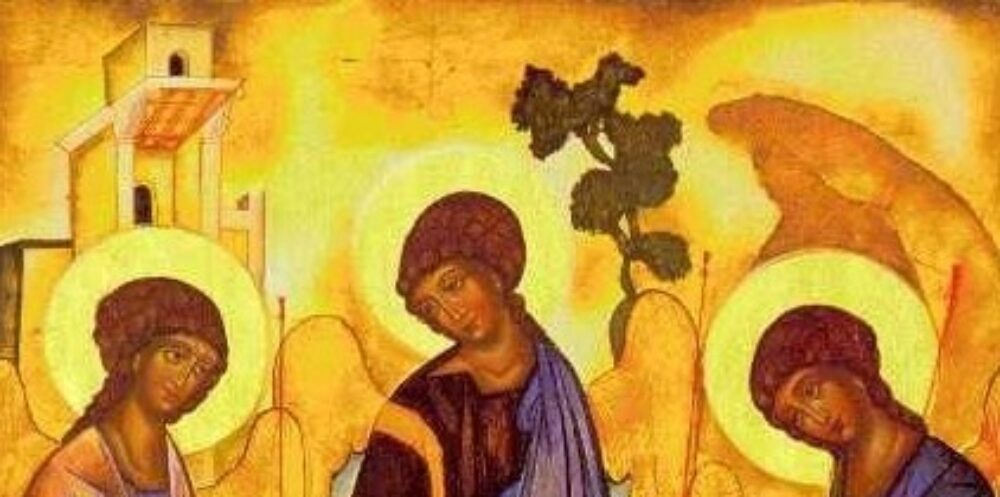
The Second Christmas Candle

But as for you, Bethlehem Ephrathah,
To little to be among the clans of Judah,
From you One will go forth for Me to be ruler in Israel.
His goings forth are from long ago,
From the days of eternity.
Micah 5:2

INTRO: It isn’t typical for a Christian community as informal as ours to observe the season of Advent

That is, adopting a practice of formally preparing ourselves for Christmas
– but I’m finding an unexpected benefit
– when I feel the pressures of our consumer culture, returning to Advent helps me reorient myself to what matters most

The theme for the second Sunday of Advent, is Bethlehem
– this is the second candle that is lighted in the darkness of winter


We’re going to track a theme in Micah that builds to chapter 5

The way Micah introduces himself is unique among the prophets
– he connects himself with a place – his village, “Micah of Moresheth”
• most common, “the son of”
• Amos tells where he’s from, but links to his profession

With his first words, he calls not only people to hear, but also a place, “earth”
– it is not unusual for God to call the earth and sky as witnesses in his court
• but it is a reference to place in a passage that is full of references to places Continue reading

December 2, 2012 – Genesis 3:8-19

Christmas Candles

And I will put enmity
Between you and the woman,
And between your seed and her seed;
He shall bruise you on the head,
And you shall bruise him on the heel.
Genesis 3:15

INTRO: I need your help this morning

When people talk about the “Christian year” (or “church year”) what do they mean?
– the church created a “Christian” calendar that divided the year into seasons
• the Christian year begins with Advent on the first Sunday in December

Christian worship is divided into two primary forms:
– “high” church worship observes a formal, set order (for Episcopalians, The Book of Common Prayer)
• there is a strong emphasis on priests, symbols, sacraments, and rituals
• “free” church worship de-emphasizes these things and claims to have no fixed form
○ however, free churches usually do fall into fixed routines
– the Christian year belongs to the high church tradition (Roman Catholic, Anglican, Lutheran, etc.)

What is “Advent”?
– the coming or arrival of Christ – but an arrival that spans time
• a first arrival and a final arrival and, in between, a day-to-day arrival
• some believers who are suffering or dying live with an awareness of his moment-to-moment arrival
– in high churches, each Sunday of Advent a candle is lighted
• Why? Since Jesus’ first coming:

The Light shines in the darkness (Jn. 1:5)
The people who were sitting in darkness saw a great light; / And those who were sitting in the land of the shadow of death, / Upon them a Light dawned (Mt. 4:16) Continue reading

October 25, 2012 – Hebrews 12:4-11

A “Theology of Suffering”

All discipline for the moment seems not to be joyful, but sorrowful; yet to those who have been trained by it, afterwards it yields the peaceful fruit of righteousness. Hebrews 12:4-11

INTRO: When we meet a person with spiritual depth, we naturally want to learn from him or her

If that person is willing to work with us, we are blessed with a spiritual mentor

Let’s consider the writer of Hebrews as our spiritual mentor
– you sit down with him and he asks a few questions
• he probes your faith, experience of God’s Spirit, and personal concerns
– when you finish, he sits in silence for a long time
• finally, he looks at you, smiles, and says,

“So, you want a stronger, closer relationship with Jesus, and you want to be a better person, and enjoy freedom from sin . . .” he pauses, then says, “but you don’t want the process to hurt or cost you anything”

This is what our passage is about, “All discipline for the moment seems not to be joyful”
– doesn’t that sound like an understatement?

During this last summer’s Olympics, NBC profiled a few of the athletes
– every one of them had daily grueling workout schedules
training entails suffering Continue reading

November 18, 2012 – John 21:15-23

Why Did Jesus Say That?

Jesus said to him, “If I want him to remain until I come, what is that to you? You follow Me!” John 21:22

INTRO: Do you feel you’re clear on the role Jesus plays in your life?

It’s too easy to glibly use words like “Lord,” “Savior,” even “Friend”
– the question isn’t about Jesus’ role in the religious part of your life
• do we leave him waiting in the margin until we need him? — like a ceramic figurine we keep in a closet and pull out in an emergency?
– what about the normal stuff? – the everyday ups and downs?
• Jesus does not want to be assigned to the irrelevant places, events, or decisions of our lives

This last chapter of John is an epilogue – sort of an afterthought
– the first fourteen verses are encapsulated to make a specific point
• John begins and ends this unit by telling us what happens in it — “Jesus manifested Himself”
– this did not happen in a religious context – there were no candles, incense, or religious symbols
• nor did it happen when the disciples had a special spiritual feeling
• it happened on the shoreline of a lake and it is likely they were feeling down
○ they had gone back to their business
○ they returned to where they were the first time they met Jesus
– whatever thoughts we have about Jesus’ role in our lives,
• he feels he belongs in the heart of it
○ where we spend most our time, think most our thoughts  Continue reading

Day Ninety – Matthew 27:1-10

Draw near to God and He will draw near to you

Then when Judas who had betrayed Him, saw that He had been condemned, he felt remorse and returned the thirty pieces of silver to the chief priests and elders, saying, “I have sinned by betraying innocent blood.” But they said, “What is that to us? See to that yourself!” Matthew 27:3-4

Judas could not stop the wheels that were now turning thanks to his help. He could not undo his act of betrayal nor reverse time by returning the silver. His action had become a fact of history and he no longer had control over it.

The heartlessness of the priests and elders is shocking. They were supposed to be representatives of God. The man who stood before them was in pain, having realized that he had done something very wrong and wanting to repent. Although they were not about to release Jesus from their trap, they could have, at the very least, tried to console Judas and assure him–from their perspective–that he had done the right thing. But they showed absolutely no concern for him.

“See to that yourself,” they told him, as if to say, “That’s your problem, deal with it yourself.” The Good News Bible reads, “That’s your business,” which we could take to mean, “That’s your line of work, Judas. It’s what you get paid for.” Indeed, that is how Judas will always be remembered.

Jesus was alone, abandoned by everyone. So was Judas. Jesus died in painful, lonely desperation. So did Judas. Jesus was overwhelmed with sadness at the end. So was Judas.

Judas went from  one permanent and irreversible action to another. Once the rope snapped, there was no going back.

O Son of God, did it ever occur to Judas that there was One who loved him, who in the precise moment of His betrayal addressed the betrayer as “Friend”? As for us, Lord Jesus, do we know the depths of Your love? The four points of the cross point to the infinite “breadth and length and height and depth” of a love that, even if we know about it, still surpasses knowledge.* In humble gratitude, we praise You for loving us as no one ever has or ever could love us.
____________

* Ephesians 3:14-19

November 11, 2012 – John 14:1-6

Why Did Jesus Say That?

Thomas said to Him, “Lord, we do not know where You are going, how do we know the way?” Jesus said to him, “I am the way, and the truth, and the life; no one comes to the Father but through Me.” John 14:5-6

INTRO: This was Jesus’ last conversation with his disciples and, as you can imagine, it went long

– it started in the upper room and continued all the way to the Garden of Gethsemane
– at the point where we enter it, the disciples are getting frustrated with Jesus

He had told them, “Where I am going, you cannot come” (13:33)
– he had mentioned this before and each time he was evasive and enigmatic about where he was going
– this led to all kinds of speculation (7:34-35; 8:21-22)

Well, Jesus’ statement makes no sense to Peter, so he asks, “Where are you going?”
– all Jesus says is, “Where I go, you cannot follow Me now; but you will follow Me later” (13:36)
– for three years, Peter had followed Jesus — from north to south, up mountains and across rivers
• he had even followed him back to Jerusalem, despite the danger there
– so he asks, “Lord, why can I not follow You right now? What makes this time so different? I’m ready to lay down my life for You”

Peter didn’t realize he had stumbled upon the heart of the problem Continue reading

November 4, 2012

Why Did Jesus Say That?

Then after this He said to the disciples, “Let us go to Judea again.”
The disciples said to Him, “Rabbi, the Jews were just now seeking to stone You, and are You going there again?” Jesus answered, “Are there not twelve hours in the day? If anyone walks in the day, he does not stumble, because he sees the light of this world.”
John 11:7-10

INTRO: This last week, I’ve spent my spare time immersed in a book I was asked to read

The author begins by taking us into her first counseling appointment
– until that point, it had taken all her strength to hold her life and family together
• then she learned her son was facing a serious health crisis
• she had no reserves to deal with it and therefore  became miserable and lost
– in successive appointments, she revealed the horrors of childhood and adolescence
• she divulged things she had never told anyone
• in the process of exposing her wounds, she occasionally hit a wall
○ she was unable to keep talking – got confused, stumbled around
○ but her counselor encouraged her to look behind each of these doors
– every time she did, she discovered another important insight about herself
• with each discovery, she grew
• gradually, she became less miserable and life began to make more sense

Much of our misery, discontent, and irritability stem from mental roadblocks and wrong ideas we hold unconsciously
– some of these could be resolved, simply by bringing them into the light
• it’s the stuff that remains in darkness that gives us most trouble
• seeing things in the light, is to understand them better Continue reading

Day Eighty-nine – Matthew 26:69-75

Draw near to God and He will draw near to you

Now Peter was sitting outside in the courtyard, and a servant-girl came to him and said, “You too were with Jesus the Galilean.” But he denied it before them all, saying, “I do not know what you are talking about” Matthew 26:69-70

What does it mean to be a follower of Jesus and belong to him? It is both liberation and a liability. The Lord’s disciple has no fear of becoming enslaved to the self-destructive forces of addiction. In one sense, the world cannot touch a believer (1 Jn. 5:18-20).

But tracking the footsteps of our Lord also leads to sacrifice and heartache. Even though Jesus has “overcome the world,” we still “have tribulation” as long as we are in it (Jn. 16:33). In the same moment in the courtyard where Peter denied knowing  Jesus , inside the house Jesus was being battered. Peter feared that the abuse could easily spill outside if he confessed his relationship with Jesus.

Although the tone of this story is dark, disappointing, and desolate, its emphasis is not how badly Peter failed Jesus, but how deeply Jesus loved Peter. Earlier, that same evening, and right before Jesus said, “You will all fall away because of Me,” Jesus passed a cup of wine to his disciples and explained that it was his blood “poured out for many for forgiveness of sins” (vv. 28-35).

How wonderful, O Lord, that You had already made provision for the failure of Your disciples. How gracious and merciful that You told them what would happen and how they would react, so that afterward they did not need to collapse into despair over their failure, but were able to pass through the dark night into dawn of Your forgiveness and restoration. We praise You, Lord Jesus, for Your infinite love that holds us to You and will never let us go.

October 28, 2012 – John 10:17-18

Why Did Jesus Say That?

For this reason the Father loves Me, because I lay down My life so that I may take it again. No one has taken it away from Me, but I lay it down on My own initiative; I have authority to lay it down, and I have authority to take it up again. This commandment I received from My Father John 10:17-18

INTRO: In another week, our government will ask us to cast our vote in the presidential election

If we can get past our pet issues and campaign promises, in a quiet moment we might ask ourselves
“Of the two main candidates, which one really knows and cares about me?”
– like the pressure I feel when I come home to a stack of bills on the counter?
• or when my friend or child can’t find job that pays enough to cover rent?
• and I don’t make enough to be able to help?

Of course, the election is not about me
– and neither is it about the millions of people like me
• its about economics, national policies, foreign affairs, and giant corporations
– still, the candidates are trying to make it sound like the election is about me
• but neither candidate has any idea of what my life is like
• their children will never face trying to support a family of five on $15.00 an hour
• they’ll never feel the pressures that their signature will place on me

As for myself, I represent a class of spiritual leaders
-do we have a better understanding or greater empathy for the average person? Continue reading

Day Eighty-eight – Matthew 26:57-68

Draw near to God and He will draw near to you

Jesus said to him, “You have said it yourself; nevertheless I tell you, hereafter you will see the Son of Man sitting at the right hand of Power, and coming on the clouds of heaven.” Then the high priest tore his robes and said, “He has blasphemed! What further need do we have of witnesses? Behold, you have now heard the blasphemy; what do you think?” They answered, “He deserves death!” Matthew 26:64-66

At first, it looks like Jesus will give the high priest another ambiguous answer, “You have said it” or “So you say.” With this same expression, Jesus had and, at the same time, had not answered Judas (Mt. 26:25) and in a similar way he would soon respond to Pilate (Mt. 27:11). It is an answer that both reveals and conceals information.

But now, with the high priest, Jesus gives up the whole truth–at least enough for them to deliver a death sentence against him.

The high priest had phrased his question to Jesus using the same terms as Peter when he made his famous confession, “You are the Christ, the Son of the living God” (Mt. 16:16; cf. 26:63). The sad irony is that now Peter would not even say Jesus’ name (vv. 69-74). The person to whom God had revealed Jesus’ identity is now denying that he knows him.

Jesus’ answer to the high priest was blasphemy only if it weren’t true. The high priest, however, did not pause for one second to weigh the possibility that Jesus was what he claimed to be. The Son of Man who would arrive in the clouds would not allow the council and their soldiers to spit on him, slap him around, and ridicule him. You cannot do that to someone who will one day be seated at the right hand of God. Or so he reasoned.

Lord and Savior, it is easy for us to see how wrong those people were who condemned You. What is more difficult for us to see is how we have misjudged You–by appearance, by the shape of our circumstances, and by Your silence. We have doubted Your love for us, Your concern and interest in our struggles. Our eyes have deceived us. You are more than we can grasp and You are doing more than we can see. From now on, when You ask us to trust You, give us grace to walk by faith and not by sight.