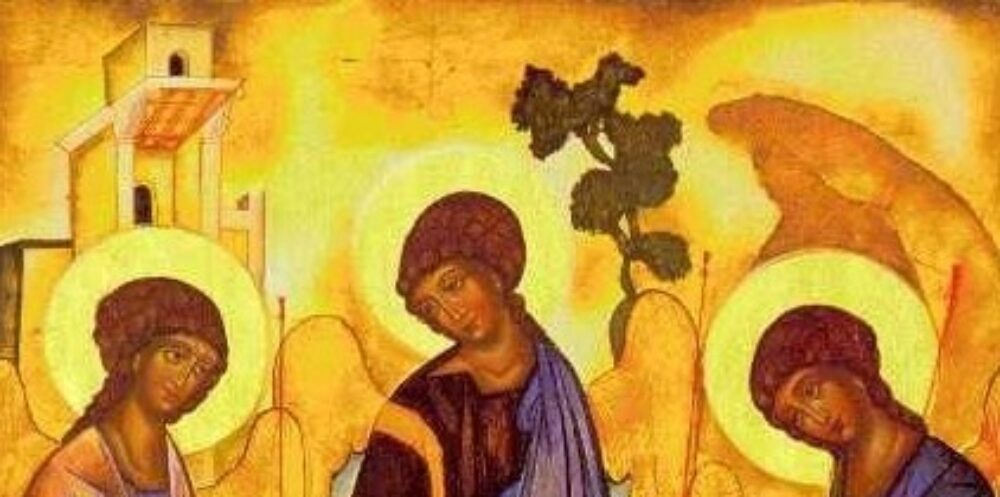
Job 8-11 05/24/2026

Podcast

Welcome and Prayer: Jim Calhoun

Come Lord, join us here today
Fill us with joy
for all the good
you bring
into our lives.
Help us be
Noticers
Of you and
Of what you do

And help us collaborate with you
Taking your lead
Waiting our turn
To join
In the good
You are making

Knowing
Your life
In us
Is our hope
And our joy
Thank you
Amen

Morning Talk: chuck smith, jr.

Intro: I have been reading a book by Bill Elliot, who is a therapist

But it’s not about psychology – it has the unlikely title, Falling Into the Face of God
– it’s an autobiography of sorts
• Bill felt called by God’s Spirit to go to the Judean desert
• and , to spend forty days there like Jesus, only without fasting
– on day 17, he was meditating on Jesus’ temptation in the wilderness
• then his thoughts went to Jesus and disciples in Philippi, and the moment when he called Peter “Satan”
William J. Elliot, “Why did Jesus do that? Especially since Peter was just trying to be helpful? It was because Peter was opposing Jesus’ deeper sense of destiny and Jesus’ deeper sense of God’s will. Satan comes from the Hebrew word for ‘opposer’ or ‘adversary.’ And that’s the point: we each have friends, and even parts of ourselves, that are often opposed to our deeper truth and connection with God. Even though they are trying to be helpful, they are still adversaries. So how do we find the skill and the courage to rebuff those well-meaning adversaries—especially when they love us and have often loved us in the past.”

Sometimes “well-meaning” friends give us bad or useless advice
(Sadly, I must admit, that I have done this to others; that is, provided them with worthless counsel or advice. I say this to my deep regret.)
– if we immediately know it’s bad, we don’t necessarily call them Satan,
• we just smile, nod, and ignore what they’ve said
• but we also have very real adversaries who are not friends
◦ and when they communicate with us, their intention is to wound, belittle, or insult
– if we do not filter what they say,
• if we let their words enter into our thoughts,
◦ the effect can alter our “deeper sense” of identity and destiny
• the most painful shock of this experience,
◦ is when the adversary is someone in the larger Christian community
◦ someone we assumed we could trust to be decent

Jude outlines a profile of dangerous people
“Yet in like manner these people also, relying on their dreams, defile the flesh, reject authority, and blaspheme the glorious ones. But when the archangel Michael, contending with the devil, was disputing about the body of Moses, he did not presume to pronounce a blasphemous judgment, but said ‘The Lord rebuke you.’ But these people blaspheme all that they do not understand, and they are destroyed by all that they, like unreasoning animals, understand instinctively. Woe to them! For they walked in the way of Cain and abandoned themselves for the sake of gain like Balaam’s error and perished in Korah’s rebellion Jude 8-10

Remember Jude refers to his readers as Beloved and to the adversaries as these people
– we saw last time, in verse 8, a list of three evils they had dreamed up:
defile the flesh – contaminate or pollute their physical selves
reject authority – perhaps refusing lordship
blaspheme the glorious ones
– then in the next two verses, Jude elaborates on “blasphemy”

There are oddities in Jude’s letter that differ from most of the New Testament
– one exception is the second letter of Peter
• a passage so close to Jude, one of them likely borrowed from the other
Peter has:
[go after the flesh] with “defiling passions”
◦ “despise authority” (Jude has reject authority)
“blaspheme the glorious ones” (both Peter and Jude)
then similar to what Jude says, Peter adds,
“. . . whereas angels, though greater in might and power, do not pronounce a blasphemous judgment against them before the Lord. But these, like irrational animals, creatures of instinct, born to be caught and destroyed, blaspheming of matters of which they are ignorant . . . .” (2 Pet. 2:11-12)
– I hope it’s okay for me to say this;
• I find both 2 Peter and Jude to be a little weird
◦ the problem stems from the strange beliefs that emerged during the era in which they were written
◦ a combination of Greek philosophy and eastern mysticism combined in one system, and rewriting the New Testament Scriptures
• I have never looked deeply into pagan or cultic beliefs
◦ a few years ago I thought it important for me to read the seminal work by Irenaeus
(a theologian who lived from mid-first century into 2nd century)
Against Heresies is a long explanation and diatribe against Gnostic teaching
• it seemed a bizarre cult to me, but was a genuine threat to the purity of Christian teaching
◦ in every cult there are basic errors that twist the truth
◦ so even knowing the weirder ones help us to discern those that are more subtle

Jude reports a story from a manuscript we don’t know much about

At one time there was a book entitled “The Assumption of Moses”
– for centuries, we have had only a few fragments of a Latin translation of the Greek text
• it was written in the first century AD and contained a fable about the body of Moses
• our information is sketchy – someone’s commentary on it
– we are familiar with the characters in the story:
Michael the archangel who appears in Daniel, Jude, and Revelation
the devil made famous especially in the temptations of Jesus
◦ he always appears as a trouble maker, and the word devil means slanderer
◦ Jesus said of him,
“When he lies, he speaks out of his own character, for he is a liar and the father of lies” (Jn. 8:44)
Moses, of course, whose death is shrouded in mystery
“So Moses the servant of the LORD died there in the land of Moab, according to the word of the LORD, and he buried him in the valley in the land of Moab . . . ; but no one knows the place of his burial to this day” (Deut. 34:5-6)

The story to which Jude alludes goes something like this:
Michael was assigned to bury the body of Moses
– but the devil argued his rights to Moses’ body for two reasons:
• the devil owned the earth, so Moses’ earthly, material body belonged to him
• also, Moses had murdered an Egyptian, and for that sin forfeited his body (corpse)
– Michael did not argue with the devil, did not revile nor insult him
• he said only, “The Lord rebuke you”

The lesson of the story: there are battles we do not have to fight,
– arguments in which we do not have to engage
• years ago I met Helen Salibian, a saintly woman living in Argentina
◦ she stood before our church one Sunday morning and gave a short report of her close friendship with Jesus
◦ afterward several people told me, “I hope I know Jesus that well when I’m her age”
• when someone asked her about “spiritual warfare” her simple reply was,
“I never engage with Satan. I always put Jesus between the devil and myself.”
◦ that is what Michael did (as the story goes) when he told Satan, “The Lord rebuke you”

Jude, however, wasn’t concerned with the story’s lesson

His point is that it was not Michael’s place to insult or revile the devil
But these people,” he says, “blaspheme all they do not understand
– this is a classic depiction of what goes on in our culture
• and, unfortunately, it now bleeds into our churches
• well-meaning Christians will give the most lame interpretation of current events
◦ it’s embarrassing to think some people assume that those people represent all Christians
– there have been too many times when I’ve felt I had to run to God’s defense
• not only does God not need me to defend him,
◦ but I don’t always know enough to give the best riposte
• I’m learning that when I am in over my head,
◦ the smartest way I can maneuver my way through someone’s nonsense,
◦ is either to silently listen and learn something about the person or to walk away

Jude realized that the posers were not “enlightened” people
– they derived their insights from what they saw in nature
• their reasoning was animalistic and devoid of revealed truth

Jude uses the biblical “woe formula” to predict their ruin

Here he employs another set of three – and each example is radically abbreviated
“the way of Cain” was disregarding God and as a result of falling prey to sin, because God had warned him, “if you do not do well, sin is crouching at the door” (Gen. 4:6-7)
• Cain’s trail went from murder, to banishment, to vagabond (Gen. 4:10-14)
“Balaam’s error” was greed
• he could not go against God, but found a way around God’s orders to him
◦ at least, he thought he did — but he paid the ultimate price in the end
“Korah’s rebellion” although he belonged to the privileged tribe of priests, he rebelled against Moses, and what resulted was the most unusual and graphic punishment in all of scripture

John, in his first letter, tells us not to love “all that is in the world,” which he enumerates as:
“the desires of the flesh and the desires of the eyes and pride of life” (1 Jn. 2:16)
– this is similar to Jude’s list and adhering to both lists could spare us much heartache
• the faith of so many Christians has been compromised by a lack of enlightenment and scripture twisting
• may God protect us from slipping from the grip of Jesus

Conclusion: Jude discerned patterns in Christian and pseudo-Christian belief and behavior

We’re doing well if we avoid the patterns of spiritual failure
But it’s even more important to know the patterns of healthy spirituality
For example, one reliable pattern is this:
“Whoever walks with the wise becomes wise,
but the companion of fools will suffer harm”
(Pr. 13:20)
If you know wise people
people who have risen from the ashes
and who continually live in the light of Jesus
walk with them!

The Lord’s Supper 05/17/2026

Podcast

Welcome and Prayer: Jim Calhoun

Come Lord, join us here today
Some days are for thinking
Coming to terms
With our lives
The ones given and lived
In the world as it is
With you

Help us make amends
Where it will be helpful
Help us stop doing
Those things
That call for amends
Help us imagine better solutions
Better outcomes
Better relationships
And step toward
Those visions
Help us to love our neighbor
In meaningful ways
Tangible ways
Timely ways
Help us to love our enemies
Those fearful
Those angry
Those vengeful
Those resentful
Those destructive
Who we find
In our lives
Help us to live
Our lives here
In this place
With the compassion
You lived.
With sacrifice when needed
With patience for
Ourselves and others
Always

Cause us to celebrate
To feast
Full of joy
At your
Littlest gift
In spite of ourselves
Knowing to our depths
It is your great goodness
Holding us always
Through it all
We thank you for this
Thank you
Amen

Morning Talk: chuck smith, jr.

“And as they were eating, he took bread, and after blessing it broke it and gave it to them, and said, ‘Take; this is my body.’ And he took a cup, and when he had given thanks he gave it to them, and they all drank of it. And he said to them, ‘This is my blood of the covenant, which is poured out for many. Truly, I say to you, I will not drink again of the fruit of the vine until that day when I drink it new in the kingdom of God” Mark 14:22-25

Intro: These verses are the script for what we’re about to do

We’re going to reenact the story
– this is what Jesus meant for us to do
“For as often as you eat this bread and drink the cup, you proclaim the Lord’s death until he comes” (1 Cor. 11:26)
• in this ritual, there is the potential of a profound encounter
• he has given us something:
◦ for our eyes to see
◦ for our ears to hear
◦ for our hands to touch
◦ for our mouths to taste
◦ for our minds to contemplate
◦ for our souls to receive
– I am going to present this to you as a devotional thought
• what I mean, is something other than a Bible study tracking the literal meaning of each word
• instead, this is what I perceive happening in these few verses

Jesus took the bread in his hands and blessed it
– as he does this, the bread undergoes a transformation
• the bread becomes a thing, an “it”
“after blessing it broke it and gave it to them”
(“it” doesn’t occur in the Greek text, but it is implied)
◦ then the bread becomes a “this” – and then “my body”
• the transition from bread to the Lord’s body is the central action of the ritual
– the same transformation occurs with the cup of wine
• it becomes something else, “my blood”
• the bread and the wine are given new meaning
◦ they are now gifts – they are the gift of Jesus giving himself
◦ as we accept these gifts, a bond form between Jesus and ourselves

We know there is a variety of Christian church traditions

Different traditions refer to this ritual by three different names
– each name is drawn from 1 Corinthians 10 and 11
– and each name tells us something about our experience

  1. Communion – 1 Corinthians 10:16-17
    “The cup of blessing that we bless, is it not a participation in the blood of Christ? The bread that we break, is it not a participation in the body of Christ? Because there is one bread, we who are many are one body, for we all partake of the one bread”
    • “participation” translates the Greek word koinonia
      • it means to share or have in common
      • this is the source of the word Communion
    • it speaks of the intimate bond that is formed with Jesus
      • but, as Paul points out, it refers to our bond with each other as well
    • John makes a lovely statement to this effect: “that which we have seen and heard we proclaim also to you, so that you too may have fellowship [koinonia] with us; and indeed our fellowship is with the Father and with his Son Jesus Christ” (1 Jn. 1:3)
  2. The Lord’s Supper – 1 Corinthians 11:20
    “When you come together, it is not the Lord’s supper that you eat”
    • Paul is scolding the church for how they ran their meetings (while some present were glutting themselves while others were near starvation)
      • so he begins by telling them that is not the Lord’s Supper
      ◦ but afterward he tells them what is the Lord’s Supper
      “For I received from the Lord what I also delivered to you, that the Lord Jesus on the night when he was betrayed took bread, and when he had given thanks he broke it, and said, ‘This is my body, which is for you. Do this in remembrance of me.’ In the same way also he took the cup after supper, saying, ‘This cup is the new covenant in my blood. Do this, as often as you drink it, in remembrance of me’”
      • here we are reminded of the nature of our relationship with Jesus, who is “Lord”
      ◦ that means, not only that we are devoted to do all that he taught and demands of us,
      ◦ but also that we have a Provider, Protector, and Pastor (Shepherd)
  3. Eucharist – 1 Corinthians 11:24
    This is in the verses I just now read: “and when he had given thanks” (eucharistesas
    • we learn from this statement how we’re to receive the bread and cup
      • we thank God for sending his Son to make us his own
      • we thank Jesus for coming, revealing the Father to us, and for giving himself completely for us and to us, all the way to the end
      • we thank the Spirit, who meets us in the ritual, giving life to our prayers and participation, continually breathing the life of God into us

One last thought before we receive the bread and the cup

Of the four gospels Mark has the fewest chapters

He gives a condensed version in almost every story that is also told by Matthew or Luke
– Matthew and Luke provide information and more development in these stories
• I get the impression that Mark is in a hurry,
◦ as if he has to get everything written down before he forgets ot
◦ or that he’s worried he’ll die before he completes his composition
• from beginning to end, Mark frequently says “immediately,”
◦ rapidly pushing each event forward into the next
– and then, when we come to the end (of the most reliable sources of Mark’s gospel, which comes in verse 8) the whole thing looks incomplete!
• the other gospels report Jesus sightings after his resurrection
◦ Mark ends with women running from the tomb — that’s it; no mention of anyone seeing Jesus
◦ this wasn’t a mistake – the ending wasn’t cut off or lost
• let’s take a close look at what Mark has done

Throughout the story, Jesus has been forbidding people to report the miracle he worked for them
A Leper, “See that you say nothing to anyone”
Parents, “And he strictly charged them that no one should know this”
A crowd, when Jesus heal a deaf man, “And Jesus charged them to tell no one”
A blind man, whom Jesus sent home he admonished him, “Do not even enter the village”
Peter, when he identified Jesus as the Messiah, “And he strictly charged them to tell no one about him”
After his transfiguration, “And as they were coming down the mountain, he charged them to tell no one what they had seen . . . .”
– but now, at the very end of the gospel, an angel at the empty tomb is telling the women who came there,
“But go tell his disciples” (that Jesus would meet them in Galilee) “GO TELL”
• finally! they are not only allowed to tell of the wonder of Jesus, they’re instructed to do so
◦ and what did they do?
“they went out and fled from the tomb for trembling and astonishment had seized them, and they said nothing to anyone, for they were afraid” (Mk. 14:8)
– THE END –

Conclusion: How can this be the end?

How can Mark leave us in suspense like this?

Suppose we were to ask Mark,
“Hey, Mark, why didn’t you write the end of the story?”
Perhaps his answer would be, “Because we haven’t come to the end.
It is up to you to write the next chapter”
Or he could say, “You are the answer to that question. Will you live the life to which Jesus has called you? Will you go and tell the world about him? Will you show the world the resurrected Jesus by your integrity, compassion, and the joyful way you meet the most desperate needs of this world?”

The story goes on
That is why we need Communion–the Lord’s Supper–Eucharist
Jesus continues the story in each of our lives
So we do this in remembrance of him,
and our spirits are fed, refreshed, and renewed in him

Jude 5-8 05/10/2026

Podcast

Welcome and Prayer: Jim Calhoun

Come Lord, join us here today.
We ask for blessing for our moms
The ones by birth
And the ones by choice
For those who magically
Or so it seemed at the time
met our needs
Real and imagined
Known or unknown
And helped us feel loved
In every part of our souls
Through and through
Without question

And grace and peace
For our moms who struggled
And sometimes won
And sometimes didn’t
And sometimes fell apart completely
And bless them for their trying
And trying again
And the hope that it might go right
This time
If just maybe…
And the tears
And the frustration
And the sorrow
And the heartbreak
And the shame

And bless us each
Again
Today
With the mothers
you have already
Given
Reminding us
By their example
Or by wounds
That this life is for loving
Setting about
Setting things right
In your way
In your love
So their lives will be honored
In our lives
Today
Amen

Morning Talk: chuck smith, jr.

Intro: There have been songs, that I loved the first time I heard them

There are others that I had to hear several times to appreciate
– but the ones that I’ve loved at first sight had two qualities:
• the sound of music (instruments and vocals) and the lyrics
◦ psychologists refer to this response to music as “emotional resonance”
◦ the sound waves and meaning of the music find a string that vibrates deep in the soul
• for me, one of the songs that instantly moved me was Van Morrison’s
When will I ever learn to live in God?

“When will I ever learn to live in God?
When will I ever learn?
He gives me everything I need and more
When will I ever learn?”

– from the time I turned my life over to Jesus, he has said to me,
• “I have given you everything; when are you going to give Me everything?”
◦ and I wonder, when will I learn that is the only way my life works?
• when I give him only some of what I live, it is the rest of my life doesn’t work

We’ve seen that Jude is responding to a crisis
– he sent this letter as a warning – respond to an emergency
• the Christian community had been infiltrated by posers
◦ he refers to true believers as “the beloved”
◦ and to the posers as “certain people” (v. 4)
• the bulk of this letter is dedicated to exposing the “certain people” group
◦ he wants to prevent them from deceiving anyone else
– we will find that Jude likes to work with sets of three
• for instance, last week “certain people” were characterized as
(1) being ungodly, (2) perverting grace, and (3) denying our Lord Jesus
◦ this week he lists another set of three
◦ and each one in this set illustrates the consequences of contradicting God
• anyone – even “the Beloved” – can self-destruct by the choices they make

Jude tells them what he wants to do in these verses
“Now I want to remind you, although you once fully knew it, that Jesus, who saved a people out of the land of Egypt, afterward destroyed those who did not believe Jude 5

The Greek word translated “want” can mean “desired” or “determined”
– either way, this is not new information for Jude’s readers, but a reminder
• so there are no surprises here, they “fully knew it”
• but it’s possible they had never looked at history in this particular light
– these three reminders that share one theme:
• the unavoidable destiny of anyone choosing to turn away from God

The first example is God’s delivery of Israel from Egyptian slavery
– this is one of the most frequently stories told in the Scriptures
• but here, what Jude says has confused many scholars:
“Jesus, who saved a people out of the land of Egypt”
◦ Jude’s readers, like everyone before them, had learned, it was Moses God used to lead Israel out of Egypt
• some interpreters have suggested translating the name, Joshua (cf. Heb. 4:8 KJV and most any modern translation)
◦ but Joshua isn’t mentioned in Exodus until much later–and he did not lead Israel out of Egypt
– Jude didn’t make a mistake, instead he’s making a statement
• he’s already told them the work that has to be done: “contend for the faith”
◦ that faith is specifically rooted in the person of Jesus
◦ all that’s revealed in Jesus’ life, teaching, miracles, and resurrection
• and Jesus is even more than all he did in the short span of his earthly life
◦ we might note that Hebrews says that Moses, although he lived and died centuries prior to Jesus
“considered the reproach of Christ greater wealth than the treasures of Egypt” (Heb. 11:26)
◦ I doubt that the passage of time runs the same in our four-dimensional universe as it does in God’s dimensions
– rather than let this become a problem or distraction, maybe we can simply honor the mystery
• the person and ministry of Jesus, who is “the same yesterday and today and forever” transcends space and time
“Truly, truly, I say to you, before Abraham was, I am” (Jn. 8:58)

Jude’s point is this: not everyone who left Egypt made it to the promise land
– several times in the desert, people rebelled against God and Moses
• and several times God culled out the wilderness travelers
◦ like removing rotten fruit from an inventory
◦ and more than once, the offenders were “insiders” (like Korah, who was a Levite; Nu. 16:1)
• the specific reasons their elemination varied from one group to another,
◦ but there was an underlying cause: they “did not believe”
– Jude’s primary call to his readers is that they “contend for the faith”
• in this wilderness example, the fatal error was literally, that they “did not believe”
• they gave up on God – believing in him and trusting him
◦ when that happens, a person becomes vulnerable to all sorts of errors of discernment, belief and behavior

The second example is somewhat strange
“And the angels who did not stay within their own position of authority, but left their proper dwelling, he has kept in eternal chains under gloomy darkness until the judgment of the great day . . . Jude 6

Some scholars assume Jude is drawing this story directly from Genesis
– I think it’s more that Jude borrowed it from the Book of Enoch,
which contains an interpretation and fanciful expansion of the Genesis story
• it was known and read, though not considered Scripture
◦ nor were the three books of Enoch included in either the Hebrew Bible or the New Testament
◦ however, still seen as having value and influenced the formation of popular beliefs
(Enoch is where the notion of “fallen angels” originated)
• Jude can cite these references without endorsing them
◦ he’s using a tradition regard angels that was familiar to his readers
◦ anyway, it ramps up the magnitude of their defection, because as angels they were closely associated with God and his realm

These first two examples have something in common,
– and it’s a point that I believe Jude wanted to emphasize
• in both instances, the offenders were at one time “insiders”
◦ the people destroyed in the wilderness, were once members of God’s community, Israel
◦ the angels were once located in God’s inner circle
• this is at the heart of Jude’s warning
◦ the “Certain people” he exposed as dangerous frauds were spreading inside Christian communities
▫ this was a concern John also shared with Jude
“Children, it is the last hour, and as you have heard that antichrist is coming, so now many antichrists have come. Therefore we know that it is the last hour. They went out from us, but they were not of us; for if they had been of us, they would have continued with us. But they went out from us, that it might become plain that they all are not of us” (1 Jn. 2:18-19)

In the third example angels are again present, but in the background of the story
“–just as Sodom and Gomorrah and the surrounding cities, which likewise indulged in sexual immorality and pursued unnatural desire, serve as an example by undergoing a punishment of eternal fire” Jude 7
Here is another instance of a tragic ending
– Sodom and Gomorrah became a recurring symbol of rebellion
(as the Red Sea had become a symbol of redemption)
• and again, not only in the Hebrew Scriptures, but in the New Testament as well
“sexual immorality” has a specific reference to deviant behavior
– there are well-known prohibitions against this in the Bible
• specifically, experimentation in pursuit of sexual pleasure
◦ activity driven by lust and practiced outside the relational purpose of sex
◦ sex is about bonding, intimacy, pleasing one’s partner, and procreation
(but never procreation exclusively; cf. Abram and Elkanah)
• as in the previous verses, they “serve as an example by undergoing a punishment of eternal fire”
◦ note that the fire is “eternal,” but that doesn’t mean the punishment is

Jude brings his point back to his concern: “these people”
“Yet in like manner these people also, relying on their dreams, defile the flesh, reject authority, and blaspheme the glorious ones” Jude 8

In verse 4 Jude had identified the posers as “certain people”
– he saw them as contemporary representatives of the same error as the three examples given
• this is why he told his readers to “contend for the faith that was once for all delivered to the saints”
• the imposters relied on a version of Christianity they had dreamed-up on their own
– now Jude provides another “set of three” to list their specific violations:
defile the flesh – there are sins that degrade and damage human body (cf. 1 Cor. 6:18-20)

reject authority – literally, “reject lordship” or “rulership”
• this is a refusal to submit to God and his revealed will for humankind
• think about it. Wasn’t this a factor in the very first disobedience?
“Did God actually say you shall not eat of any tree in the garden? . . . You will not surely die”

Blaspheme the glorious ones – Jude will expand on this in the verses that follow

Conclusion: For me, trudging through these verses,

Feels like hacking our way through a jungle – a dark jungle
It’s a relief to close the Bible, set it down and breathe again
Is it really necessary to spend several weeks in Jude?

Some days my walks take me near electrical towers
It isn’t necessary for me to read the warning signs every time I pass them
But it’s good for me to know the danger and obey the signs

Christianity has always been and will always be in danger of be infiltrated and diluted
Is there any point when will we say, “Enough is enough!”
Will people who identify as Evangelical Christians stop justifying blatant wickedness
and say, “Enough is enough!”
When will we ever learn to live in God
not partially, but completely?
It had better be now,
before we run out of time

Jude 1-4 05/03/2026

Podcast

Welcome and Prayer: Jim Calhoun

Come Lord, and join us here today

We are a small community
Of ordinary people
Making our way
Through uncertain days

We are unable to bend the world
Or even
Anyone
To our will
Our reach isn’t great enough
Our power
well, our power is mostly illusion
And our frustration rises
Our faith wobbles
And hope begins to fade

So we turn to you now
Open
Maybe broken open,
Needing support from you
Comfort from you
And guidance
Needing guidance
on what to do
when we have no power
And wobbly faith

Show us Lord our next step
Who to love
And when
And how
Because we know that is the path
Even if everything else falls apart
This is always the path
And we are glad for this
And our place in it
Sharing your work
With your steady hand
In your loving care
Thank you
Amen

Morning Talk: chuck smith, jr.

Jude 1-4

Intro: On the days I spend with three of my grandchildren,
I sometimes say to my thirteen year old grandson,

“I’m going for a walk, do you want to go with me?”
– he has never said, “Sure, Grandpa, let’s go” – never
• and I know why – he’s convinced it won’t be fun
◦ he’d have to get unnecessary exercise, and
◦ it’d be difficult to stay on trail with eyes glued to his cell phone
• this morning I’m inviting you to take a walk with me–
◦ through the book of Jude – it’s a short walk,
◦ and much of it is unpleasant, or confusing, or dark
– what I don’t want to do is make this a Bible study
• my tendency is to be drawn to technicalities
◦ that’s a problem with this letter that was written in haste,
◦ so there are several tough technical issues – also,
• a lot of its information is crunched together in a short space,
◦ entire stories abbreviated in three or four words
◦ and there are even references to stories we’ve never seen in the Scriptures

That’s why I want this to be like taking a walk with few distractions
– if I make it a “lecture,” we won’t feel the full force of it
– and as far as Jude goes, that would miss its whole purpose
• threats that worried him have returned to haunt us today
• so, here we go: [read verses 1-2]

Jude’s first lines are familiar enough to recognize for what they are

He identifies himself to his readers, who knew him well enough
– like Paul, he knew his life was defined by service to Jesus
• that’s how these people knew him, as a slave of Jesus
◦ he did not live for himself or fame and fortune
◦ he was devoted to the spiritual care of others
• they also knew of his brother James,
◦ but for a fact, we don’t know for certain either him or his brother
◦ this letter was most likely written after the other James and Judas we meet in the New Testament had died
– next, addressing his readers, he also defines their lives
• they are “called,” which is to say they received an invitation
◦ and they responded to the invitation with an absolute YES!
◦ like the disciples, who when Jesus called, dropped everything to follow him
• to what were these believers called? To be loved — that is what defines who they are
◦ three times Jude addresses his readers directly
◦ and each time, he uses this designation, “Beloved”

Normally, I’d read these introductory words without giving them much thought
– when I receive a letter that begins, “Dear Chuck,”
• I don’t get warm feelings, thinking I am dear to the sender
◦ it’s just a standard way of beginning a letter
• if, however, it begins, “My dear friend,” and
◦ I know it’s sincere, then I pause to absorb the warmth
– to know you are truly loved by someone is a unique experience
• it’s among the most rewarding, affirming feelings possible
• perhaps we should always pause here and receive God’s love
◦ go into our “contemplative mode” of slow, deep breaths and awareness
◦ and once there, allow ourselves to be-loved

If you get around much, I’m sure you’ve heard the phrase “This one’s a keeper”
– it is used by fishers who have caught a suitable fish
• someone looking for a puppy to bring home from the pet store or animal shelter
• or when your adult daughter introduces you to a really decent boyfriend
– Jude says his readers are keepers – “kept for Jesus Christ”
• this is meaningful, even though the word “for” does not appear in the Greek text
◦ so it could be they were kept “by” Jesus, or “in” Jesus
• the idea of being kept by the Lord was picked up by the poet who wrote Psalm 121
“he who keeps you will not slumber.
Behold, he who keeps Israel
will neither slumber nor sleep.
The LORD is your keeper . . . .
The LORD will keep you from all evil;
he will keep your life.
The LORD will keep
your going out and your coming in
from this time forth and forever more”
(Ps. 121:3-5 and 7-8)
◦ whether kept by Jesus or for Jesus, Jude wanted them to know they were under his protection and care

The blessing at the beginning is also standard New Testament letter-writing

Paul’s usual blessing was “grace and peace” – except in 1 Timothy where he writes,
“Grace, mercy, and peace” – Jude is the only letter writer who adds “love”
• this is consistent with him addressing them as “Beloved”
◦ and here the blessing is that these three qualities would “be multiplied”
• it is as if he cannot stress this message strongly enough

Now to the reason why he’s fired off this brief message to them
“Beloved, although I was very eager to write to you about our common salvation, I found it necessary to write appealing to you to contend for the faith that was once for all delivered to the saints. For certain people have crept in unnoticed who long ago were destined for this condemnation, ungodly people, who pervert the grace of our God into sensuality and deny our only Master and Lord, Jesus Christ Jude 3-4

Previously, Jude had a completely different project in mind
– something more ambitious and perhaps much lengthier
• whether or not he ever got around to it, we’ll never know
◦ my guess, judging from his writing here,
◦ it would have been like a “devotional”
• that’s because Jude does not strike me as a theologian,
◦ but more like a preacher, hammering at his key points rather than working out a logical development of them
– what I imagine he had in mind was something lovely,
• informative and motivating, edifying and inspiring
• that would have been his original plan, but something happened
◦ and he changed direction half-way through his sentence

Years ago, a preacher described letters of John and Jude as postcards
– Jude, however, is not a postcard, it’s a telegram
• maybe that word doesn’t work any more
• but if you’re old enough to remember or watch old movies,
◦ telegraph was once the quickest way to send message long distance
– if your cell phone receives Wireless Emergency Alerts –
the phone vibrates and makes a terribly annoying screeching sound
• that’s what this letter is, an emergency message – a call to arms
• their Christian faith had been compromised, endangered
◦ they would have to fight for the truth to keep it alive
◦ the essence of their beliefs had been “delivered” to them
– passed down from the Hebrew Scriptures, the teaching of Jesus, and the Christian apostles

The phrase, “For certain people,” introduces the source of Jude’s concern

This marks the tension that runs through the letter
– on one side of the line there is the community of the “Beloved”
• on the other side, “Certain people”; “these people” 8 and 10; and simply “these” in verses 14, 16, and 19
• he draws a contrast between them and his readers:
“But you” verse 17, and “But you, beloved” in verse 20
– the “Certain people” group did not announce their arrival
• instead, “they crept [into their spiritual community] unnoticed”
◦ at first, they looked like fellow believers
◦ they spoke with the same religious jargon
• but in reality, they were “ungodly people” – in two ways:
“pervert the grace of our God into sensuality”
“and deny our only Master and Lord, Jesus Christ”

Jude says the warning of this threat goes way back, “long ago”
– was he exaggerating the danger? blowing it out of proportion?
• he uses strong language and images
◦ as we move on, we’ll find how serious the threat was
• they presented themselves as fellow Christians,
◦ but in their belief and practice they proved to be otherwise
◦ Paul gave a similar report to Titus regarding people who weren’t the real deal
“They profess to know God, but they deny him by their works” (1:16)
– at some point, I’ll explain a little bit about Gnosticisim
• it drew a lot on the person of Jesus, but with a terrible distortion
• some people suggest that Gnostic writings were buried by the Church
◦ but that’s not true – after studying them and finding them to be fabrications,
◦ those writings were simply dismissed and excluded from the more reliable texts

Conclusion: In all my life, I’ve never seen anything like what’s happening in our country today

A warped version of Christianity has infiltrated the Evangelical sub-culture
Even big-name pastors and evangelists have embraced unbiblical teaching
(at least in part if not in whole)
We have been placed in the role of “the Beloved”
and is necessary for us today to contend for the faith – the real thing
How? First and foremost, by by living it!

O Breath of God 04/12/2026

Podcast

Welcome and Prayer: Jim Calhoun

Come Lord, join us here today

It is so difficult
To understand
To make sense of
To make real
That we share
Your resurrection
In some meaningful
And tangible way
In our lives.

Fill our hearts and minds
Teaching us what is life giving
And what is soul destroying
Clarifying
In real time
How to love others
While loving ourselves
So all who are loved by you
Are also loved by us

But this life
of resurrection and
Restoration
doesn’t come all at once
Only bit by bit
Over lifetimes
So grant us forgiveness
For ourselves and each other
Because we will need it
To give space and try again
And try again
And try again
Learning the way

And grant us courage
And hope
And perseverance
To keep at it
To stay the path
Being born
And born again
And raised from the dead
And let transformation,
Your victory over
Sin and death,
Do it’s work
In each of us
Amen

Morning Talk: chuck smith, jr.

“If you love me, you will keep my commandments. And I will ask the Father, and he will give you another Helper, to be with you forever, even the Spirit of truth, whom the world cannot receive, because it neither sees him nor knows him. You know him, for he dwells with you and will be in you. I will not leave you as orphans; I will come to you. Whoever has my commandments and keeps them, he it is who loves me. And he who loves me will be loved by my Father, and I will love him and manifest myself to him.” John 14:15-19, 21

Intro: I am going to take a risk this morning

Aside from whatever ways I’m supposed to help others,
– my own life in God has been driven by one passion
• that is, to experience everything Jesus promised his disciples
• my primary rationale is to take Jesus at his word
◦ to be more specific:
– what is on the table for me is not that I work miracles
• at least, not extraordinary miracles, I’m okay with ordinary miracles
◦ like bringing a smile to a baby’s face
• I know I’m not called to “signs and wonders”
◦ what I’ve longed for is personal, and has been my longing from childhood

In the scripture I read, Jesus is telling his disciples goodbye

In this entire section of John, from chapter 13 through 16, Jesus is downloading his final revelations and instructions
– the way John introduces these chapters says it all:
“. . . when Jesus knew that his hour had come to depart out of this world to the Father, having loved his own who were in the world, he loved them to the end” (Jn. 13:1)
• to the disciples, this message was confusing and disturbing
◦ that’s why, when we come to ch. 14 he needs to tell them,
“Let not your hearts be troubled” (Jn. 14:1)
• I think the disciples’ reaction is predictable,
“How can you expect our hearts to not be troubled? You’re going, we don’t know where, and you say we cannot go with you. But our whole lives depend on you!”
◦ Thomas and Philip ask nervous, desperate questions
– Jesus gives them reassurance that they’ll be okay
• they now know God for themselves, because they’ve seen and encountered God in Jesus
• so now he begins to unlock their future
◦ he makes a few conditional statements – “if-then”
“If you love me, you will keep my commandments”

It’s critical that we remember his commandments

They all stem from one core commandment in the previous chapter
“A new commandment I give to you, that you love one another just as I have loved you, you also are to love one another” (Jn. 13:34)
– this is the most important requirement for being a disciple
• if we’re going to move forward and further with Jesus,
◦ love must be the underlying dynamic and motive
• otherwise, the human ego gets in the way and ruins everything
– then what? What door is opened for us if we love others?
“And I will ask the Father, and he will give you another Helper, to be with you forever, even the Spirit of truth . . .”
• there are two points I want to make here:
First, “Helper” is a weak word when referring to the Holy Spirit
◦ other possible translations include:
“Advocate” – is the role an attorney plays in assisting in court
“Counselor” and “Comforter”
◦ besides the role Jesus describes, the Spirit will also empower the followers of Jesus
Second, the word “another” – two Greek words could be used for another:
heteros means “another of a different kind”
allos means “another of the same kind” — this is the word used here
◦ the Spirit is another Counselor of the same kind as Jesus
Pentecostal and Charismatic Christians have sometimes made the Spirit seem scary; e.g., the “Holy Ghost”
– but as Jesus was with the disciples, so is God’s Spirit is with us
• there is one Spirit of God, who is also the Spirit of Jesus

I need to explain that I’m not trying to do theology right now

I’m hoping to show you that we can have a deeper, stronger connection with God than what most Christians experience
– Jesus is telling his disciples that he’s going away;
• and he did go away, BUT he did not leave them “as orphans”
• we were never meant to live at a distance from God
◦ never meant to lose touch, to not feel his presence, or hear his voice
– Jesus began speaking very directly to me when I was 18
• I did not hear a voice, but in my mind I heard thoughts that were not my own
• at that time, the Lord was preparing me for, and steering me toward ministry

That went on for a couple of years
– it wasn’t something I experienced every day,
• but occurred at critical moments of transition
• and then it stopped
– the Lord continued to work on me, guide me, teach me,
• but not with the same direct and forceful impression
◦ I think there was a lot I needed to learn–and to unlearn
◦ so I became a student, a disciple – and that went on for years
• then, in my late twenties, I wanted to hear Jesus again like I had before
◦ the path I took was to study whatever I could to understand how God speaks to his people

Of course, most of my research was biblical
– but I also wanted to understand the nature of our human consciousness
• my question was: Have we been given a mental capability to tune into God’s voice?
◦ and if so, is it possible to strengthen and increase this ability?
• around that time cognitive science became very big
◦ partly because of the rapid growth of computer technology
◦ we had new tools for understanding how the brain organizes and processes information
• soon after the cognitive sciences expanded, neuroscience began to make rapid process
◦ that was also advanced by new brain-imaging technology,
◦ and new surgical devices for working with a live brain
– most scientists in these fields are not interested in religion
• but some are, and some of those participate in an important institution
◦ The Center for Theology and the Natural Sciences
◦ they have published papers from a conference in 1998, Neuroscience and the Person
• one chapter was written by biochemist, Arthur Peacocke
◦ he titled his paper, “The Sound of Sheer Silence” – referring to when God spoke to Elijah on Mount Horeb
◦ Peacocke asks questions about receiving messages directly into the brain and not through the five senses
– in his paper he asks exactly the same question I had been asking (but not as intelligently)
Peacocke, “In such instances, is it necessary to postulate some action of God whereby there is a direct communication from God to the human consciousness that is not mediated by any known natural means, that is, by any of the constituents of the world. Is there, as it were, a distinctive layer or level within the totality of human personhood that has a unique way of coming into direct contact with God?”

Eventually, I realized, even if I had answers to such questions, they wouldn’t help me at all
– the only way to develop a greater receptivity to God’s Spirit would be through practice
• the spiritual discipline of listening
• this is the essence of contemplative prayer

Listen again to Jesus’ promise:
“Whoever has my commandments and keeps them, [they are those who love] me. And [those who love] me will beloved by my Father, and I will love [them] and manifest myself to [them]”

Here are some of my recommendations for improving our reception of the Spirit’s communication:
Flood your mind with Jesus — do this and he will become more real to you
– read and reread the gospels – choose a favorite and return to it frequently
• take specific scenes and find yourself in them

In quietness, relax your body, surrendering yourself to Jesus
• you don’t have to try to feel anything other than to sense his nearness
• whisper his name and fall into his presence
– you’ll see that you control your thoughts, they won’t control you

The Spirit is a bridge – our connection with God is Spirit to spirit
“The Spirit himself bears witness with our spirit that we are children of God” (Ro. 8:16)
– remind yourself that the Spirit surrounds you, and quietly say “You”
• he’s the only one there, and that will help you realize he’s there and he hears you
• allow yourself to sense him here and now

Conclusion: If you’ve ever rappelled, you know,

when you stand at the edge of the cliff preparing to descend, you must lean back
At first, it feels wrong – until you do it – and then it feels right
Because now you feel secure, steady, and in control
Your weight isn’t working against you, but for you,
holding you snug against the cliff

Practice leaning back into God’s Spirit
One day you will certainly wake up to him
You’ll know this is right, that he is with you,
because you will be at peace

Easter 04/05/2026

Podcast

Welcome and Prayer: Jim Calhoun

Come Lord, join us here today
The not so well to do,
Have reason enough to smile today
So do the needy,
And the broken.
Those who are sick
And beat down
Those disappointed
Those left longing and disappointed
The resentful
The worried and
those filled with fury
All of us.
All of us knowing
The stone was rolled away
That death isn’t the final word
That the frailties in ourselves
And in all we know
And that long and painful tail
of consequences
And hurts
Are not the final word
That life begins its fullness
As we die a little
And you make us new.

So, Yes Lord
Yes. Yes.
A thousand times yes
Roll away the stone
Bring us into life with you
Make us whole
Make us new
and we will sing
And shout
And have reason enough to smile
Thank you Lord
Thank you
Amen

Morning Talk: chuck smith, jr.

That very day two of them were going to a village named Emmaus, about seven miles from Jerusalem, and they were talking with each other about all these things that had happened. While they were talking and discussing together, Jesus himself drew near and went with them. But their eyes were kept from recognizing him. And he said to them, “What is this conversation that you are holding with each other as you walk?” And they stood still, looking sad. Then one of them, named Cleopas, answered him, “Are you the only visitor to Jerusalem who does not know the things that have happened there in these days?” And he said to them, “What things?” And they said to him, “Concerning Jesus of Nazareth, a man who was a prophet mighty in deed and word before God and all the people, and how our chief priests and rulers delivered him up to be condemned to death, and crucified him. But we had hoped that he was the one to redeem Israel. Yes, and besides all this, it is now the third day since these things happened. Moreover, some women of our company amazed us. They were at the tomb early in the morning, and when they did not find his body, they came back saying that they had even seen a vision of angels, who said that he was alive. Some of those who were with us went to the tomb and found it just as the women had said, but him they did not see.” And he said to them, “O foolish ones, and slow of heart to believe all that the prophets have spoken! Was it not necessary that the Christ should suffer these things and enter into his glory?” And beginning with Moses and all the Prophets, he interpreted to them in all the Scriptures the things concerning himself.
So they drew near to the village to which they were going. He acted as if he were going farther, but they urged him strongly, saying, “Stay with us, for it is toward evening and the day is now far spent.” So he went in to stay with them. When he was at table with them, he took the bread and blessed and broke it and gave it to them. And their eyes were opened, and they recognized him. And he vanished from their sight. They said to each other, “Did not our hearts burn within us while he talked to us on the road, while he opened to us the Scriptures?”
Luke 24:13-32

Intro: Every week I spend two days in Scotty’s home

I’ve been doing this for years–making meals for my grandchildren:
– one breakfast for Calum (and afternoon snacks), one lunch for Adrianna, and three dinners
• I’m still taking two of them to and from school
• in the lull, while they’re at school, I’ve been taking walks around the undeveloped land near their neighborhood
◦ it’s been a good time to practice focusing my awareness on the presence of God’s Spirit
◦ maybe three months ago, I began sharing moments of my walk on Facebook
– from the very first book of the Bible, walking is used as metaphor
• it usually refers to the way we live out our days with God in closeness to him
• however, in this Easter story, these two disciples (whom otherwise we do not know),
◦ find themselves actually walking with Jesus for real!
◦ what Jesus shares with them turns their lives around, literally
“And they rose that same hour and returned to Jerusalem” (v. 33)

This story informs me of what God has in mind for us in our Reflexion community
first, we are all on a spiritual journey
• we never stop and settle in – our lives are in constant flux
◦ we travel through verdant fields and pleasant streams
◦ but there are also desert wastelands and dark valleys
• all of it is for our instruction and training
◦ our faith is being toughened through hardship and trials
◦ the further we go, the more our trust and hope grow
secondly, we are making this journey together
• I may be more aware of this than others, but it’s true for all
• we are sharing our lives in God with each other
– then third, Jesus is with us all the way
• sometimes we need to remind each other of that truth

This Easter morning, I want to focus on verses 15 and 16
“Jesus himself drew near and went with them. But their eyes were kept from recognizing him.”

I’m sure they thought they knew Jesus–they were disciples of his after all
– turns out, volumes could be written about what they did not know
• so this walk became like all the other walks with Jesus prior to the cross and tomb
◦ with the Lord instructing them regarding himself and his life’s purpose,
◦ he gave them a general survey of the Hebrew Scriptures from Moses through the Prophets
• not recognizing Jesus is a common theme in resurrection stories
◦ Mary Magdalene in the garden, the eleven disciples in a locked room, and so on
– I’m not sure what we’re supposed to think of that
• he was still Jesus–scars and all, but somehow different
• maybe he appeared in a truer form of himself
◦ or maybe simply the shock of seeing him alive made them doubt their vision

This past Friday held a special surprise for me

I’ve enjoyed a friendship that began fifty years ago
– it’s been a while since we spent time together,
• but his wife told me he had been hospitalized with a serious illness,
◦ and I knew I had to see him
• we had developed a bond from many deep conversations
◦ we also experienced the miraculous healing of young girl
◦ what I did not expect, was the warmth of love I still felt for him
– these bonds we’ve formed with each other are very important
• I hope you understand that
• I don’t mean here on Sundays
◦ but in all the ways we meet and communicate with each other
• I would say that includes our extended community,
◦ that joins us each Sunday by way of the Internet

Walking the Easter road, we get to enjoy Jesus together
– all of us long for the same things:
• to be grounded in integrity and faithful devotion
• to avoid making serious mistakes that darken the soul
• to assist each other when life is overwhelming
• and to have an ever-increasing awareness of Jesus’ presence
– we are here for you – what does that mean?
• we don’t have a paid staff–pastors, counselors, or prayer team
◦ you are the team, each other’s partners in prayer, comfort, and motivation
• we’re like the musketeers, “All for one and one for all”
◦ we inspire each other – and bind each others’ wounds

So we journey together, and Jesus is with us

But like those two disciples, we don’t always recognize Jesus
– I’ve been exposed to many Christians who don’t expect Jesus to show up for them in their grief
• it’s as if they believe Jesus only appears for celebration
◦ that we’re supposed to go from victory to victory
• those are typically the people who are always telling us to “smile”
– in heartache and loss, one of the most common prayers is, “God, where are You?”
• like both Martha and Mary, who when their brother Lazarus died, each in turn said to Jesus,
“Lord, if you had been here my brother would not have died” (Jn. 11:21 & 32)
• sometimes people assume suffering and grief are punishments
◦ we forget that Isaiah described the Messiah as
“a man of sorrows and acquainted with grief” (Isa. 53:3)
◦ let that sink in: “acquainted with grief”
Jesus spent a lot of time with sorrow

Grief creates a unique quality of–intensity
– the pain of our loss is especially keen
• but so are the moments of consolation
,• I remember well. passing through my deepest sadness
◦ every time I sat in worship, I choked up
It was like I felt the full meaning of every word in every line of every song
◦ as I began to heal, I regretted knowing that once my heart mended and was whole again,
I would no longer feel the full impact of worship to that same depth
– in those most intense moments of sorrow, Jesus is here

Jesus is here, but we may not know it

And that is what I hope this story can do for us, that it will show us
– even when we don’t recognize Jesus, he is here and that it’s our job to help each other remember
• there is a great deal about God that we don’t understand
◦ and what we think we know, we know imperfectly
• there are other truths we know, but don’t realize we know them
◦ Jesus has to be with us to show us what is already ours
◦ he has to open our eyes

This is the most wonderful truth in this story

Our eyes can be opened – and that changes everything
– I am in this ongoing development of awareness
• I find it very difficult, because there is absolutely no curriculum
◦ it is experiential – but not tangible
◦ insight is increased – but not information
◦ much is given – but it cannot be measured
• we cannot think our way into the eye-opening moment
◦ it is like we are walking backwards into it
◦ Bible studies prepare us for it, but does not produce that awareness
(scripture is necessary–in fact all of it; v. 44,
but it still requires a mind-opening gift from Jesus to see; v. 45)
– as for these two disciples, when were their eyes opened?
• not on the road, even though as Jesus taught them, their hearts burned within them
◦ their eyes were not yet opened
◦ later on, when they met up with the eleven apostles,
“they told what happened on the road, and how he was known to them in the breaking of the bread” (v. 35)
• the Lord has given us rituals in which we pray with our bodies
◦ those are often the moments when our eyes are opened

Conclusion: Before Jesus began explaining to these two disciples,
the meaning of his death and resurrection, he said,
“O foolish ones, and slow of heart to believe all that the prophets have spoken!”
That was a spiritual diagnosis
Then he began to administer the cure
He does the same for me – for you – for all of his disciples
Keep in mind, the education Jesus gives is not theoretical
Everything is to be practical and experiential
What we learn in the Scriptures, we live in ritual, prayer, and contemplation

In one of the hospital visits I made early in my ministry, I met with and prayed for a young woman who had broken both legs in a hang-glider accident. Leaving, I got on an elevator on the fifth floor. Descending one floor the elevator stopped, the doors opened and a woman stepped in. She looked at the floor numbers on the panel and then asked me, “Do you know which floor the maternity ward is on?” I answered, “I’m sorry, this is my first time in this hospital, and I don’t know.” She said, “That’s okay. I have just now been with a friend who is close to death, and I wanted to look at new life before I left.”

She wasn’t interested in hearing a lecture or reading a pamphlet. What she wanted was to experience a fresh, new life. And we do not need another sermon on the nearby presence of Jesus; we need a living experience of his nearness. Are we ready to open our hearts in a daily pursuit of that?

Palm Sunday 03/29/2026

Podcast

Welcome and Prayer: Jim Calhoun

Come Lord, join us here today

Bring us close to you
Close to each other
Keeping faith
Deepening our hope
Knowing that you are with us
All the days
Moment by moment
As we practice our calling
To serve
Just as you serve us.

Serving those who are without
Those vulnerable
Those weak
Those needy
Those broken and resistant
Loving folk who feel unloved
And unloveable
Because we know
The life
That can grow
From that grace
And mercy
And kindness
Thanks to you.
Thank you.
Amen

Morning Talk: chuck smith, jr.

“The next day the large crowd that had come to the feast heard that Jesus was coming to Jerusalem.” John 12:12
Intro: We’re told this large crowd “had come to the feast”

I take that to mean they were not locals, but most likely from the Galilee region where they had followed Jesus’ ministry
– being visitors to Jerusalem, they “camped” on the mountains around the city
• and especially the Mount of Olives,
◦ staying in tents, a lean-to, or sleeping under the open sky
– a rumor shuttled through the crowd – Jesus was near
Jesus spent the previous night in Bethany,
• a small village on the backside of the Mt. of Olives
◦ there had already been speculation, whether he’d show up
◦ many people had been looking for him in and around the temple
• a murmur of voices floated down the slopes of the Mount of Olives
◦ breathless anticipation hung in the air
– someone, not yet clued-in, felt it and asked, “What’s going on?”
she was told the rumor, “We think Jesus is here!”
“Where?”
“We don’t know yet, but he’s close”
– then there was some commotion at the crown of the mountain
• a man threw his cloak on the worn path, perhaps hoping Jesus would step on it when he arrived
• that triggered a wave of people carpeting the road
◦ some throwing down their cloaks or a palm branch
◦ others cut more branches and preparing to wave them like banners

Then, at last, Jesus appeared at the summit,
– and those nearest to him went wild
• as he slowly begins his descent, a woman cries, “Hosanna!”
◦ immediately it becomes a chant – a chorus of “Hosannas”
– a donkey is brought to Jesus, and now he rides down the path
• a shout, “Blessed is he who comes in the name of the LORD”
◦ familiar lyrics from Psalm 118
◦ and immediately others begin singing it
• another voice yells, “The King of Israel!”

The thunder of hundreds of voices fill the sky,
– floating down into the Kidron valley, then up Mount Zion and spills over the walls of Jerusalem, into the city
– singing – praising – announcing – begging

Now people are pouring out of the city
– these are the locals, driven by curiosity
• as they reach the edge of the crowd, they shout,
“Who is this?” – and a voice in the crowd yells back,
“This is the prophet Jesus, from Nazareth of Galilee”
• the two crowds join merge and become one river that flows into the temple

I doubt that Jerusalem had seen anything like this for at least 100 years or more
– it’s a big day for Israel – a wonderful day – a day of hope

By the time Jesus reaches the gates of the city,
there are three different, spontaneous reactions to this spectacle
The First spontaneous reaction: Jesus’ own bewildered disciples
– they are overwhelmed and thrilled, for sure,
• but they have no idea of what is going on
◦ Jesus gave them no warning
◦ they had nothing to do with planning or programming it
◦ they don’t even know how it started
– it was only some time later – after Jesus was “glorified,” as John says,
• and after much searching of the prophets and introspection,
◦ that they realized on that day the Scriptures were fulfilled
“Fear not, daughter of Zion” –the prophet Zechariah had written
“behold, you king is coming,
sitting on a donkey’s colt!”

“This is the day that the LORD has made;” the psalmist wrote,
“let us rejoice and be glad in it.”
• this footnote was added to the story much later
◦ and right now it’s sort of a distraction
◦ but it became an important revelation for the disciples
• the Lord Jesus, whom they had followed for several years,
◦ allows himself for the first time to be recognized as the Messiah

The second spontaneous reaction: was that of the furious Pharisees
– they had been Jesus’ nemeses through his entire ministry
• and right then they were losing their minds!
– I try to imagine them shouting at each other,
“Can’t you see we’re getting nowhere? We were supposed to stop him! Silence him!”
And another,
“Look what’s happening! The whole world has gone after him!”
– of course, that was an exaggeration,
• but hysteria causes people to think all kinds of wild ideas

The third spontaneous reaction seems ironic to me
– a Pharisee had just said, “the world had gone after him”
• and then the very next thing we read is,
“Now among those who went up to the feast were some Greeks”!
– this looks like it was meant to confirm the Pharisees’ worst fears
• these foreigners, these non-Jewish visitors to Jerusalem,
◦ found Philip and said, “Sir, we wish to see Jesus”

At this point, the story turns
The parade is over and the excitement is dying down
– but before we go on, I want to express my own passion:
• I enjoy seeing my Hero celebrated for who he is, for what he’s done, and all that he represents
• I would love to see crowds of his disciples cheering him
◦ not the contrived, feel good, “look at me worship” show
◦ but with a reverent, humble, self-abandoned focus on Jesus
• And I want see the whole wide world to go after him

The Grecians approaching Philip is a flashback to the beginning of John’s Gospel

The first disciple of Jesus to be named by John is Andrew
– and the first thing Andrew does is to bring his brother, Peter, to Jesus
• after that, the next disciple named is Philip
◦ and the first thing Philip does is goes and gets Nathanael
• Andrew and Philip are bringing people to Jesus
◦ in chapter 6, Philip and Andrew appear again
◦ Andrew brings to Jesus a boy, whose lunch feeds a multitude
– John may be telling us that he is wrapping up his story of Jesus’s public ministry
by creating an envelope structure using Andrew and Philip at its beginning and end
• chapter 12 tells the of Jesus’ final announcements to people outside is inner circle of disciples
– did the Greeks actually meet and talk with Jesus?
• the Lord’s answer doesn’t tell us anything about them, perhaps still waiting somewhere off-camera

The story of Palm Sunday suddenly turns sad
Jesus rains on his own parade – he talks about his death
And Jesus answered them, “The hour has come for the Son of Man to be glorified. Truly, truly, I say to you, unless a grain of wheat falls into the earth and dies, it remains alone; but if it dies, it bears much fruit. Whoever loves his life loses it, and whoever hates his life in this world will keep it for eternal life. If anyone serves me, he must follow me; and where I am, there will my servant be also. If anyone serves me, the Father will honor him.
Now is my soul troubled. And what shall I say? ‘Father, save me from this hour’? But for this purpose I have come to this hour. Father, glorify your name.” Then a voice came from heaven: “I have glorified it, and I will glorify it again'” John 12:23-28

The “grain of wheat” Jesus mentions is himself and he says it “falls into the earth,”
which seems an odd phrase to me
– it would make more sense if he said the seed was planted in the earth
• but Jesus gives the seed human characteristics,
◦ so it falls, like a soldier who falls in battle
• Jesus then makes his literal death an example for us
◦ we must carrying on his ministry through a living death
◦ we must learn how to die to a corrupt world
– the Lord’s words sink into my heart, and I feel sadness
“Now is my soul troubled”
• there are times when we have to live with that dying to the world and dying to self

Conclusion: My sister Cheryl has five children
A few years ago, her oldest daughter married a remarkable man
A devoted follower of Jesus, who taught Bible studies that drew lots of young people hungry for God’s word on Friday nights at Calvary Chapel of Costa Mesa
He was a male model and sometimes returned to modeling when they needed extra income
Mike was also a body-builder and more recently became part-owner of a gym
Always yearning to minister to others, he used gym for Bible study
And most recently he was hired by a church in Connecticut to be their pastor
Monday Mike suffered a massive heart attack
Since he was alone, no one was there to assist him
Being without oxygen, his body was unable to protect itself from deterioration
It has been a tense week, with the doctors not being certain of his outcome;
that is, until Friday, when he passed away
His death has changed the mood of Palm Sunday for me this year
There’s still the celebration
But only Jesus sees the big picture – and his soul is troubled
We’re not here forever – and at times the journey seems impossible
Today, my soul is troubled, as is the case for all my family
I feel the best I can do, is just get up and come to Jesus
That is his invitation, “Come unto Me”

I did not know of Damien Rice until a new friend shared one of this artist’s song with me. I want now to share the lyrics of that song with you.

Just Come
We’ve wanted to be trusty and true
But feathers fell from our wings
And we’ve wanted to be worthy of you
But weather rained on our dreams
And we can’t take back
What is done, what is past
So fellas, lay down your fears
‘Cause we can’t take back
What is done, what is past
So let us start from here
‘Cause we never wanted to be lusty or lewd
Nor tethered to prudish strings
And we never wanted to be jealously tuned
Nor withered into ugly things

But we can’t take back
What is done, what is past
So fellas, lay down your spears
‘Cause we can’t take back
What is done, what is past
So let us start from here

And if all that you are
Is not all you desire,
Then, come
Come, let yourself be wrong
Come, it’s already begun
Come, come alone

Come with fear, come with love
Come however you are
Just come, come alone

Come with friends, come with foes
Come however you are
Just come, come alone

Come with me, then let go
Come however you are
Just come, come alone

Come so carefully closed
Come however you are
Just come
Come, come along
Come with sorrows and songs
Come however you are
Just come, come along
Come, let yourself be wrong
Come however you are
Just come

Source: Musixmatch
Songwriters: Damien George Rice
Trusty and True lyrics © Warner/chappell Music Publishing Ltd

Drawing Lines 03/22/2026

Podcast

Welcome and Prayer: Jim Calhoun

Come Lord, join us here today

Not everyday is golden
Some are too messy
Others too dreary
Mistakes made
Battles lost
Amends insufficient
Not enough resources
Regrets
Resentments
Hurts
Tears

But even on these days
Days of struggle
Of hope against hope
Of the trying one more time
But not succeeding
Even these days
Are days of grace
Days of learning
Of growing
Of persevering
Of mercy
Of new hope
Of repair
Of redemption
Of salvation
Moving
Our hand in Your hand
Steady and calm
Inching toward wholeness
Peace
Shalom

Thank you, Lord
Thank you
Amen

Morning Talk: Guest speaker, Sean Kappauf


The Passage: Galatians 5
The Big Question:
When did faith become more about the lines we draw than the love we live?

We all do the internal calculus:
• Can I be friends with someone who voted differently?
• Can I worship with people who read scripture differently?
• Can I belong here with my doubts, questions, and messy parts?
• Can I still call myself a Christian if I don’t fit the mold?

“For freedom Christ has set us free. Stand firm, therefore, and do not submit again to a yoke of
slavery”
Galatians 5:1
“For in Christ Jesus neither circumcision nor uncircumcision counts for anything; the only thing
that counts is faith working through love.”
Galatians 5:6
“For you were called to freedom, brothers and sisters… through love become enslaved to one
another. For the whole law is summed up in a single commandment: You shall love your neighbor
as yourself.”
Galatians 5:13-14

What Paul Is Saying
The Galatians were being told: ‘Sure you believe in Christ, but if you really want to belong, you need the
right boundary marker to prove you’re in the club.’
Paul’s response: Christ has already set you free. You already belong. Not because you:
• Managed your worthiness
• Checked off the right boxes
• Voted the right way
• Believed the right things
We still do this today; we just changed the markers.
• Back then, it was “circumcision”
• Now, its politics, theology, culture, image

The same question lies underneath it all: Do you qualify to belong?
And every time we make belonging conditional on something other than love, we drag ourselves back
under the weight of performance. Back into the anxiety of, ‘Am I enough?’

Two Different Starting Points
The Religious Approach
Start with TRUTH, which exempts us from showing mercy, but still call it “love”
The Jesus Approach
Start with LOVE, which leads to mercy, and ultimately the truth.
It’s easier to draw lines than to love people who stretch us.
It’s easier to label someone than to sit across from them.
It’s easier to win an argument than to carry someone’s story.
In starting with love, we’re not removing truth; we’re re-ordering it.
• Not because truth doesn’t matter
• Not because “anything goes”
• But because love is how truth becomes visible
When love comes first, truth doesn’t disappear. It actually finds an opportunity to be received.
Religion often starts with truth as a weapon. But Jesus starts with love as a “way in”; and somehow, when people are loved, they become open to the truth.
What if we approached the person we disagree with, not as a threat to convince, but as a neighbor to love?

What Freedom Is For
Freedom is not a reward for people who finally get it right.
Freedom is the environment God uses for out growth.
Freedom is the medium God uses to mature us.
God doesn’t wait for us to become perfect before He trusts us with freedom. He gives it to us now,
knowing we might misuse it. Because love cannot be coerced. Love requires freedom.
The law’s goal was always love.
Not boundary-policing.
Not line drawing. Love.
When we live in freedom for the sake of love, our aperture for seeing where Christ is already at work
expands.
We see neighbors, not projects.
We see people, not categories.

This Week: Practice It

  1. Identify one boundary marker
    Name something you’ve been using to decide who belongs. Be honest about it. Ask God to widen your vision.
  2. Have one conversation with someone you would normally avoid
    Not to fix them. Not to win. Just to understand. Start with curiosity and see what happens to your heart.
  3. Notice where you’ve tied your worth to performance
    Where have you been quietly asking ‘Am I enough?’ Hear this again:
    “For freedom Christ has set you free.”
    You don’t have to earn belonging. You already have it.

The Bottom Line
We don’t have to guard the made-up lines anymore. We get to love.
Not a life where “anything goes”.
But a life where love leads;
where our hearts are wide enough to see God at work in places we didn’t expect;
and where our arms are open enough to serve people we once avoided.

For freedom Christ has set us free.
So let’s live free.
And let’s love like it.

Spiritual Cardiology 03/15/2026

Podcast

Welcome and Prayer: Jim Calhoun

Come Lord, join us here today

Let us not fall into despair
Even when despair seems
The most reasonable choice
If we were alone
Without each other
Without you
Then despair just might
Be the wisest way

But we are not alone
We have each other
to lift and to love
And to be lifted and loved
In turn
And we have you
Present
Compassionate
Making all things whole

Help us set aside our despair
And find the work you are offering us
And then
Help us dig in
Take it on
And work with joy
As children adopted
As friends
As heirs
Together
As your kingdom comes
Bit by bit
And despair fades away
Amen

Morning Talk: chuck smith, jr.

1 Samuel 7:3

Intro: Samuel enters the Scriptures during a chaotic period of history

The best way to understand it, is found in a line repeated in Judges
“In those days there was no king in Israel” (Jdg. 18:1 and 19:1)
– and again at the very end of Judges, with an added explanation
“In those days there was no king in Israel. Everyone did what was right in his own eyes” (Jdg. 21:25)
– I have a friend who wrote a book on the Kingdom of God
• and though I enjoyed reading it and trust him as a serious student of the Bible,
◦ I disagree with his take on this verse
◦ he suggests that everyone doing what was right in their own eyes was a good thing
Steve Gregg, suggests that “. . . liberty of personal conscience prevailed, rather than dominated by a human (and therefore corrupt) earthly ruler.”
• but that this isn’t what that line means is proven elsewhere
◦ in Moses’ instructions to Israel when they would enter the land, he says,
“You shall not do according to all that we are doing here today, everyone doing whatever is right in his own eyes . . . .” (Deut. 12:8-9)
◦ really, all you have to do is read the last three chapters of Judges to see the confusion and tragedy that resulted from everyone doing what they considered the right thing
Robert Alter discerns in these chapters a “theme of violence,” and suggests that, “Judges represents, one might say, the Wild West era of the biblical story,” a revelation that “becomes explicit at the end of the book, that survival through violence, without a coherent and stable political framework, cannot be sustained and runs the danger of turning into sheer destruction.”

As 1 Samuel begins, the era of Judges overlaps the coming era
– and gradually, a more stable society is formed
• I am impressed by how expertly the writer develops the overlapping of the two eras
◦ reading chapters 2-3, the text shifts back and forth:
◦ first Samuel ministering in God’s house, then Eli’s sons incorrigible sons violating ministry, then back to Samuel, then back to Eli and his sons, and so on

We briefly lose sight of Samuel after chapter 4, where he is still a boy
– but then he reappears in chapter 7, twenty years later
• the temple, first established at Shiloh, is now gone
◦ and the ark of the covenant is sheltered elsewhere (v. 1)
• meanwhile Israel is languishing under the rule of the Philistines
◦ so we learn that “all the house of Israel lamented after the LORD” (v. 2)
– at this point, Samuel suddenly appears as Israel’s spiritual leader
“And Samuel said to all the house of Israel, ‘If you are returning to the LORD with all your heart, then put away the foreign gods and the Ashtaroth from among you and direct your heart to the LORD and serve him only, and he will deliver you out of the hand of the Philistines'” 1 Samuel 7:3

Now your wondering why I’ve dragged you through this mess

So I’m going to explain what’s on my mind
– when my reading in the Scriptures this week brought me here,
• this particular verse stood out and became my meditation
◦ there are plenty of other places in Bible that say something about the “heart,”
◦ this one just happened to be where I landed
• and it seemed relevant because of the chaotic state of our nation
◦ perhaps the direction that God is giving us in this hour,
◦ is the same as that Samuel pointed Israel to go
– I may be straining a bit here, but I want us to think about Spiritual Cardiology

You would have had to been living under a rock for years,

To not know heart attacks are a leading cause of death around the wor
– most of us are also well aware the behaviors that put our hearts at risk
• an unhealthy diet, lack of exercise, bad habits, and excessive emotional states:
◦ stress, depression, anxiety, anger, and resentment
– the same holds true for our spiritual heart
• and that is why we want to follow the wise advice:
“Keep your heart with all vigilance,
for from it flow the springs of life” (Pr. 4:23)
• this is one of those verses that frequently comes to my mind
◦ I always get the feeling that it is extremely important,
◦ even if I don’t always put it to practice like I should

In the Scriptures, the heart is a flexible metaphor

Whether it refers to thinking, feeling, decision-making, believing, or hardening,
– it is always at the center, the core of our being and our doing
• so to come to God with our whole heart,
◦ is to devote our entire self to him
• in the Hebrew Scriptures, there is no splitting off one part of our self
◦ we cannot have God’s love in our heart, and give in to our bodies’ cravings
– the whole heart is the whole self, so giving it to God wholly is an undivided devotion
• in Psalm 86, the poet’s prayer is,
“Teach me your way, O LORD,
that I may walk in your truth;
unite my heart to [revere] your name” (v. 11)
• an undivided heart is a pure heart – uncontaminated

So Samuel tells God’s people to turn to God with all their heart

He also tells them to “direct” their hearts to the LORD,
– and the purpose for them doing that is to “serve him only”
• the Hebrew word translated “direct” includes the idea of being established, fixed
◦ Israel had to permanently attach their devotion to Yahweh alone
• pagan gods were always a temptation for them,
◦ but besides alien gods, there could be other things that would draw them away

In our culture, heart symbols represent love or affection

But our hearts can also feel something similar to love, and that is passion
(and not only romantic passion)
• a passion for sports, for the arts, for truth
• pursuing our passions, typically produces some thing, object, or accomlishment
– for several years I enjoyed a particular television program
• Barb and my kids thought I was silly for watching it

Sister Wendy was a little nun, touring art galleries and sharing her insights with her viewers. She was not lecturing as an art critic might, though she was familiar with those sorts of details–the artists and their backgrounds, the time period in which they produced their work, the various types of pains, styles, and compositions–, but usually she would stand near a painting (less often a statue) and draw attention to features of movement, texture, emotion, and drama. She spent a good deal of time with each masterpiece to derive that much insight from them. Her observations had a lot to do with the effect a painting would have on her. And sharing all that she observed, I was able to see what she saw. Her passion was contagious.
– I think this is the way we’re supposed to enjoy art; we look, and feel, and then ask,
“What does this painting have to tell me?”
• it was her passion that drew me in
• and I’m convinced that a person’s passion for Jesus is more compelling than any prepared speech we can deliver
• a passionate heart sees more than a glimpse or mere “looking at” reveals
• that is the gift that a Sister Wendy, or a Henri Nouwen, or Frederick Buechner gives us
◦ their passion for the Lord opens our eyes to wonder
– to serve God with our whole heart, is to be inspired and motivated by passion
• you know you’re in that state when so absorbed that you don’t notice the passing hours or worry about missing a meal

We need to realize we have control over our hearts

There is much in our world we cannot control
– the weather, traffic, other people
• but we own our hearts
• at the very least, we can point them in the right direction
– sadly, we can also give up our control of our own heart to someone else
• or we can let the wrong things into our hearts

I know that God has my whole heart–sometimes

I’m pretty sure he has all of it whenever he asks for it
– but there are times when my devotion sinks to half-hearted
• more than once I’ve felt guilty when reading Jesus’ parables in Mark chapter 4
◦ especially the “thorns” it the parable of the seed and four soils
“They are those who hear the word, but the cares of the world and the deceitfulness of riches and the desires for other things enter in and choke the word and it proves unfruitful” (Mk. 4:19)
◦ other things enter into my heart and demand my attention or response
• sometimes I think that to turn to God with my whole heart all of the time, I’d have to live in an monastery

Conclusion: When I was twenty-one years old, my home was in a California desert

I lived in a literal shack. Sometime in the 1930’s or 40’s a man had built four of shacks in a row, and then rented them out. In a space of less than 200 square feet, there were two rooms, a living room, a dining room (!), a tiny kitchen, and a tiny shower. I shared the shack with three roommates; marines who were willing to live anywhere as long as it was off base. I was pastoring a small church with the most wonderful people I had ever known.
One evening, driving with Roger home from the church to our shack, I was feeling lonely and a bit moody. Sighing, I said, “I wish I had someone to share all this with.” Roger instantly said, “Share WHAT?” and we both laughed.

Reflexion is a shared spiritual journey
We are traveling this path together – fulfilling a longing;
to know God and to grow into his perfect love
One half of this journey is growing in love for all people
The other half is to “love the Lord our God with all our heart and with all our soul and with all our mind” (Mt. 22:37)
We have a ways to go,
so let’s encourage and support each other along

Church 03/08/2026

Podcast

Welcome and Prayer: Jim Calhoun

This prayer is from St Francis, with just a little change or two.

Come Lord, join us here today
Lord, make us instruments of your peace:
where there is hatred, let us sow love;
where there is injury, pardon;
where there is doubt, faith;
where there is despair, hope;
where there is darkness, light;
where there is sadness, joy.
O divine Master, grant that we may not so much seek
to be consoled as to console,
to be understood as to understand,
to be loved as to love.
For it is in our giving that we receive,
it is in our pardoning that we are pardoned,
and it is in our dying that we are born to eternal life.
Amen

Morning Talk: chuck smith, jr.

“I hope to come to you soon, but I am writing these things to you so that, if I delay, you may know how one ought to behave in the household of God, which is the church of the living God, a pillar and buttress of the truth. Great indeed, we confess, is the mystery of godliness:
He was manifested in the flesh,
vindicated by the Spirit,
seen by angels,
proclaimed among the nations,
believed on in the world,
taken up in glory
1 Timothy 3:14-16

Intro: This morning, we’re going to explore a crucial question:

What are we doing here, for heaven’s sake?
– answers are scattered through the New Testament,
• and it’s the focus of Paul’s entire first letter to Timothy
• he intended to go over this in person
◦ but here he provides only a summary statement

Paul explains how we “ought to behave”

“Ought” is not one of my favorite words
– Christian preachers, youth leaders, and Sunday School teachers have used it to control and manipulate adults and children
• so let’s try to get to the heart of Paul’s concern
• Francis Schaeffer, wrote an excellent essay entitled, “The Mark of the Christian”
◦ for centuries Christians displayed their faith with different symbols
◦ “uniforms,” cross necklaces, and annoying bumper stickers
Schaeffer, “But there is a much better sign–a mark that is to last through all the ages of the church till Jesus comes back.”
He was referring to what Jesus had said to his disciples, “A new commandment I give to you, that you love one another: just as I have loved you, you also are to love one another. By this all people will know that you are my disciples, if you have love for one another” (Jn. 13:34-35)
Schaeffer, “Notice that what he says here is not a description . . . . It is a command which includes a condition. . . . An if is involved.”
– the “if” tells us that it is our love that communicates to others that we belong to Jesus
• that’s the only authentic sign of a follower of Jesus
◦ Paul is training Timothy in practical ways to show love among Christians in the church
◦ in the next chapter, he will tell Timothy,
“set the believers an example in speech, in conduct, in love, in faith, in purity” (1 Tim. 4:12)
• so coming back to what a church “ought” to look like,
◦ love is the gold standard for our behavior

The Greek word translated “behave” is interesting
– its root meant to twist, then turn and later to steer
– we can imagine the twists and turns of our interactions with each other
• in this instance, our “behavior” is relational

Paul refers to the Christian church with a variety of metaphors
– it is God’s temple, the body of Jesus, and here, a house
• he then clarifies, “which is the church of the living God”
“church” translates the Greek ekklesia – an assembly, to which people were called to attend
◦ another factor is koinonia – to share or have in common, a communion, a community
• his other metaphor, a pillar and buttress of the truth
◦ that’s a tough one – too often churches stray from truth, usually from an over-emphasis on one doctrine
◦ even as churches often fail to display God’s love for the world through Jesus

Paul concludes this brief message with a poem, possibly a song
– its title is, “The Mystery of Godliness”
– few years ago, Rick Founds wrote a song that has been sung around world
• it encapsulates the coming, death, and resurrection of Jesus
• the song that Paul quotes is similar in that way
◦ it contains a richness of theology proclaimed in poetic verse

Before Reflexion met for the first time, I got to thinking

Who were we, and what were we about?
– I thought it was necessary to hammer out a vision for us
• so I went to work on a Venn Diagram
◦ I inserted the goals and values that moved me
• but before I went very far with that, I felt a restraint
◦ it seemed that God’s Spirit was telling me, “Don’t do that”
◦ instead, we were to start meeting and then discover the shape God stamped on our group and our meetings
– but I also had concerns of my own
• first of all, I did not want to be in charge of another church
◦ I feel like “church” is a tired, broken word
◦ people usually think of a building when they hear the word church; and their reaction is cold not warm
• churches tend to alienate people who aren’t core members
◦ one way they do this is with “doctrinal statements”
▫ you’re handed one as soon as you walk in the door
◦ these tend to create barriers rather than bridges
▫ it’s like having a fence–tells you whether you’re in the group or out of it
▫ and many times, our doctrinal statements make little sense to the non-believer
• so I opted for “spiritual community”
◦ that is, to me, the New Testament meaning of church
• at any rate, the church is not an institution or business
◦ it’s a living, breathing organism
◦ people bound together by their devotion to Jesus

I also knew that I did not want the title of “pastor”
– that has come to mean “professional clergy”
• someone who performs services and provides ritual
• there are lots of people who carry the title of pastor,
◦ and many of them are nothing like a shepherd or care giver
◦ some are like religious celebrities – the star of the show
▫ they create a following through charisma and self-promotion
◦ others are like managers
▫ their skills lie in areas of organization and control
▫ but no one can manage someone else’s spiritual journey or the moving of God’s Spirit
– I want to be here for you in the ways that you need me
• but my desire is to journey with you
◦ I’m not the guy sitting on the top of a mountain,
◦ who utters wise sayings to people willing to make the climb
• I’m on the road with you, saying,
“Hey, what do you think about taking this path?”
or, “How about we camp here for awhile?”

Maybe eight years ago I reviewed our current status and trajectory

I do that on occasion, automatically
– sometimes I veer from the path God laid out for us
• I think we need Bible studies, when what we really need is:
◦ encouragement, edification, direction, support, and grace
• so I do is self-check

What are some of the features of our community?

I’m convinced that if we’re to experience genuine spiritual growth,
freedom is a necessity we cannot compromise
– every person needs to be heard with a nonjudgmental response
• we can open our hearts without being shamed or clubbed with the Bible
• you can relax, be yourself; you “belong,” you’re accepted
– we are seeking a better knowledge of God, of ourselves, of each other
– our life with Jesus is a spiritual journey (modeled in Hebrews 11)
• we travel together, even if not at the same pace
(for years, our vision has been revealed in the story of the two disciples on the road to Emmaus)
• we are developing a greater awareness of God’s presence
◦ a deeper confidence that “all shall be well”
– we practice the spiritual exercises we have learn from scripture
• to wait on the Lord
• to seek him
• to watch for him
• to rest in him,
• to draw near in prayerful mediation and contemplation
• to be still
◦ this is why we begin our meetings in silence
– we strive for an ever deeper devotion to our Lord Jesus
– we are definitely, still in the lab! We have not “arrived”
• there’s room to fail, because without at least trying, there’s no room to succeed

Conclusion: Before leaving you, I want to lighten the mood a bit

This is a conversation I had one dreary morning:

Lord God?
Yes?
I’m down. I don’t know . . .
That’s okay.
Okay for me to be down?
Yes.
Why? It leaves me with so little energy, unnecessary negativity, and I really become useless.
It is okay, because I can use you rain or shine, up or down, strong or weak. I can use your downness.
But how?! You know where it takes me.
I can use even your downness. You brought it to Me, now will you give it to Me? Consecrate it to Me?
Yes, Father, as best I can. Use my down mood to the full extent of Your pleasure and power.
I will.
I won’t do this perfectly.
Lord . . . ?
Peace! I know, My child, I know.
[sigh] I’m feeling less down.
Of course. [smile]