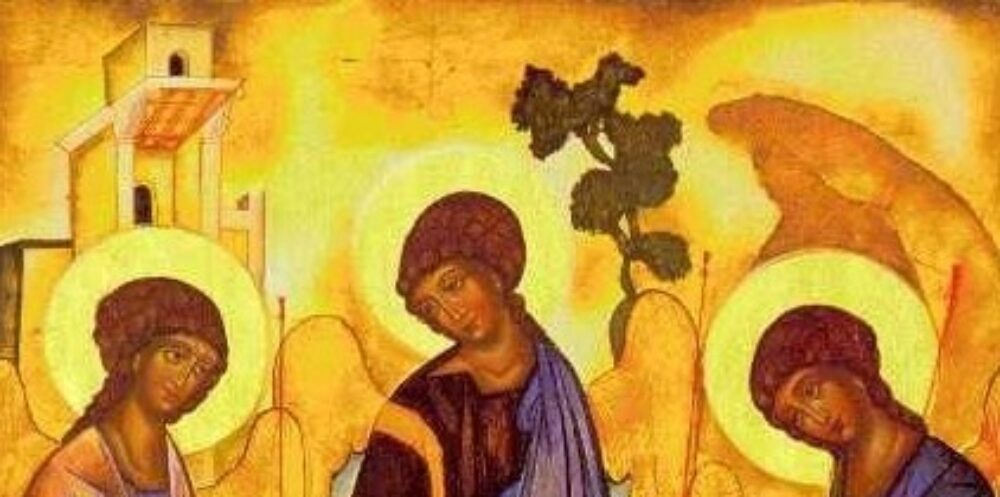
Welcome and Prayer: Jim Calhoun
Come Lord, join us here today.
We thank you for our community
Our shared lives.
Knit us together
In new ways
Forming new bonds of affection
New opportunities to give
and to receive
Increasing our joy
Deepening our faithfulness
Strengthening our hope
Turning us into people
Known for their loving
Putting aside our every anxiety
Knowing your great love
Will carry us along
And through
All the way
Every step
To the very end
Amen
Morning Talk: chuck smith, jr.
The word of the LORD that came to Hosea son of Beeri in the days of Uzziah, Jotham, Ahaz, Hezekiah, kings of Judah and in the days of Jeroboam son of Joash king of Israel Hosea 1:1 (I am quoting Robert Alter’s translation of the Hebrew Scripture)
Intro: Before we began Galatians, I asked for recommendations as to where in scripture to go next
A trusted friend suggested we venture through the minor prophets
– “minor” because they are relatively short compared to Isaiah, Jeremiah, and Ezekiel
• I hesitated for awhile, then procrastinated, finally hoping to dodge The Dozen prophets at the end of the Hebrew Scriptures
• even though the longest of them is only fourteen chapters and shortest is only one chapter,
◦ they still require as much study and preparation as the major prophets
◦ so it’s basically been a matter of laziness
– however, we have reached a point in our nation’s history,
• in which we need to hear the voice of these prophets
• and Hosea in particular
The church in America is suffering a collective identity crisis
The way I see it, lines are blurred; we’ve lost the ability to discern
– between deep and shallow, true and counterfeit, what is of God and what is of the world
• the way people throw Bible quotations into public debates,
◦ reveals how little they understand the Scriptures or the context that gives meaning to each verse
– I’m not being flippant when I say reading through the prophets has convinced me,
• if we continue down the road we’re now on, God will lift his grace from over our churches and nation
• paying attention to the message of the prophets is essential, teaching us we must:
◦ do God’s will, follow the path of Jesus, and return to our first love
◦ so let’s listen to Hosea with this in mind
In verse 1, Hosea appears in his own world, during a specific time
He straddled two nations; Judah to the south and Israel in the north
– when Israel broke away from Judah, their first king, Jeroboam 1, created a cult
• after him, not one king of was faithful to God
• the king mentioned here in Hosea is Jeroboam II
– within ten years of his death, five different kings had come and gone
• and then, the nation of Israel was gone too
• the prophet lived to see Israel come to an end
Right off, Hosea’s story effects us like a shock to the system
When the LORD began to speak to Hosea, the LORD said to Hosea:
Go, take you a wife of whoring
and children of whoring,
for the land has surely whored
away from the LORD Hosea 1:2-3
Hosea’s message begins with a brief flash of poetry
– chapters 2 and 3 will contain more poetry than ordinary writing
• then from chapter 4 on, the rest of the book is poetry
• Robert Alter suggests poetry is more fitting for prophecy,
◦ because this is “the word of the LORD” delivered to his prophets
◦ God is speaking, and that requires a special form of expression
– but the big question is: Does God actually tell Hosea to marry a prostitute?
(at the least, the Hebrew word indicates a “promiscuous” woman)
More than a few scholars have looked for a work-around to this
– I won’t go into their theories, because I’m not convinced of their merit
• some of them, I suppose, feel they must protect God’s holy image
◦ perhaps they find the idea repugnant
◦ I suspect that some commentators feel threatened by it
(they don’t want to think God would ever ask them to do such a thing)
• I’ve heard young single men say,
◦ “I would never forgive my wife if she cheated on me”
◦ that sort of mindset finds Hosea’s story hard to handle
– God has placed other difficult demands on his prophets
• he used not only their speech, but their entire lives to reveal his heart
What we need to appreciate, is that from the start,
– God presented his love to Israel as a husband devotion to his wife
• so through his prophets he confronts their idolatry and fascination with other deities,
referring to it as adultery
• a spiritual form of immorality
Hosea’s children are recruited to illustrate God’s word
And he went and took Gomer daughter of Diblaim, and she conceived and bore him a son. And the LORD said to him: “Call his name Jezreel, for soon I will make a reckoning for the blood of the house of Jehu and put an end to the kingdom of the house of Israel. And it shall be on that day I will break the bow of Israel in the valley of Jezreel” Hosea 1:4-5
“Jezreel” was not chosen for the child because of the meaning of the Hebrew word
– however, the meaning names of his next two children will be relevant
• but the significance of the city of Jezreel is that it had a history
• and that would hit closer to home to people living in Israel, where the city of Jezreel was located
– King Ahab was notorious for being most wicked king of all
• his wife, Jezebel, was a princess from a border nation who brought Baal worship into Israel
(they had a palace in Jezreel that served as a second home away from the capitol city in Samaria)
◦ God appointed one of Ahab’s generals to execute justice on Ahab’s dynasty
◦ Jehu was to remove the crown prince and become his replacement
• Jehu came to Jezreel, where Queen Jezebel was living
◦ he commanded that she be thrown from an upper story window
◦ then he trampled her underneath his horses’ hooves
– soon, however, Jehu crossed a line and brutally caused more bloodshed, of which God did not approve
• it seems God chose this one event as a “case in point”
◦ Israel had to face trial and pay for their “spiritual adultery”
• the phrase “break the bow” refers to a decisive battle
◦ Assyria had recently become a world power in the Mid East
◦ they conquered Israel about ten years after death of Jeroboam
Another one of Hosea’s children is given an unfortunate name
And she conceived again and bore a daughter. And he said to him: “Call her name Lo-Ruhamah, for I will no more show mercy to the house of Israel nor will I forgive them in any way. But to the house of Judah I will show mercy and rescue them through the LORD their God, but I will not rescue them through bow and sword in battle with horses and with horsemen” Hosea 1:6-8
“Lo-Ruhama” means “no mercy”
– God was going to cut off his mercy to Israel
• for two centuries he put up with their pagan practices
◦ he was constantly sending them his word through his prophets
◦ and he came to their rescue repeatedly
• but now, all of that was over
◦ he would no longer provide for them or protect them
– a sad fact of our human condition is that we must lose some things before we appreciate their value
• we don’t think to thank God for our vision, until we see someone with a white cane and dark glasses clicking their way along a sidewalk
• we learn from Hosea that there are lessons we learn from our losses
Naming the third child
And she weaned Lo-Ruhamah and conceived again and bore a son. And he said, “Call his name, Lo-Ami, Not my people, and I will not be your God” Hosea 1:9
“Lo-Ami” signifies “Not My People”
– it would be impossible to measure the magnitude of this loss
• it is the end of a dream – the reversal of a promise and a vow
◦ it is nothing less than a separation and divorce
God’s devotion to Israel began long before they were a nation
– as far back as Abraham, he was forming their identity
“I am the LORD. I appeared to Abraham, Isaac, and to Jacob, as God Almighty, but by my name the LORD I did not make myself known to them. I also established my covenant with them . . . . I have remembered my covenant. . . . I will take you to myself to be my people and I will be your God . . . .” (Ex. 6:2-7)
• this is the essence of God’s covenant with Israel, and the benefit both parties receive
(Yahweh gets a people for himself and the people get a God who is for them)
◦ the slogan is repeated throughout the Old Testament, and especially in the Prophets
“I am your God – you are my people”
• the connection between God and the people is relational
◦ it is a bond sworn in love – a promised intimacy
◦ a commitment that would last forever
– but now, at this critical stage of Israel history, they are approaching a different destiny,
• God has loved Israel, been faithful, and forgiven many of their offences
◦ but he will no longer turn a blind eye to their adulteries
• there are consequences – and the consequences are painful,
◦ as Hosea learns through his own difficult circumstances
Could there be a greater tragedy?
– Israel not only loses God, but they lose their national identity as well
• they are now lost in the world
• when Assyria conquered Israel,
◦ they deported thousands of families to other countries
◦ then they planted thousands of foreigners in their land
– the mixture of the nationalities erased Israel’s unique identity
• that is where this first sad prophecy leaves off
Conclusion: The obvious question is “Why marry a whore?”
What I hear first is God asking, “Have I got your attention now?”
So we might want to begin there – does God have our attention?
For Hosea to bring this prophetic word with all the passion and intensity of God’s heart,
he had to experience the pain and betrayal of love for himself
His heart had to be broken
Only then could he speak in public with the right attitude and pathos
Next I hear Hosea telling us,
“Your healing will begin when you wake up to what you have”
We live in the new covenant which God enacts with us through Jesus
We don’t have to lose it in order to appreciate it
We can learn to walk in God’s ways as their spelled out for us in Hosea’s message to Israel
But the strongest and most surprising revelation in this remarkable book,
is the ongoing, intensely moving, and richly edifying and undying love of God