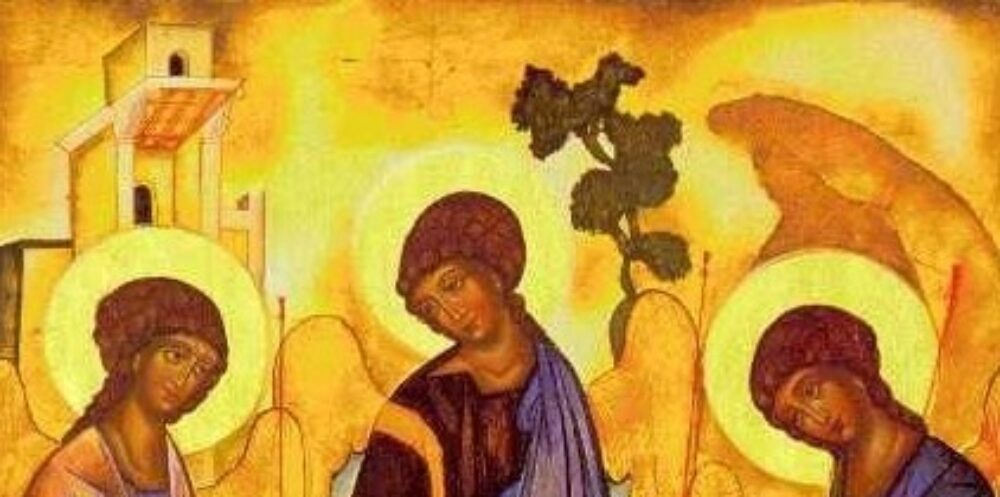
The Question Within the Question
Now there is in Jerusalem by the sheep gate a pool, which is called in Hebrew Bethesda, having five porticoes. In these lay a multitude of those who were sick, blind, lame, and withered [waiting for the moving of the waters; for an angel of the Lord went down at certain seasons into the pool and stirred up the water; whoever then first, after the stirring up of the water, stepped in was made well from whatever disease with which he was afflicted.] A an was there who had been ill for thirty-eight years. John 5:2-5
In 1952, French author Francois Mauriac was awarded the Nobel prize for literature. According to the Nobel Foundation, he was chosen, “for the deep spiritual insight and the artistic intensity with which he has in his novels penetrated the drama of human life.”
Mauriac once wrote about what he wanted to hear from priests and preachers. He said, “Oh how avidly I would listen to them, if they spoke to me of the Son of man, not as theologians, not as sociologists, but as those who see, who touch the resurrected Christ!”
– that is exactly how John talks to us about Jesus–as one who had seen and touched the Lord Jesus
What was from the beginning, what we have heard, what we have seen with our eyes, what we have looked at and touched with our hands, concerning the Word of Life . . . we proclaim to you also . . . (1 Jn. 1:1-3)
• he wanted us to meet and experience Jesus
○ and when we do, we discover that, in Jesus, God comes close to us
We can ignore the part about the angel
– it is not found in the oldest or the most reliable manuscripts
• it’s an example of someone trying to help the Bible make sense
○ it drives me crazy when people do this — it’s like Uzzah taking hold of the ark to steady it
• not everything in the Bible is intended to satisfy our intellect or make us feel good
• regardless of how we feel about it, we need to be with what it says until it performs God’s work in us
Regarding Bethesda, we know people flock to sites of miracle (e.g., Lourdes in France)
– I imagine the “regulars,” the men and women who showed up every day
• a community forged by a common bond of brokenness and suffering
• uncomfortable with how they were treated by “norma”l people they huddled around the pool
○ no one gave them strange looks – everyone was accepted
○ it was a social life of sorts that made their disabilities tolerable
– John zeroes in on one particular person
• this will be the man who meets Jesus read more…
“Sandwiched” Stories — Two Daughters
One of the synagogue officials named Jairus came up, and on seeing Him, fell at His feet and implored Him earnestly, saying, “My little daughter is at the point of death; please come and lay Your hands on her, so that she will get well and live.” And He went off with him; and a large crowd was following Him and pressing in on Him. A woman who had a hemorrhage for twelve years, and had endured much at the hands of many physicians, and had spent all that she had and was not helped, but rather had grown worse–after hearing about Jesus, she came up in the crowd behind Him and touched His cloak. For she thought, “If I just touch His garments, I will get well.” Immediately the flow of her blood was dried up; and she felt in her body that she was healed of her affliction. Mark 5:22-29
Once again we encounter contrasting characters. On one side, we meet a man described as a “synagogue official.” Opposite him is a woman who was banned from the synagogue. In fact, it may have been one of the man’s responsibilities to make certain people in her (unclean) condition never entered the synagogue.
– the man named was respected
• the unnamed woman was no doubt pitied and avoided
– the man came up to Jesus, fell at his feet and begged for his help
• the woman had to sneak up behind Jesus
Surrounding them and Jesus was a large crowd
– although made up of anonymous players, the crowd plays a definite role
• a sea of people from whom a man and woman emerge, then melt into again
• the man and woman are representatives of everyone else in the crowd
“Synagogue official” does not define Jairus
He was a father when he came to Jesus
– he was desperately trying to hold onto the life of his daughter
• as he put it, “My little daughter”
• I don’t think he planned on dropping to his knees
○ but it was “on seeing Him” that he collapsed at Jesus’ feet
• he arrived at eleventh hour, when his daughter was “at the point of death”
– Jairus had pictured in his mind what Jesus would do
• “come and lay Your hands on her, so that she will get well and live” read more…
Through His Eyes
Now one of the Pharisees was requesting Him to dine with him, and He entered the Pharisee’s house and reclined at the table. And there was a woman in the city who was a sinner, and when she learned that He was reclining at the table in the Pharisee’s house, she brought an alabaster vial of perfume, and standing behind Him at His feet, weeping, she began to wet His feet with her tears, and kept wiping them with the hair of her head, and kissing His feet and anointing them with the perfume. Now when the Pharisee who had invited Him saw this, he said to himself, “If this man were a prophet He would know who and what sort of person this woman is who is touching Him, that she is a sinner.” Luke 7:36-39
As we begin this story it will be helpful if we first look at a snapshot of Jesus
So let’s step back to the previous episode
– in prison, John the Baptist was having second thoughts about his endorsement of Jesus
• Jesus reassured John’s disciples everything was going along as it should
• he then talked to crowd about John and some of the differences between them
– Jesus explained that their target audience proved to be frustrating
• John was a stern ascetic, but they didn’t like that — “He has a demon” (v. 33)
• Jesus was sociable and engaging, but they didn’t like that either (v. 34)
“Behold, a gluttonous man and a drunk, a friend of tax collectors and sinners”
○ now this is how Jesus characterized himself in their eyes
– these descriptions weren’t accurate representations of either John or Jesus
• but if a sinner ever needed a friend, Jesus was there
Luke introduces two new characters
He likes working with contrasts and especially when it entailed a male and a female
– at first, the Pharisee and sinner appear as stereotypes
• stock characters – predictable (representative of a mind-set or class of people)
– but both are given the opportunity to change
• and thereby becoming more interesting characters — more like real people
○ Jesus will give them the chance to see themselves as something else
○ to become something else read more…
From Death Into Life
Soon afterwards He went to a city called Nain; and His disciples were going along with Him, accompanied by a large crowd. Now as He approached the gate of the city, a dead man was being carried out, the only son of his mother, and she was a widow; and a sizeable crowd from the city was with her. Luke 7:11-12
In conversation with my oldest daughter yesterday, we realized that we both have faced some interesting challenges recently. At one point she asked me, “Has everyone suddenly gone crazy?” I suggested that it could be an experimental toxin the government released in the atmosphere over Orange County, but then more seriously answered, “We’re just seeing a different side of people that we thought we knew.”
I also explained how my dad’s death created a vacuum and since then a number of people have jumped in to try to fill it. Now this new, brighter light in which my dad lived has exposed characteristics that were not visible before. Some of these new discoveries have been disillusioning and heartbreaking.
Think of the variety of ways we know different people
Strangers – we only need to know the most basic facts
• is this person safe or unsafe?
• do I want or need to know these people better or not?
Acquaintances (neighbor, mail carrier, clerk)
• we know their names and a few of their traits and characteristics
Friends – we are familiar with a large range of their traits and characteristics
• also, we know something about how all these things fit together
• we refer to the composite of these qualities as “character” and “personality”
Family – we know all of the above, plus their background and “life-story”
• we also have some knowledge of the story they tell about themselves
• but we may not know their “inner life” as well as we assume
Lover, Spouse – (ideally) we know all of the above, but more intimately
• and we are known in the same way and to the same degree
The Lover is someone that was at first a Stranger
– we have come to know person better and our knowledge has been modified along the way
• we have discovered that some of our first impressions were wrong
– we discovered also their complexity and contradictions
• for example, “He is outgoing, but not all time or not with certain people”
The closest knowing of another requires years of experience
– it also requires interest, caring, and listening
– this is why we’re traveling with Jesus each Sunday
• and why this morning we arrive with him at this small village
Nain was not far from Nazareth (Jesus’ home town) read more…
Clinging To the Old — Forfeiting the New
After that He went out and noticed a tax collector named Levi sitting in the tax booth, and He said to him, “Follow Me.” And he left everything behind, and got up and began to follow Him. Luke 5:27-28
Intro: If writing a commentary on Luke, we might title the second half of this chapter:
“The Beginning of Jesus’ Conflict With the Pharisees”
– did Luke intentionally design the structure with this in mind?
• I don’t know – doubt it – I think it’s possible that what he had in mind at this point was:
“The Kind of Things Jesus Did that Got Him Into Trouble”
– Luke is showing us the kind of person Jesus was during his life and ministry
• being who he was, conflict was inevitable
• Luke told this story to introduce others to Jesus–people who never met the Lord
○ for him, everything about our life in God depends on Jesus and knowing him
So Luke has us following Jesus when he leaves the house
(where he had healed a paralyzed man)
“He went out and noticed . . .” – what do we notice when we go out?
– in Jesus’ world, tax collectors lived on society’s margin
• if possible, people would ignore and avoid them
○ they were the sort of people who would blend into the background and disappear
• if tax collectors had tried to enter religion, they would come up against strong barriers
– but where others saw nothing or merely a tax collector,
• Jesus saw the qualities of a disciple
“Follow Me” – only two words, but we want to slow down when we come to them
– what did Jesus ask Matthew to join? what was he inviting Matthew into?
• a philosophy? a movement? a set of religious beliefs?
– read the word ME as if it appeared in bold print
• Matthew was being called to a person read more…
How Faith Comes to Us
One day He was teaching; and there were some Pharisees and teachers of the law sitting there, who had come from every village of Galilee and Judea and from Jerusalem; and the power of the Lord was present for Him to perform healing. Luke 5:17
Intro: Luke describes the setting with specific details
Not when and where details, but who and what details
– the characters he highlights
• Jesus, who was teaching
• a group of Pharisees and teachers of the law, who were “sitting”
○ why would Luke make special mention of the Pharisees and teachers?
○ that they came from all over–and especially from Jerusalem–is a clue
○ they were there to investigate Jesus
– some thing else was present, namely, “the power of the Lord . . . to perform healing”
What part do the Pharisees and teachers of law play in the story of Jesus?
– their role was that of antagonists who create conflict for the protagonist–the villains who oppose the hero
• through the tension their opposition to Jesus creates, core issues are highlighted and addressed
– the are also representatives of an old and bankrupt system
• the “institution” that had assumed ownership and control of the sacred
• a friend refers to this as “Religion, Incorporated”
William McNamara observed, “Where the institutional factor plays an important part in a community, materialism is liable to prosper.” And he explains, “A materialist is one who regards matter as primary and ultimate reality and spirit as secondary and incidental.”
– Religion, Inc. is obsessed with material concerns
• for example, every thing important to the institution is measured in numbers
○ number of dollars (the “budget” is its heart), square feet, of attendees, programs, etc.
– Religion, Inc. institutionalizes faith and thereby attempts to reduce its own need for it read more…
Restoring God’s “Likeness”
In the early morning, while it was still dark Jesus got up, left the house, and went away to a secluded place, and was praying there. Simon and his companions searched for Him; they found Him, and said to Him, “Everyone is looking for You” He said to them, “Let us go somewhere else to the towns nearby, so that I may preach there also; for that is what I came for.” Mark 1:35-39
Intro: This section begins and ends with Jesus in a secluded places
The first scene takes us to a village on the shore of Galilee
– the gospels refer to it as the “Sea” of Galilee,” but to us Californians, it is more like a lake
• thirteen miles north to south, seven miles wide, and bounded by mountains on three sides
• walking the shore in the early morning and evening, you are calmed by the rhythmic music of ripples
– one morning, before sun rose over the peaks beyond eastern shore, a solitary figure moved in darkness
• Jesus went looking for an out of the way place to pray
○ he did not have to go far to be completely alone
○ besides, making his way through the rugged terrain in the dark would be difficult
– the Bible sometimes hides the best parts
• wouldn’t it have been fascinating to sit nearby and observe Jesus in prayer?
Daylight broke over Capernaum, waking Peter and his friends
– Jesus was gone – so they went looking for him
• soon they came clamoring into his solitude
○ they could not restrain their excitement
○ Jesus is gaining popularity, “Everyone is looking for you!”
– but Jesus is ready to move on
• attracting large crowds is not what he “came for”
V. 40, We’re not told when or where Jesus was met by “a leper”
I am guessing it was along a road between villages
– victims of this disease were not allowed in towns or cities
– leprosy in the Bible is not usually the disease we know by that name (Hansen’s disease) read more…
When Jesus Broke the Rules
He left Judea and went away again into Galilee. And He had to pass through Samaria. So He came to a city of Samaria called Sychar, near the parcel of ground that Jacob gave to his son Joseph, and Jacob’s well was there. So Jesus, being wearied from His journey, was sitting thus by the well. It was about the sixth hour. John 4:3-8
Intro: When we went through Genesis, we were introduced to” type-scenes”
A storytelling formula used in shaping a specific sort of event that recurs in different stories
– the type-scene we explored was “boy meets girl at a well” – men who met their wives at a well
• John’s specific reference to “Jacob’s well” in this story reinforces the link with this type-scene (Gen. 29:1-20)
– what stands out in type-scenes are not the similarities with the prototype, but the deviations from it
• in the story in John 4, there are two significant deviations in the type-scene:
1.) Jesus asked for water, but deviated from the type-scene when he offered the woman a drink
2.) the strangest twist is that, far from finding his wife at a well, he met a woman who already had five husbands
○ the dialogue turns on this particular point – this is where it gets serious
The Samaritan woman is a mirror image of Nicodemus
– he was male (named) and a member of Israel’s religious establishment
– she was female (unnamed) and lived outside Israel; in fact, a despised Samaritan
(note that one of the most degrading things Jesus’ opponents could say to him was that he was “a Samaritan” and had a demon (Jn. 8:48)
• that Jesus spent time with this woman and offered her eternal life is a beautiful illustration of his defiance
○ he did not allow cultural or religious conventions stand in his way
○ he refused to love only those he was supposed to love
How the story unfolds
Unlike his meeting with Nicodemus, Jesus initiated conversation with the Samaritan woman
“Give Me a drink”
– surprised, but not flustered, she shot right back, “How is it that You, being a Jew, ask me for a drink . . .”
As if to say, “Where’s your racism now, when you’re thirsty and I have the jar? You wouldn’t even be talking with me if your friends were here”
– John’s footnote explains why she said this, “For Jews have no dealings with Samaritans” (cf. v. 27)
• I think she enjoyed having the upper hand
• she was not afraid of Jesus – obviously, she knew how to handle men
In his response to her, Jesus said there were two things she did not know” read more…
Jesus’ Easter Bible Study
And behold, two of them were going that very day to a village named Emmaus, which was about seven miles from Jerusalem. And they were talking with each other about all these things which had taken place. While they were talking and discussing, Jesus Himself approached and began traveling with them. But their eyes were prevented from recognizing Him. Luke 24:13-16 (please read the entire passage)
Intro: Four weeks ago, we set out to meet people who met Jesus
I took last week’s subjects out of sequence, because it was Palm Sunday
– since today is Easter, our two disciples are again out of sequence
(we’ll return to the proper order next week)
Luke identifies only one of these disciples by name
– the Bible tends to observe a literary strategy when it either names characters or leaves them anonymous
• had both disciples been named and were were familiar with the other one we might think:
“Oh of course, that’s just like Peter” — and not identify with that other person
– but not named, he represents an entire category; namely, all disciples
• Luke means for us to take this walk with Jesus
• in the person of the anonymous disciple, we can be there with them
The one biblical image that best represents what we are doing here in Reflexion is this scene
• Jesus is “traveling” with us, explaining the Scriptures
• we are making this spiritual journey together
What did Jesus do for them during this walk?
I want to label this session “therapeutic enlightenment” read more…


Daily Meditations From the Scriptures